
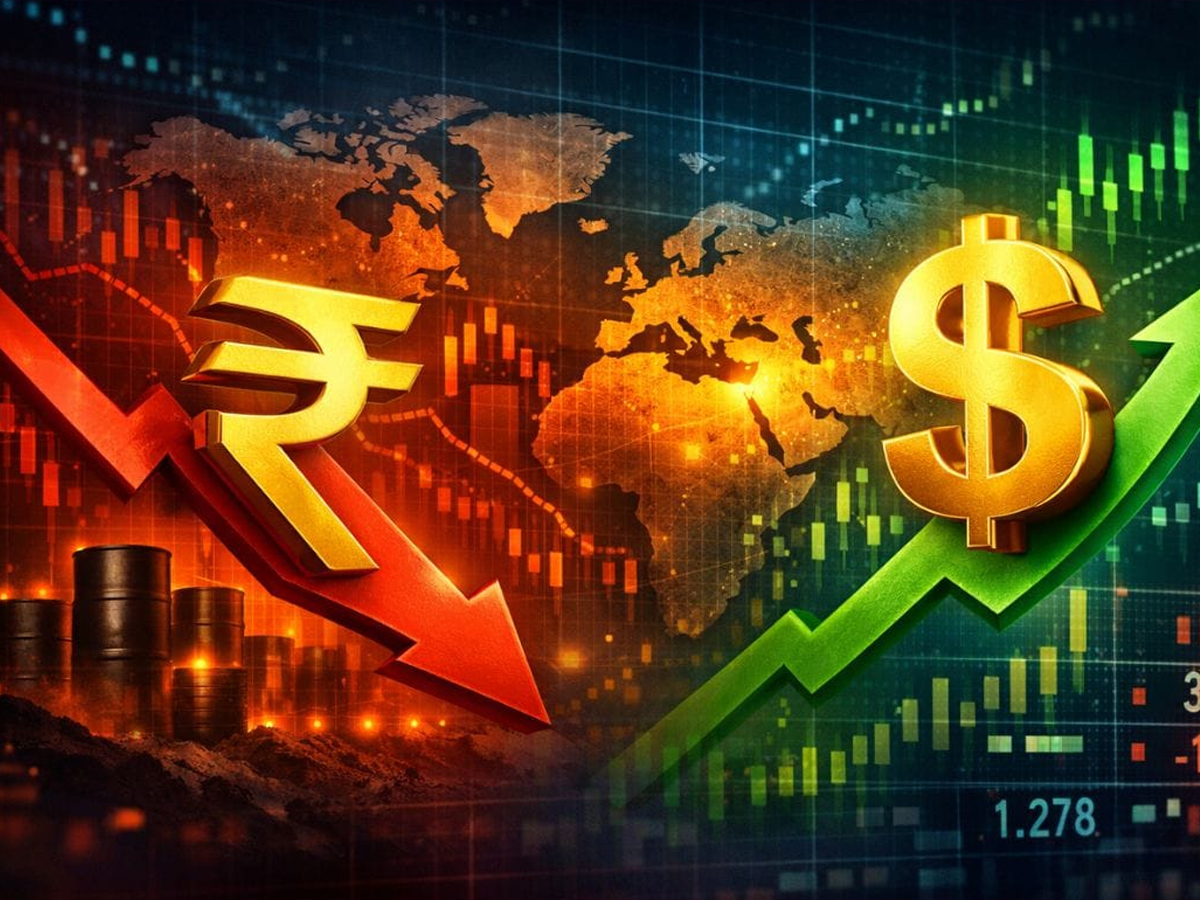
India’s currency has slipped to a historic low amid rising geopolitical tensions and soaring oil prices, shaking global markets. The Indian rupee weakened sharply on Monday, touching its weakest level ever against the US dollar, reflecting the growing pressure on economies that rely heavily on imported energy.
The rupee dropped 0.6% to 92.3350 per dollar, breaking its previous record low of 92.3025 reached last week. The decline came as investors rushed toward safer assets like the US dollar while oil prices surged following escalating conflict in the Middle East.
Analysts say the currency’s fall highlights how global geopolitical shocks can quickly affect emerging economies such as India.
USD to INR: Why the Rupee is Falling Against the Dollar?
The latest slide in the rupee closely follows the escalation of military action involving the United States, Israel, and Iran. The conflict has rattled global markets and raised concerns about disruptions to oil supplies.
As tensions intensified, investors shifted money into safer assets like the US dollar and gold. This shift increased demand for the dollar and weakened several emerging market currencies, including the rupee.
Higher crude oil prices have added further pressure because India imports the majority of its energy needs.
USD to INR: Oil Price Surge Jumped and Impact on India
Global oil prices have jumped sharply since the conflict began. Brent crude surged more than 26% to around $117 per barrel during early Asian trading, triggering fears of a broader energy shock.
For India, rising oil prices can quickly translate into economic stress. The country is the world’s third-largest crude oil importer, making its economy highly sensitive to fluctuations in global energy markets.
Since oil is traded in US dollars, a weaker rupee means India must spend more local currency to purchase the same amount of crude. As a result, the country’s import bill increases significantly when both oil prices and the dollar rise simultaneously.
Rising Oil Costs Could Push Inflation Higher
Economists warn that expensive oil and a weaker currency can fuel inflation across the economy.
Fuel costs influence transportation, manufacturing, and logistics. When crude oil prices increase, petrol and diesel often become more expensive. This raises the cost of moving goods and operating businesses.
Companies frequently pass these higher costs to consumers, which can lead to rising prices for everyday products and services. If inflation accelerates sharply, it could affect household spending and slow economic growth.
Pressure on India’s Trade Balance and Government Finances
A prolonged surge in oil prices could also widen India’s trade deficit. When the country spends more on energy imports, the gap between imports and exports grows.
At the same time, a weaker rupee increases the cost of importing other goods such as fertilisers, chemicals, and electronic components. This combination can create additional challenges for fiscal management and economic stability.
Market experts also warn that foreign investors often become cautious about emerging markets during periods of global uncertainty. This can trigger capital outflows from equities and bonds, putting further pressure on the currency.
USD to INR: Can the RBI Stabilise the Rupee?
The Reserve Bank of India (RBI) usually watches sharp currency movements closely. When volatility rises, the central bank can intervene in foreign exchange markets by selling dollars from its reserves.
Such steps can slow rapid declines and stabilise the market, although they rarely reverse broader global trends.
For now, the rupee’s record low reflects the ripple effects of rising geopolitical tensions, surging oil prices, and nervous global investors. If crude prices remain elevated and the conflict escalates further, pressure on India’s currency and economy could persist in the coming weeks.




