
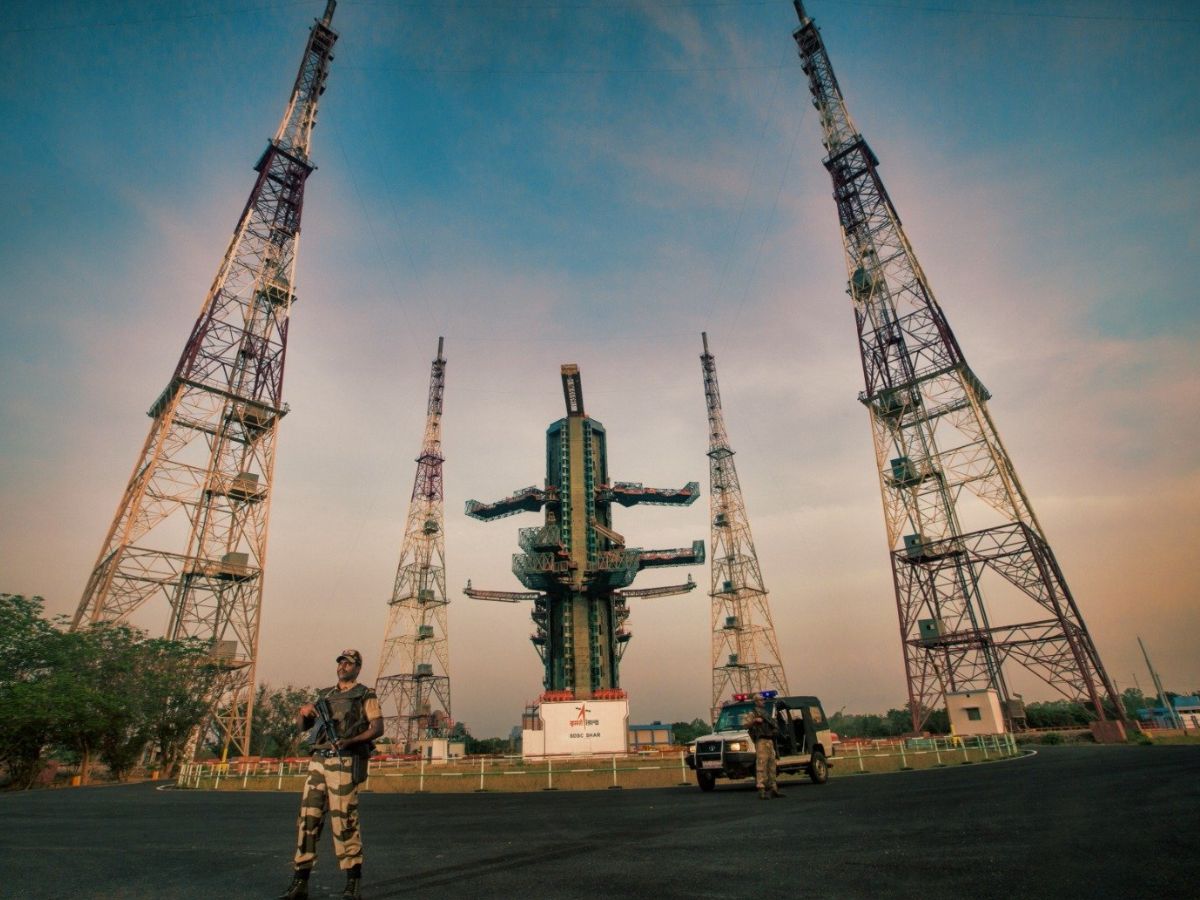
CISF Raising Day 2026: India is one of the nuclear powers in the world, and the security of its nuclear weapons is one of the top priorities for the country. This brings us to the question of how secure the nuclear weapons and facilities of the country are and what forces are responsible for the security of the nuclear weapons.
The short and simple answer is the Central Industrial Security Force. However, the real scenario is different. Although the security of the nuclear facilities is taken care of by the above force, there are several other security arrangements as well.
PM Modi greeted Raising Day wishes to all personnel of CISF & admired the force for its professionalism, dedication, and courage. He added that they play a key role in our security system by protecting essential infrastructure and ensuring the safety of countless people every day. Their unwavering commitment to duty is truly commendable.
Raising Day wishes to all personnel of CISF! This force is admired for its professionalism, dedication, and courage. They play a key role in our security system by protecting essential infrastructure and ensuring the safety of countless people every day. Their unwavering… pic.twitter.com/YZqRx5pCd7
— Narendra Modi (@narendramodi) March 10, 2025
Why CISF Day Is Important
India observes the foundation day of the Central Industrial Security Force every year on the 10th of March. The Central Industrial Security Force came into existence in the year 1969 under the Government of India, with the main objective being the security of public sector organizations. As of the 10th of March, 2026, the Central Industrial Security Force has completed its service period of 57 years.
However, over the years, the mandate has increased manifold, and the security force is now entrusted with the security of the country’s airports as well as the seaports and the metro rail.
Currently, the security force has about 1.9 lakh personnel, including officers and soldiers, as part of its ranks. One of the most important tasks that the security force is entrusted with is the security of the nuclear power plants.
How India Protects Its Nuclear Facilities
India is a recognised nuclear power, and safeguarding nuclear energy plants and weapons is essential for national sovereignty. To achieve this, the country has built a multi-layered security system.
This system combines advanced technology, intelligence coordination and specially trained military forces to protect nuclear installations from any potential threat.
CISF: The First Line of Defence
The main responsibility of the Central Industrial Security Force is the security of nuclear power plants and research facilities.
The CISF, which works under the Indian Ministry of Home Affairs, sends its special security forces to nuclear facilities to provide security. These security forces undergo special training and utilize the best technology to keep watch over the facilities.
The security forces utilize technologies such as CCTV, biometric devices, and advanced weapons to keep watch over the facilities and detect any unusual activities that may take place within and outside the facilities.
Strategic Forces Command: Protecting Nuclear Weapons
Whereas the CISF is deployed for the security of nuclear plants, the nuclear weapons of India are under the control of the Strategic Forces Command.
The Strategic Forces Command is a joint force consisting of officers from the Army, Navy, and Air Force of India. It is in charge of ensuring the safety of nuclear weapons and their proper usage.
The usage of nuclear weapons in India is possible only under the Nuclear Command Authority, headed by the Prime Minister of India.
During the storage and transportation of nuclear weapons, they are under the tight security of commandos of the Strategic Forces Command.
Major Nuclear Power Plants in India
India operates several important nuclear power plants located across different regions of the country. Most of these facilities are guarded by the Central Industrial Security Force.
Some of the key installations include:
-
Tarapur Atomic Power Station – India’s oldest nuclear power facility.
-
Rajasthan Atomic Power Station – A major nuclear project located in Rawatbhata.
-
Madras Atomic Power Station – Located in Kalpakkam along with the Indira Gandhi Centre for Atomic Research.
-
Narora Atomic Power Station – Situated near the Ganga river and heavily protected.
-
Kakrapar Atomic Power Station – A key energy centre in western India.
-
Kaiga Atomic Power Station – Located in dense forest areas, requiring special surveillance systems.
-
Kudankulam Nuclear Power Plant – The largest nuclear power facility in India, operating with international-level safety standards.
Multi-Layered Security Around Nuclear Plants
In fact, security in nuclear plants does not just depend on the presence of security guards with guns. Several security layers are put in place to ensure security. For instance, the plants are enclosed by high walls, barbed wires, and even electrical fencing. Stringent security checks are also in place.
In addition, sophisticated sensors, motion detectors, and even night vision cameras are used. Another security measure put in place is “air-gapping.” This is where the computer systems in the nuclear plants are totally separated from the general internet.
In fact, India’s intelligence agencies, such as the Intelligence Bureau and the Research and Analysis Wing, also exchange security information to prevent any possible attacks on the country’s nuclear plants.
Preparing for Natural or Technical Disasters
Security threats in nuclear power plants are not restricted to threats from terrorists. Natural disasters and technical problems can also pose a threat. To address any such disaster situation in nuclear power plants, the National Disaster Response Force is trained to handle chemical, biological, and nuclear emergencies. Mock drills are regularly conducted in nuclear power plants so that the authorities are always ready to face any situation in the event of a disaster.
How India Deploys Its Nuclear Weapons
India has a policy of “No First Use.” This means that India will not start a nuclear war.
Due to security reasons, the exact location of nuclear weapons is kept very confidential. These weapons are kept in underground bunkers.
India has the capability of nuclear triad. This means that nuclear weapons can be launched from the ground, the air, or from the sea.
Nuclear-powered submarines like INS Arihant are one of the safest means of deploying nuclear weapons.
One of the World’s Strongest Nuclear Security Systems
India’s nuclear security has been rated as the best in the world. The Central Industrial Security Force and the Strategic Forces Command officers work day and night to ensure the security of the country’s nuclear facilities.
The government is making all the best efforts to improve the security by providing the best training and using the best technology.
The security and control of nuclear energy and nuclear weapons is an integral part of the security policies of the country.




