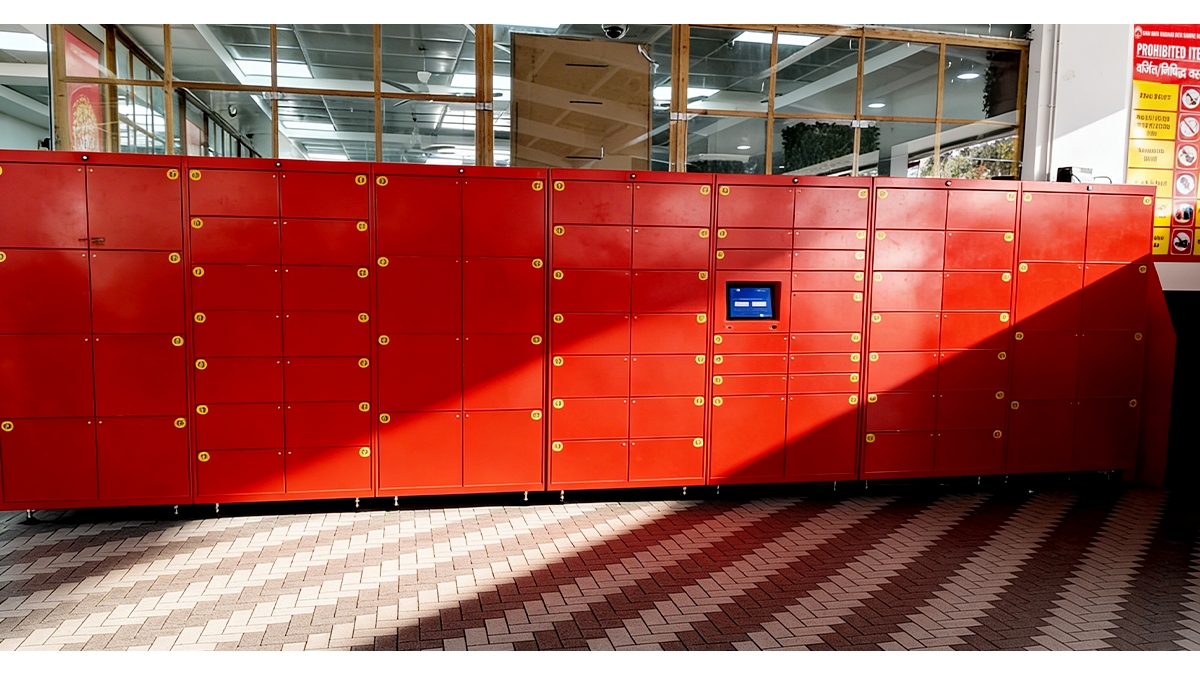
Standing near the storage zone at the base of the Shri Mata Vaishno Devi Shrine, it is easy to notice what is missing. There is no crowd pressed around a counter. No shouting of token numbers. No anxious pilgrims clutching paper slips while balancing bags and mobile phones.
In their place is a quieter arrangement. A row of automated lockers stands to one side, used steadily by pilgrims who pause briefly, complete a transaction, and move on toward the yatra route. The change is subtle, but its impact on movement and order is immediately visible.
These lockers, introduced by Smartbox Lockers, mark a shift in how the shrine is handling a long-standing operational challenge: managing personal belongings for millions of visitors without slowing them down.
What the Old Storage Counters Looked Like During Peak Rush
Anyone who has visited Vaishno Devi during peak periods will remember the storage counters. Pilgrims waiting in slow-moving lines, bags piling up behind counters, and staff struggling to keep pace with the volume, especially during festivals like Navratri. Until recently, this manual system was the only option. Phones, wallets, and bags were handed over against physical tokens, often after a considerable wait. During heavy footfall, confusion was common, and the process added stress to what is already a physically demanding journey.
During heavy footfall, confusion was common, and queues often slowed movement through the base area.
The new locker system removes much of that friction. Pilgrims now approach a digital interface, enter their mobile number, receive a one-time password or QR code, choose an available locker, and deposit their belongings themselves. The entire interaction is brief, and the area keeps moving.
How Movement Around Storage Areas Has Quietly Improved
What stands out most is the reduction in congestion. Where queues once spilled into walkways, movement is now more evenly spread. Pilgrims arrive, store their belongings, and proceed without clustering around a single point.
Security has also improved. Each deposit and retrieval is digitally recorded, replacing the earlier reliance on physical slips and manual oversight. While attendants are present nearby, their role has shifted from managing every transaction to assisting only when required. This has reduced pressure on staff and removed the need for manual crowd control around the counters.
During a midweek visit, elderly pilgrims and families were seen using the lockers with minimal assistance. The interface offers clear instructions, and help is available when needed. The transition feels practical rather than abrupt.
An Upgrade That Blends Into the Pilgrimage Experience
The locker installation does not attempt to draw attention to itself. It blends into the surrounding infrastructure and does not intrude on the religious atmosphere. Officials associated with the rollout describe it as a functional upgrade rather than a technological statement.
Automated lockers have become common in settings such as metro stations, banks, and residential complexes. Their introduction at a pilgrimage site of this scale reflects a growing recognition that crowd-heavy public spaces need systems that can scale without adding complexity. The move also aligns with a broader push to modernise public services while maintaining cultural continuity. Here, technology has been applied to a specific pressure point without altering how pilgrims experience the shrine itself.
Why Other Major Shrines May Take Note
If the system continues to perform under peak conditions, it is likely to attract attention from administrators at other major religious sites. Shrines such as Tirupati, Shirdi, and the Golden Temple face similar challenges during high-volume periods. For now, the change at Vaishno Devi is best understood through its absence of disruption. By removing a familiar bottleneck quietly and efficiently, the locker system allows pilgrims to focus on the journey ahead rather than the logistics behind them.
In a place where millions pass through each year, that alone is a meaningful improvement.
