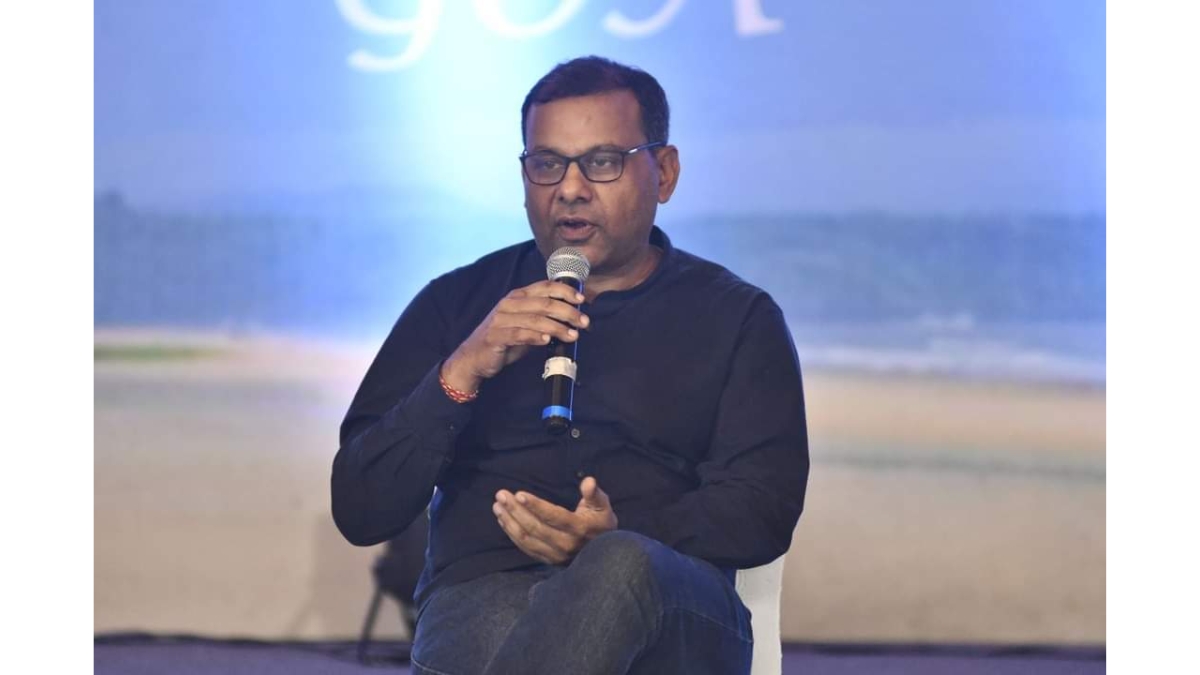
New Delhi [India], September 4: In India’s bustling higher education market, the management degree, once viewed as a golden ticket to career security and social prestige, now finds itself at the centre of a reckoning. For tens of thousands of young Indians who sign up for MBA programmes each year, the rising cost of business school is compounded by the chilling reality of poor campus placement and mounting student loan debt. As Vineet Gupta, founder of Ashoka and Plaksha University, warns, “Management education has to reinvent to remain relevant not only in India but all over the world.”
The MBA Boom and the Bust
Over the last decade, management education mushroomed in India in response to surging demand. Today, there are roughly 3,900 management schools with nearly 350,000 seats nationwide. But the tide has turned: as many as 65 business management colleges are reportedly shutting down in 2025, while hundreds of others face declining admissions and uncertain futures.
The root cause? For a growing number of students, the promise of an MBA no longer matches the real-world outcome. Many lesser-known colleges are plagued by outdated, theory-heavy curricula, inexperienced faculty, and a glaring disconnect from business reality. As a result, “very few respectable companies participate in the course-end recruitment drives,” and students are left without job offers, despite having invested ₹4-30 lakh or more in their education.
Student Debt Piles Higher as ROI Shrinks
A survey of new graduates paints a stark picture: nearly 50% of MBA graduates in India fail to secure relevant jobs within months of graduating, particularly from Tier 2 and Tier 3 institutes (ASSOCHAM Report, 2017). Many young MBAs are now saddled with steep student loans and no clear repayment path, a financial risk that’s making students and families increasingly wary of business education’s true return on investment (ROI).
Vineet Gupta’s experience reflects this shift: “At the postgraduate level, a lot of middle-class families take loans especially for professional degrees like engineering, management, and medicine, hence the expectation of ROI is high. If the focus of accreditation shifts to quality, many of our institutions will face problems in getting notified.” The upshot: aggressive expansion and lax regulation have left too many students paying for degrees that do not deliver careers.
Industry’s Tough Love: Skills, Adaptability, Technology – and the AI Disruption
Demand has stagnated for graduates from lower-rung business schools, but the number of applicants to elite IIMs and top institutions remains strong. What’s changed is industry’s expectation: companies now seek business graduates who are not only knowledgeable but also adaptable, multidisciplinary, and capable of creative, real-world problem solving.
But another reality cannot be ignored: the rise of technology and artificial intelligence is rewriting the job market itself. According to a McKinsey Global Report, about one-third of activities across 60% of all jobs are automatable. In India, AI and automation have already reduced hiring in repetitive roles such as back-office operations, data entry, customer support, and even entry-level HR screening. TCS recently announced layoffs of over 12,000 employees, citing AI-driven efficiencies in coding, testing, and IT support, with analysts warning that up to 500,000 jobs in the outsourcing sector may be at risk.
As these technologies expand, fresh graduates, especially those trained for routine corporate functions, find fewer opportunities waiting for them. “Conventional MBA programs train the wrong people in the wrong ways with the wrong consequences,” remarked a leading academic, echoed by many business leaders who question whether current programs are preparing graduates for future challenges.
Solutions: Redefining Management Education for ROI and Relevance
Vineet Gupta’s vision offers a pathway out of the crisis, a rethinking of how management education is structured, delivered, and evaluated:
- Shift from Input to Output: Indian business schools must move from input-based evaluation (number of teachers, buildings) to output-based metrics (graduate employability, student learning gains, career progressions).
- Industry Partnerships: Programmes should be co-created with industry to ensure real-world relevance. Gupta has advocated for making experiential learning, capstones, and internships a mandatory core of each program - “it brings in the whole element of learning by doing.”
- AI and Tech-Ready Curriculum: Since AI is here to stay, universities must equip students with the ability to work alongside technology, not compete with it. Courses on data analytics, machine learning, digital transformation, and AI-driven decision-making should become core components of the MBA. For example, Delhi University’s partnership with Google Cloud now trains students in AI, cloud computing, and data analytics.
- Focus on Teaching Quality and Well-Being: Top faculty, engaging pedagogy, and campus environments that promote student resilience and holistic development are essential.
- Transparency in Outcomes: Regulators, Gupta suggests, should publish placement, salary, and ROI data from each institution, empowering students to make informed decisions.
- Encourage Experimentation and Global Best Practices: Vineet Gupta cites the Ashoka and Plaksha models - rooted in philanthropy, interdisciplinarity, and global benchmarking as examples of how to build impactful institutions.
If the ‘MBA factory’ model is fading away, a more rigorous, student-centric, and future-ready system must take its place. This means not only integrating real-world industry practices but also aligning education with the technological transformations reshaping the job market. As Gupta says, “We need an expansion in both capacity and quality of our higher education. For management education to justify its cost and earn back student trust, it must prove through jobs, innovation, and leadership development that it remains relevant in a rapidly changing global economy. Until that happens, student debt without jobs will continue to shape and challenge the very purpose of the Indian MBA.”