Budget 2026 will be India’s first-ever Union Budget presented on a Sunday. Here’s why February 1, 2026, marks a historic shift in Budget history.
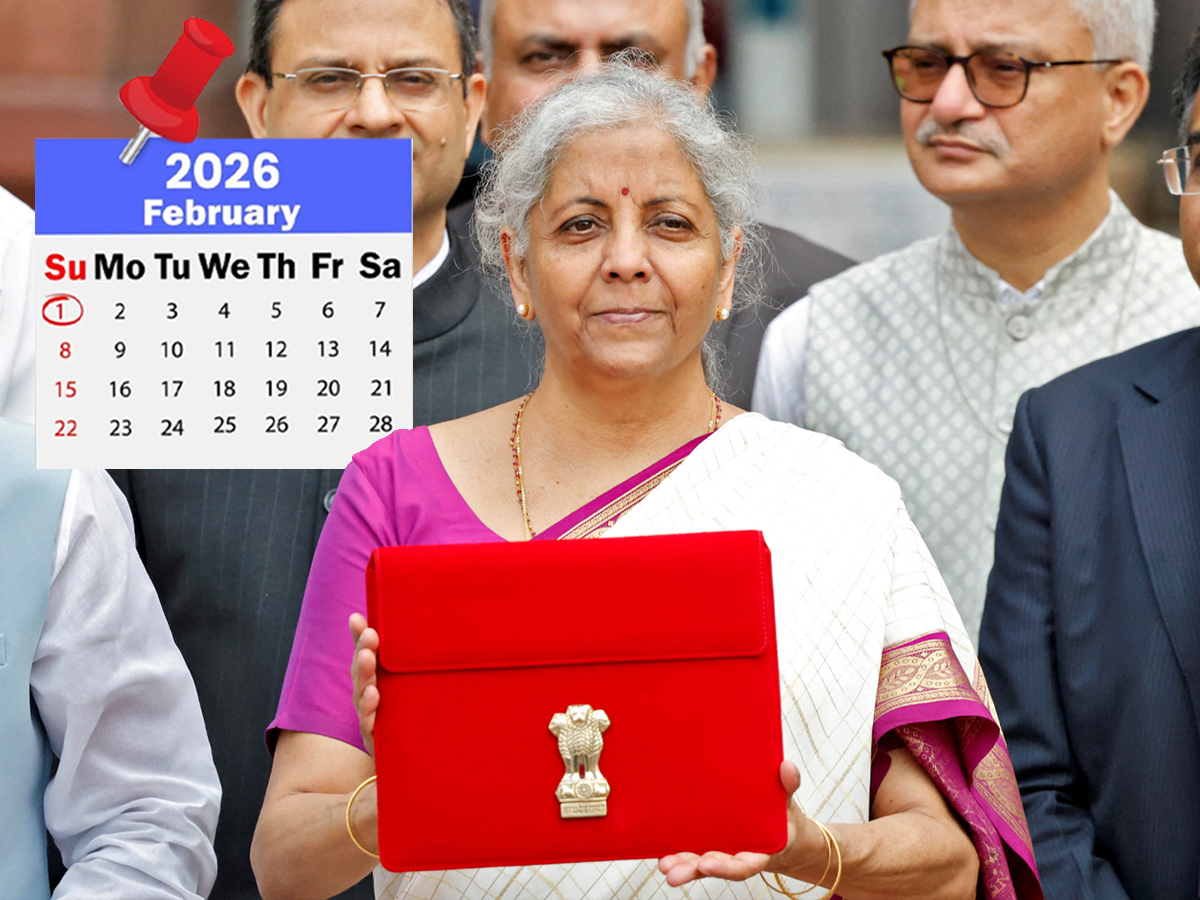
The Union Budget 2026 will be the first-ever Sunday Budget presentation in independent India. (File Photo)
For the first time since Independence, India’s Union Budget will be presented on a Sunday. Finance Minister Nirmala Sitharaman is set to table the Union Budget 2026–27 in Parliament on February 1, 2026, a date that quietly creates history in India’s parliamentary calendar.
While Budget Day has long been associated with weekdays, and occasionally Saturdays, a Sunday presentation has never happened before. The upcoming Budget not only outlines India’s economic roadmap but also highlights how deeply the country’s budget-making process has evolved over the decades.
The Union Budget 2026 will be the first-ever Sunday Budget presentation in independent India.
For decades, governments deliberately avoided Sundays. Until 2016, the Budget was always presented on the last working day of February, ensuring it never fell on a weekend. Even after reforms changed the presentation date, coincidence had never pushed Budget Day to a Sunday, until 2026.
The reason lies in a major reform introduced in 2017, when the government fixed February 1 as the permanent date for presenting the Union Budget.
Before this change, the Finance Minister presented the Budget at the end of February. The revised schedule aimed to give ministries and states more time to plan and implement spending before the new financial year began in April.
February 1, 2026, happens to fall on a Sunday, making this historic moment unavoidable and symbolic of how procedural reforms now override old conventions.
Yes, but only on Saturdays, never Sundays.
In recent years, Budget presentations took place on Saturdays in 2015, 2020, and 2025. These were exceptions, not the norm. Even then, governments ensured institutional readiness to handle market reactions and administrative processes.
For Budget 2026, both the BSE and NSE will conduct special live trading sessions on February 1, reflecting how financial systems have adapted to changing timelines.
For nearly five decades after Independence, India followed a colonial-era practice by presenting the Budget at 5 pm.
This timing had nothing to do with Indian convenience. When it was evening in India, it was morning in the United Kingdom, allowing British authorities to track financial developments in real time. The practice continued until the late 1990s, long after colonial rule had ended.
India finally broke from this tradition by shifting the Budget presentation to 11 am, aligning it with domestic priorities rather than colonial legacies.
Union Budget 2026 marks Nirmala Sitharaman’s ninth consecutive Budget, a rare personal milestone in Indian political history. No other Finance Minister has delivered so many back-to-back full budgets.
The Sunday presentation adds another unique chapter to her tenure, placing Budget 2026 at the intersection of procedural reform and political continuity.
Budget 2026 is expected to focus on sustaining India’s growth momentum through targeted allocations across key sectors. These include infrastructure, railways, manufacturing, defence, renewable energy, MSMEs, electronics, urban development, artificial intelligence, and emerging technologies.
With global uncertainty and domestic growth priorities intersecting, the Budget’s timing and content carry added significance.
The Sunday presentation of Budget 2026 reflects how India’s governance has modernised—moving away from colonial habits toward efficiency-driven decision-making.
It answers a simple but historic question: How many times has India presented its Union Budget on a Sunday?
The answer, finally, is once.
