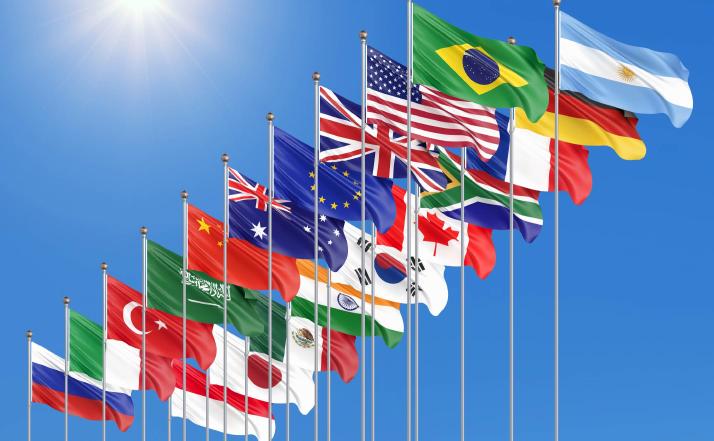
As the world moves further into a multipolar era, the diplomatic role of so-called “middle powers” is becoming increasingly important. The piece opens by defining what a middle power is: states that are neither global superpowers nor small peripheral actors, but still wield substantial diplomatic, economic and institutional influence. These countries often occupy a unique position in international politics; they are able to act as bridgebuilders, mediators, and promoters of a rules-based international order. Many emerging democracies now branded as middle powers such as Brazil, Indonesia, Mexico and South Africa; face internal political, institutional and governance challenges that constrain how far they can project leadership externally. For instance, domestic pluralism, the robustness of institutions, and the political culture of consensus all influence how a country engages in multilateral diplomacy. A key theme is that middle-power foreign policy cannot simply be about grand statements at international fora; it must reflect credible, coherent action at home. Unless domestic policies, institutional practices and political consensus align with the external posture, multilateral leadership is likely to be symbolic rather than substantive. Domestic coherence bolsters legitimacy abroad. For example, a state promoting human rights, environmental standards or free trade in international arenas must demonstrate those values internally to have credibility. Without that internal alignment, attempts to lead multilateral coalitions can falter or appear inconsistent.
There are specific national examples to illustrate how domestic political dynamics influence multilateral behaviour. In the case of Brazil, under its liberal administrations (such as those of Luiz Inácio “Lula” da Silva and Dilma Rousseff) the country pursued a policy dubbed “benign multipolarity”, advocating inclusive global governance, reforming the United Nations Security Council, deepening engagement in the World Trade Organization and leading climate diplomacy. However, under the more conservative administration of Jair Bolsonaro, Brazil shifted toward ideological bilateralism, scepticism of multilateral institutions, and a tougher environmental stance; showing how domestic politics can quickly alter global posture.
seen as an example, where foreign-policy continuity and coherence have been affected by shifts in leadership and ideology. Under Andrés Manuel López Obrador (AMLO), Mexico’s foreign policy was more inward-looking and sceptical of external alignment, following the country’s tradition of non-intervention and independence (the “Estrada Doctrine”). Mexico’s location next to the US places external constraints on its freedom to align globally; making its status as a middle power both a capacity and a limitation. In these cases, the lesson is clear: internal political will, institutional strength and external constraints all shape how middle powers engage globally. Another example is Indonesia, which under former President Joko Widodo (Jokowi) pursued the “Global Maritime Fulcrum” concept to elevate its influence across the Indian and Pacific Oceans. Under his successor, the approach shifted toward transactional bilateralism; reflecting internal recalibration and external realities. For middle-power multilateralism to be credible, the domestic backing; whether political, bureaucratic or strategic must be sustained and aligned.
Thus, broader implications can be drawn. First, it underlines that for middle powers to be effective multilateral actors, their foreign policy must emanate from national policy coherence rather than being simply reactive to global events. Second, these states must resist being merely pawns in great-power rivalry; they should aim to construct alternative institutional channels, regional leadership platforms and cross-regional linkages that align with their national interests and global goods. In doing so, the “middle” power plays can become pivot points for global order rather than bystanders. The domestic reform is integral to multilateral leadership. This means strengthening institutions, fostering transparency, implementing policy commitments, adhering to international norms, and developing domestic capacity for diplomacy and global engagement. Without domestic vitality, foreignpolicy ambition remains hollow. Middle-power diplomacy must be grounded in homegrown power; not just external alliances. The concept of “leverage” is key: middle powers may lack the sheer heft of major powers, but they can leverage their network, institutional influence and credibility if underpinned by domestic legitimacy.
Multilateralism in the 21st century is evolving: it is not only about big treaties in vast global organisations but also about smaller coalitions, issuespecific networks, regional platforms and functional cooperation. Middle powers are ideally positioned for these kinds of flexible formats; they are nimble, less encumbered by heavy legacy burdens and often more willing to experiment with new frameworks. Yet to take advantage of this, they must ensure that their domestic systems are capable of supporting such adaptability. There are four core domestic pillars for effective middle-power multilateralism: institutional strength (capable foreign policy machinery, rule of law, bureaucracy), domestic policy coherence (alignment of domestic and foreign policy goals), political legitimacy (public support, transparency, accountability) and resource base (economic and diplomatic resources to engage meaningfully). Without these pillars, a country may make bold foreignpolicy moves but lack the follow-through that turns ambition into influence. Middle powers can act as “norm entrepreneurs” and “bridge-builders” in global governance. Their value lies not just in siding with major powers but in convening platforms where diverse actors come together, in mediating conflicts, facilitating South–South cooperation, and injecting fresh dynamism into multilateral fora. But to do so effectively, these countries must bring domestic reforms and credibility to the table. Domestic behaviour and external leadership cannot be decoupled. Multilateral leadership for middle powers is not simply about speaking at international gatherings: it is about building enabling systems at home; strong institutions, policy coherence, domestic legitimacy, and resources — so that global engagement is credible and effective. The “at home” dimension is not a distraction but the starting point. For countries like Brazil, Mexico, Indonesia or South Africa (and others aspiring to similar roles), success abroad depends on success at home. If domestic reforms lag, then multilateral aspirations may remain hollow. But if domestic and external strategy align, these middle powers have a real opportunity to shape the emerging global order with agency, credibility and impact.
Dr. Sharanpreet Kaur in an Assistant Professor of International Relations at School of Social Sciences, Guru Nanak Dev University, Amritsar.
