Oil has attracted the louder headlines. But the disruption to fertiliser markets may prove more durable, and its consequences for India more structural.
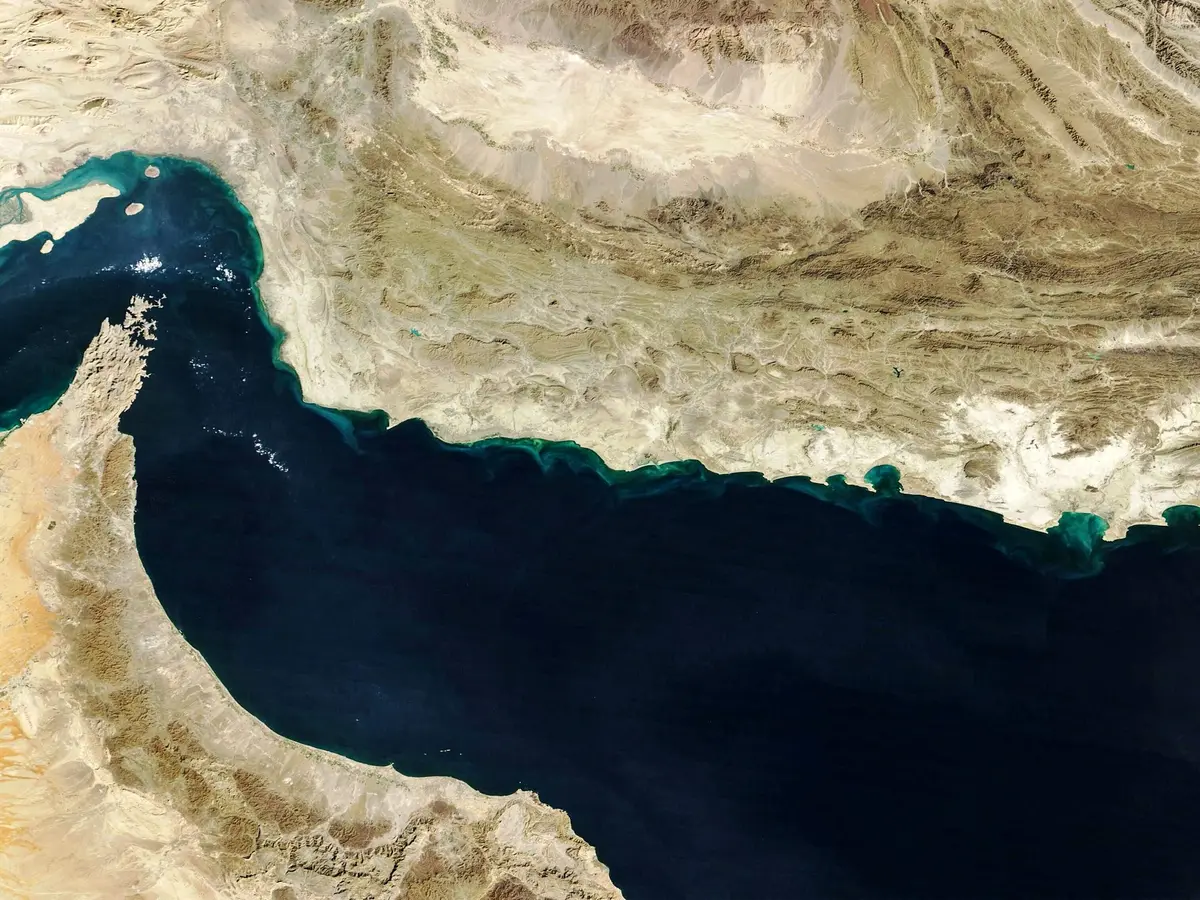
State of Hormuz (Photo: X)
In 1909, Fritz Haber demonstrated that ammonia could be synthesized from atmospheric nitrogen and hydrogen. Carl Bosch industrialized the process, and the Haber-Bosch method today sustains, by conservative estimate, roughly half of all human life on earth.
The Nobel Committee awarded Haber the Chemistry prize in 1918. The award citation did not mention that he had, in the intervening years, also developed chlorine gas for deployment on the Western Front. Science, like policy, has its selective emphases.
The feedstock for Haber-Bosch is natural gas. The largest proven reserves of natural gas sit beneath the Persian Gulf. And the Gulf’s exit to the world runs through a strait, 33 kilometres wide at its narrowest, between the coasts of Iran and Oman.
That strait is now, for practical purposes, closed.
Since the US-Israel strikes on Iran began over the weekend, Iran’s Islamic Revolutionary Guard Corps has declared the Strait of Hormuz unsafe for commercial shipping. While now Iran has allowed traffic—except for the US, Israel, Europe and their western allies there is issue of high insurance premiums.
Oil has attracted the louder headlines. But the disruption to fertiliser markets may prove more durable, and its consequences for India more structural. The strait handles roughly 35-45% of globally traded urea exports, 25% of all nitrogen fertiliser trade, and 45% of global sulphur exports, sulphur being a key feedstock for phosphate fertilisers. Three of the world’s ten largest urea exporters, Qatar (11% of global trade), Iran (10-12%), and Saudi Arabia are simply “stuck.” The Fertiliser Institute in Washington estimates that approximately 50% of global urea production is either directly affected or at risk. Even vessels that could technically transit now face war-risk insurance premiums that may make voyages commercially unviable. A physical blockage and an insurance blockage are, from a farmer waiting for urea in Haryana, indistinguishable.
India’s exposure is structural. The country sources more than 40% of its urea and phosphatic fertilisers from the Middle East. In 2024-25, imports of finished fertilisers under Chapter 31 of the Customs tariff stood at approximately $8.26 billion. Urea (HSN 31021010 and 31021090) combined at $2.38 billion. DAP (HSN 31053000) at $2.77 billion. Add the upstream raw material imports, phosphoric acid ($2.12 billion), ammonia ($1.03 billion), rock phosphate ($1.15 billion), and the total fertiliser-related import exposure was approximately $12.73 billion.
The month-specific data is more instructive, and more alarming. March and April is India’s peak pre-kharif procurement months, when imports surge ahead of the June monsoon onset. In March 2023, Oman, Qatar, and the UAE together accounted for approximately $71.5 million of India’s urea imports out of a monthly total of $85.5 million, over 83% of the month’s entire urea import bill. Oman alone was the single largest supplier, at $62.5 million. On DAP, Saudi Arabia supplied $103 million of the $300 million imported in March 2023, a 34% share, and 37% again in March 2024. On ammonia, the feedstock for domestic urea production, Saudi Arabia and Oman together accounted for over 50% of India’s March 2023 ammonia imports; for the full year 2023-24, the Gulf’s share of India’s ammonia import bill had risen to approximately 71%. The conflict has fallen, with notable precision, on the months when India is most active in every one of these markets simultaneously.
The factory floor has already felt it. IFFCO (the Indian Farmers Fertiliser Cooperative) has begun reducing output at urea plants following the suspension of Qatari LNG, its primary feedstock, after drone strikes on QatarEnergy’s Ras Laffan complex. Two other domestic facilities have similarly curtailed production. (This is not a subtle dependency. LNG is both the energy source and the hydrogen donor for Haber-Bosch synthesis.)
There is a fiscal dimension that compounds the supply problem. Under direct price control for urea, the maximum retail price is fixed at Rs 266.50 per 45 kg bag, a figure not meaningfully revised since 2012. The government reimburses producers the difference between actual cost and MRP. Emergency imports at $1100-1300 per tonne above pre-conflict levels inflate this subsidy outlay directly. The 2025-26 Union Budget projected a reduction in the fertiliser subsidy bill as part of fiscal consolidation targeting a 4.3% of GDP deficit in 2026-27. The Persian Gulf has noted this ambition with interest.
In the short run, Russia is the logical alternative, and is already under discussion in government circles. The medium-run question is where India has consistently underperformed, and where the most consequential choices now lie. IFFCO launched nano urea liquid in 2021, commercially approved under the Fertiliser (Control) Order, 1985, with the promise that one 500 ml bottle could replace one conventional 45 kg bag through foliar application. Nano DAP followed in 2023. The agronomic results under India’s diverse field conditions have been inconsistent at scale, and farmer adoption has been modest.
The Indian Council of Agricultural Research has maintained biofertiliser programmes, Rhizobium, Azotobacter, phosphate-solubilising bacteria, since the 1980s. PM PRANAM, launched in 2023 to incentivise states to reduce chemical fertiliser use, is a nudge in the right direction. None of this has moved the needle on import dependency. The reason is not difficult to identify. India’s fertiliser subsidy bill runs to tens of thousands of crores annually. Its fertiliser R&D expenditure is not in the same conversation.
A subsidy regime that makes cheap imports perpetually attractive creates no incentive for the patient, expensive work of building domestic alternatives. If the import price is always subsidised back to Rs 266.50, why would anyone invest in nano urea at scale? The incentives are misaligned, and they have been for decades.
The Green Revolution that rescued India from famine in the 1960s rested on two pillars: improved seeds and cheap nitrogen from the Gulf. The seeds were domesticated and improved over the decades that followed. The nitrogen supply chain was not.
Carpe diem, the old tag goes. Whether India acts on that knowledge is a question only the next few seasons will answer.
*Aditya Sinha writes on macroeconomics and geopolitics. Shaurya Pandey is a Technology & Finance Strategy Consultant.
