
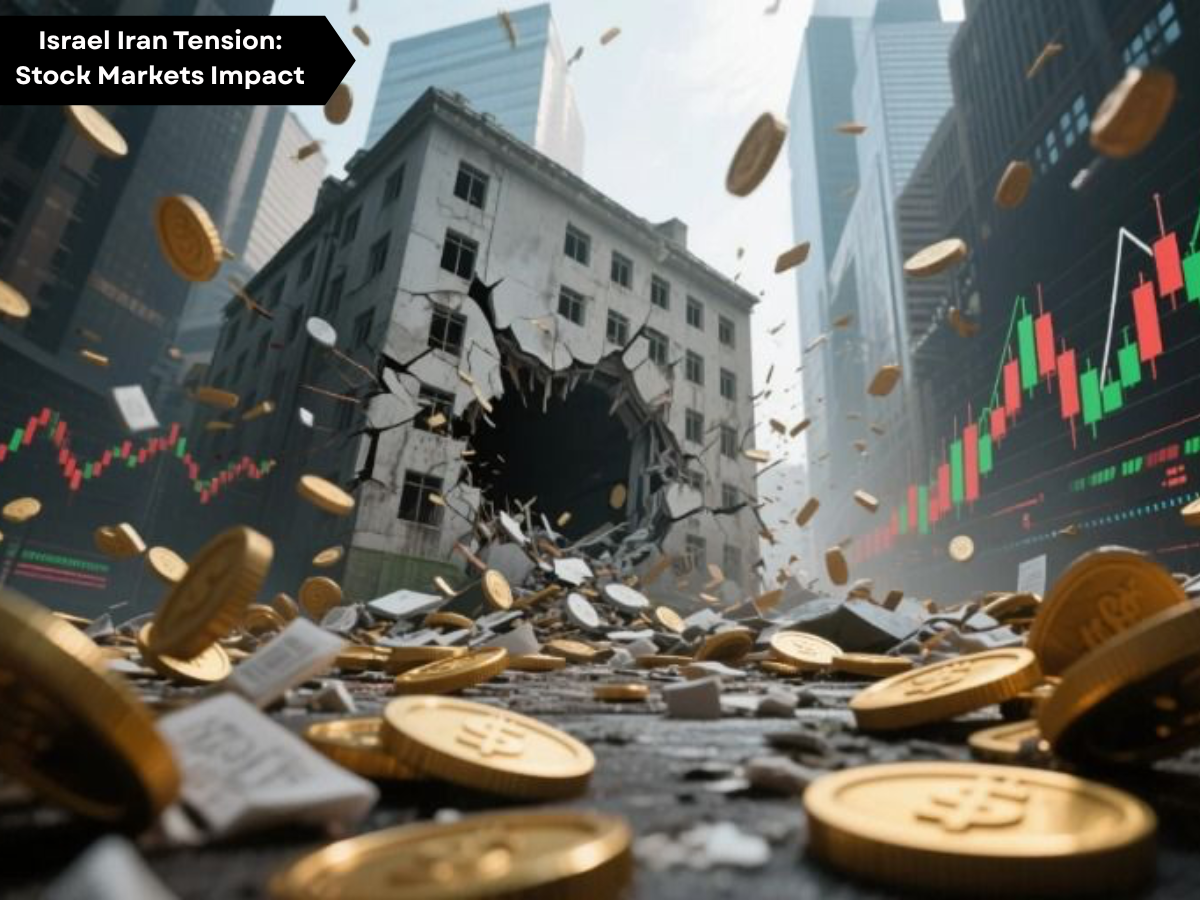
US Stock Market Update: Escalating tension between Israel and Iran has brought back a sense of uncertainty in the world financial market. The US and Israel carried out synchronized strikes on Iranian targets and the response by Tehran threatened the possibility of a regional war. US stocks are under the scrutiny of investors with the already sensitive crude oil already responding violently. This article discusses how these tensions might determine the behavior of the markets, the prices of energy, the foreign exchange and the strategy of investors.
Israel‑Iran Tension: What Could Be the Impact on US Stock Market?
Geopolitical occurrences traditionally bring short-term volatility to stock markets as risk premia increase. On the eve of the escalation of the conflict, the S&P 500 had declined approximately 0.4% on the Friday ending the largest monthly decline of the index in a year. The equity market fear index VIX was also on the rise indicating that investors were worried. Assuming that the conflict spreads or interrupts the oil supply channels, the ability to be chronically risk averse may exert pressure on equity values, particularly in industries dependent on consumer demand and capital expenditure.
Israel‑Iran Tension: Crude Oil Prices Surge Toward $100 as Global Conflict Threatens Supply
Geopolitical threats in the Middle East affecting oil prices are immediately reflected with almost 20% of the global crude oil passing through the Strait of Hormuz. The last escalation saw the price of the Brent crude rise by almost 3% to approximately $73 per barrel. The analysts caution that the disruptions would lead into Brent reaching up to 90 100 per barrel, a price that has historically lowered world growth expectations and cut corporate earnings forecasts.
Israel‑Iran Tension: Will Rising Crude Oil Pose Challenges for Indian Markets
In oil-importing nations such as India where 85-90% of the demand on crude will be covered by imports, an increase in oil will translate into increased trade and fiscal deficits. A 10% rise in the price of crude oil is likely to increase the Indian import bill by around 10 to 15 billion per year. This would absorb corporate margins, enhance inflationary pressures and decrease discretionary spending, which subsequently would have an impact on the stocks that are consumer demand related.
Israel‑Iran Tension: How Are Dow Jones Futures Reacting to Global Conflict
US futures markets provide early indication on the open prices. As a rule, Gulf crisis Dow Jones Industrial futures open with lower gaps, as traders position in risk-off. This may be aggravated by a major oil spike. Brent crude going below the 90-95 zone will prompt trading desks to value a reduced rate of economic growth and reduced corporate earnings, which will drive futures even further to the south.
Israel‑Iran Tension: Will Gold & Silver Price Surge on Rising Geopolitical Risk
Gold and silver, which are considered safe haven assets, are normally vulnerable to increased geopolitical risk. Gold prices have crept on the upside in the last few sessions with the last few drawing closer to multi-month highs. In case of tensions, gold might break through the major resistance levels of around 2,150-2,200 per ounce, whereas silver might begin to climb to about 30-35 due to the flows of safe haven and the strong demand of silver industry.
Israel‑Iran Tension: How are Bitcoin & Cryptocurrency Responding
Geopolitical stress has a different effect on cryptocurrencies such as Bitcoin. Bitcoin also fell a notch down with the equities but went back up to $68,000 indicating to some investors that crypto assets are partial risk diversifiers. Nevertheless, when there is a significant sell-off in tech stocks a crypto market is still very much correlated to them implying that Bitcoin might decline should there be a crash in the equities market.
Israel‑Iran Tension: Could Silver Prices Break into $100 per Ounce?
With the current state of affairs, it is not likely that silver will hit 100 per ounce of gold, however, gold might rally. The industrial use aspect on the demand side of silver renders the price more vulnerable to growth opportunities as compared to pure safe-haven demand. Even during powerful safe-haven rallies, silver is generally heading to the range of 35 -40, which is much less that the 100-level proposed in the speculative cases.
Israel‑Iran Tension: How Currency Markets are Reacting to the Conflict
The currency markets are responding in an unbalanced manner. The Israeli Shekel currency was steady in a range of about 3.09-3.14 per dollar which is attributed to the strong reserves of Israel and its strong economy. In comparison, the Iranian Rial fell to historic lows of close to 1,749,500 to the USD, which is virtually equivalent to a decline by almost a third of the early January rates. These currency actions underscore the different fundamentals of the economies and the confidence of the investors.
Israel‑Iran Tension: Will Stock Markets Open Lower on Monday?
Stocks will open negatively biased considering that there will be an overnight increase. Analysts observe that geopolitical risks therefore normally result in reduced openings especially on international indices that are linked to cyclical industries. The extent of the decline will be determined by the initial trading trends and the further developments of the price of crude.
Israel‑Iran War Impact: What to Expect on March 2 Amid War Escalation
- Stock markets might start the day lower as investors seek safer options.
- Crude oil prices could climb further if tensions around the Strait of Hormuz escalate.
- Gold and U.S. Treasuries may see increased demand as safe-haven assets.
- Emerging markets could experience capital withdrawals.
- Currencies of countries heavily reliant on oil imports may lose value against the dollar.
What Should Investors Do
- Be cautious of the movements in crude oil prices, as energy shocks have the ability to impact the markets rather quickly.
- Invest in diversified sectors such as utilities and basic consumer goods, which tend to be defensive in nature.
- Invest in gold as a safe haven in case of increased market risks.
- Try to limit exposure to highly cyclical stocks to avoid vulnerability.
- Be aware of the latest developments in geopolitics, as anything unexpected can happen at any given time.
Israel‑Iran Tension: Gulf Stock Markets Slide Amid Rising Regional Risk
The heat has already been experienced to the Gulf markets. The Tadawul All Share Index of Saudi Arabia started close to 5% underperforming and subsequently recouped losses due to geopolitical risk being taken into account by investors. As Middle Eastern equities decline, risk sentiment in the world market may worsen and there will be greater sell-offs both in emerging and developed markets.
FAQ’s: Israel‑Iran War Impact on the Stock Market
Q: Will the US stock market fall sharply?
A: Short‑term drops are possible, but sustained declines depend on how long the conflict lasts and whether oil supply is disrupted.
Q: Are oil prices the biggest risk?
A: Yes, a spike above $90 per barrel would add inflationary pressure and weigh on markets.
Q: Should investors exit stocks?
A: Not necessarily strategic diversification and defensive positioning are more prudent than full exit.
Q: Will tech stocks be hit hardest?
A: Growth stocks may underperform if interest rates rise or if risk aversion intensifies.
Q: Do safe‑havens always benefit?
A: Typically, gold, Treasuries and defensive assets see inflows during geopolitical stress.
Q: Which sectors may be most impacted?
A: Technology, travel, and consumer discretionary stocks could face pressure, while energy and defense stocks may see support.
Q: Will the US stock market crash on Monday?
A: Full crash is unlikely; U.S. indexes often dip initially during geopolitical shocks, but historical data shows most sell-offs reverse if conflicts don’t widen rapidly.
Disclaimer: The information provided in this article is for informational purposes only and does not constitute financial advice. The Sunday Guardian suggests that readers consult with a certified financial advisor before making any investment or money-related decisions. The stock market involves significant risk.




