
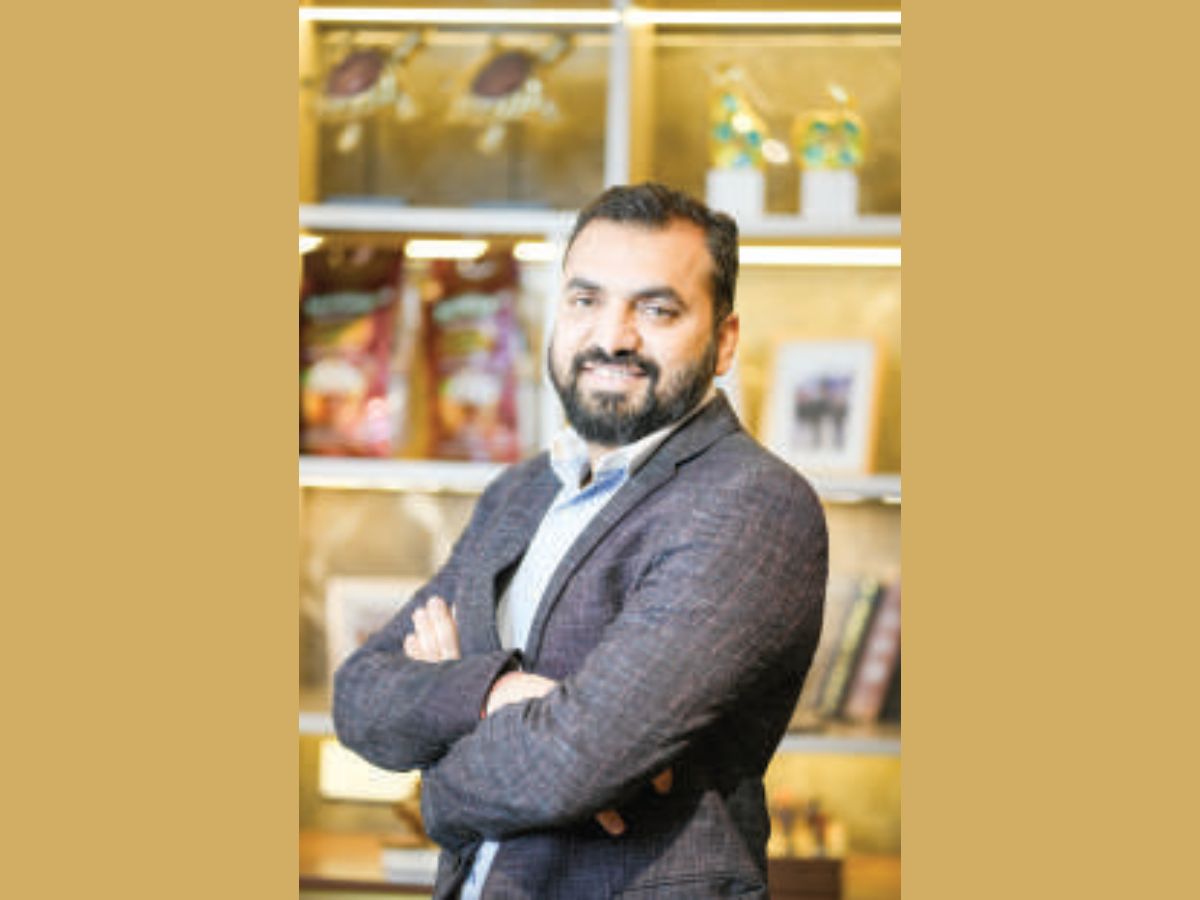
New Delhi: In an exclusive interview with The Sunday Guardian, Amit Goel, Founder and Managing Director of KNAM Foods, discusses how the company is redefining the centuries-old legacy of Basmati rice for today’s global market. From cutting-edge automation and low GI offerings to navigating policy changes and leveraging new trade deals, Goel explains how KNAM Foods is blending tradition with innovation to stay ahead in a competitive industry.
Q. Basmati rice is a centuries-old product. How do you make something so traditional feel modern and relevant to a global audience?
A: Indeed! Basmati Rice has a long-standing legacy and rich heritage, and we at KNAM Foods are very proud to be part of that legacy. We believe tradition and modernity can go hand in hand.
What we’ve done is combine the traditional essence of Basmati, its aroma, texture, and taste, with the best of today’s technology. Our rice mills are fully automated with cutting-edge machinery, so from separating the paddy to packaging the final product, everything is handled with precision and care.
We’ve also kept a close eye on what global consumers are looking for. Health is a big priority today, so we’ve introduced pesticide-free Basmati rice with a low glycaemic index, something that appeals especially to health-conscious markets in Europe and the U.S.
And we believe that every bag of rice we export has a little piece of India. It carries our heritage, and it also meets the expectations of a modern, global audience that values quality, sustainability, and transparency.
So, in short, it’s about staying true to the roots but evolving with the times, and that’s exactly what we strive to do every day.
Q. With AI, automation, and new-age machines in your mills, you’ve turned rice production into something futuristic. Do you see yourself more as an innovator or a traditionalist?
A: Honestly, I’d say I’m a bit of both. At heart, I deeply respect tradition. I come from a family that’s been connected to agriculture, and I’ve grown up understanding the importance of soil, farmers, and the legacy of Basmati rice. That connection keeps me grounded.
But at the same time, I truly believe innovation is the way forward, especially when you’re working in a global market. So yes, we’ve invested in modern, automated rice milling facilities. These technologies help us ensure consistency, hygiene, and efficiency, all while preserving the natural qualities that make Basmati rice so special.
So, for me, it’s not about choosing between being an innovator or a traditionalist; it’s about blending both. I like to think we’re using the power of innovation to protect and enhance our traditions, not replace them.
Q. Many people associate rice with high carbs and blood sugar spikes. How is your low-GI basmati rice changing this perception, especially in diabetic or fitness communities?
A: Yes, that’s something we hear a lot—that rice is high in carbs and not great for people with diabetes or those watching their fitness. At KNAM Foods, we took that seriously and introduced a low glycemic index Basmati rice that helps change this perception.
It’s the same aromatic, long-grain rice people love; however, it has slower digestion and absorption rates, so it doesn’t spike blood sugar levels. That makes it a great option for diabetic individuals and health-conscious consumers.
We’ve seen growing interest from fitness communities and international buyers who want healthy food without compromising on quality or taste. For us, it’s about showing that rice can still be part of a healthy lifestyle; you just have to choose the right kind.
Q. Over the past few months there have been changes in rice export policies from India? Are these changes significant to the industry and how does the industry stand to benefit from them?
A: Yes, there have been some important changes in rice export policies recently. The government had put restrictions & duties and subsequent relaxations on some rice varieties to control domestic prices and ensure food security in India.
While this did impact overall exports, it also gave a push to focus on premium rice types like Basmati and pesticide-free rice, which are still in demand globally. Further with trade agreements across countries like the UK shall benefit the trade.




