
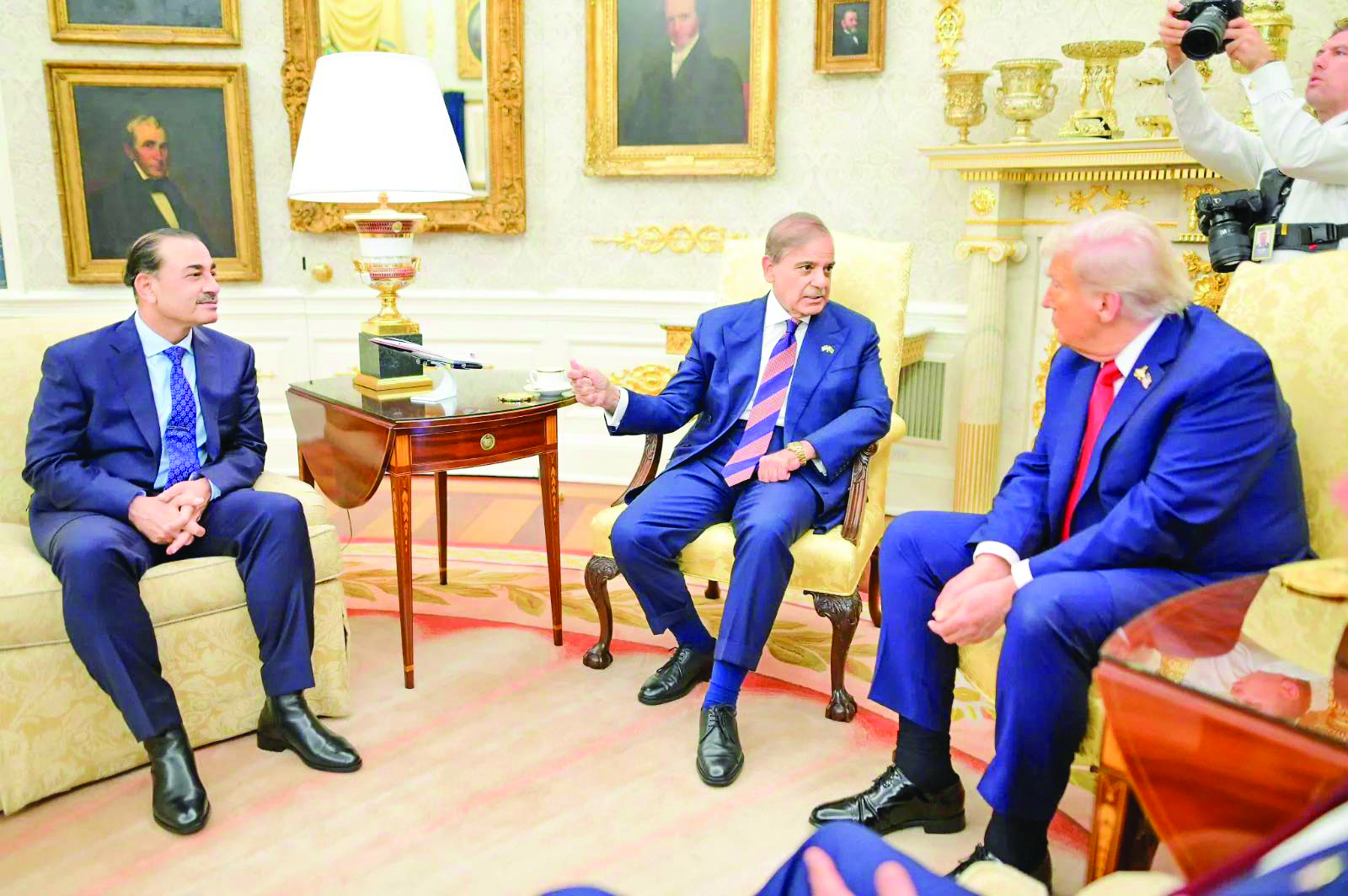
At the recent Gaza peace summit in Sharm el-Sheikh, Egypt. President Trump publicly referred to General Asim Munir as his “favourite Field Marshal”. Trump has displayed a remarkably warm and friendly relationship with the Pakistan’s army chief. As the head of Pakistan’s military, Munir offers an opportunity for direct dealings, which fits Trump’s transactional approach to foreign policy.
Recent developments indicate how Trump is getting drawn into Pakistan’s “milibus” or “military’s business” syndrome. “Milibus refers to the military’s vast, unaccountable, and non-transparent business empire. This military capital is used for the personal benefit of the armed forces’ leadership but is not recorded in the official defence budget. The “milibus” provides the military with financial autonomy and increases its interest in maintaining political power. The military’s business interests are frequently intertwined with its political influence, undermining civilian institutions.
The term “milibus” was coined by analyst Ayesha Siddiqa in her 2007 book “Military Inc.: Inside Pakistan’s Military Economy”. She estimated the military’s business empire to be worth at least $20 billion at the time. Recent reports suggest this figure has grown significantly.
The milibus’ foundation was laid by Pakistani’s first military ruler, Ayub Khan in the 1960s, but it expanded dramatically during subsequent dictatorships. The military justifies these ventures as welfare programs for its personnel, but critics point out that the benefits are disproportionately concentrated among the officer class.
The military’s economic interests span nearly every sector of the Pakistani economy, making it the country’s largest business conglomerate. Milibus operates through various channels: Four main military-controlled Foundations—Fauji Foundation, Army Welfare Trust, Bahria Foundation, and Shaheen Foundation manage vast business empires. The military runs a wide range of enterprises—from bakeries, farms, and petrol pumps to major industrial plants, banks, and insurance companies. It is also directly involved in institutional businesses like commercial banks such as the Askari Bank media networks, cement plants, and the National Logistics Cell (NLC), which manages transportation and toll collection.
In addition, the military is a big player in the real estate sector. The military controls significant, high-value real estate across the country, particularly through the Defence Housing Authority (DHA). Land is often acquired at subsidized rates or is granted for military service. Individual officers receive personal benefits, including valuable land and post-retirement business opportunities. The military’s extensive involvement in Pakistan’s economy has led to accusations of widespread corruption and self-enrichment among the top ranks.
Top generals in Pakistan have amassed immense wealth, sparking public outrage and debate over military corruption. The allegations point to lucrative land allotments, military-run businesses, and undeclared assets, with several high-profile cases involving senior officials. Journalistic investigations and leaked financial documents, such as the Pandora Papers, have revealed several Pakistani military generals and their family members who have acquired properties and other assets abroad. These disclosures have fuelled public scrutiny regarding the accumulation of wealth by the military elite in a country facing significant economic challenges.
Multiple media outlets have claimed that Asim Munir is personally profiting from his official role. It is alleged that his personal wealth is growing because of his position as army chief, which is because he is overseeing a vast military business empire. Munir acts as the CEO of this vast conglomerate and benefits from its profits.
Accusations of corruption and the accumulation of wealth by Pakistani generals are not new. After leaving office, General Pervez Musharraf spent long periods living in luxury abroad, including in Dubai and London. Reports indicate he purchased expensive apartments in London and the UAE following his retirement. General Qamar Bajwa was the army chief in Pakistan before Asim Munir. A 2022 investigative report by journalist Ahmad Noorani alleged that General Bajwa’s family rapidly amassed significant wealth, including properties abroad, during his tenure as army chief. His predecessor was General Ashfaq Parvez Kayani. The Pandora Papers revealed offshore dealings involving General Kayani’s brothers. Claims have also been made on social media and in some reports that Kayani owned property in Australia. As head of the military’s media wing, General Asim Saleem Bajwa was linked to an extensive business empire in the United States, which included numerous Papa John’s pizza franchises. A former Inter-Services Intelligence (ISI) official, Major General Nusrat Naeem reportedly established an offshore company in a tax haven shortly after his retirement.
There is increasing evidence that Trump recognises the powerful role of Pakistan’s army chief and is leveraging this relationship to advance his financial interests. This coincides with a significant shift from his earlier stance towards Pakistan and has been highlighted by several recent events and public comments.
In April 2025, the Trump family owned finance platform called World Liberty Financial (WLF) signed a “Letter of Intent” with the newly formed Pakistan Crypto Council (PCC) to accelerate blockchain innovation and the integration of decentralized finance. The deal-making was reportedly attended by high-profile Pakistani officials, including Prime Minister Shehbaz Sharif and army chief General Asim Munir. Concerns have been raised over why military officials were present at a meeting for a civilian government initiative.
Following Trump’s meeting with Munir on June 10, 2025, his administration announced its intention to help Pakistan develop its untapped oil and mineral reserves. Three months later, in September, Pakistan’s Frontier Works Organisation (FWO) signed a $500 million Memorandum of Understanding (MoU) with Missouri-based US Strategic Metals (USSM). The Frontier Works Organisation (FWO) is a military-engineering organization of the Pakistan army which constructs infrastructure projects like highways and tunnels.
In conclusion, Pakistan’s army chief has made himself useful to the US by offering assistance on matters like critical minerals, potentially giving himself leverage. Pakistan’s military is seen by Trump as a more reliable conduit for executing tactical goals than its civilian government. The warming US-Pakistan military relationship has caused dismay and concern in Indian policy circles. By prioritizing temporary, transactional gains with Pakistan, Trump’s approach risks harming the more vital, long-term strategic partnership with India.
Prabhu Dayal is a retired ambassador of India.




