
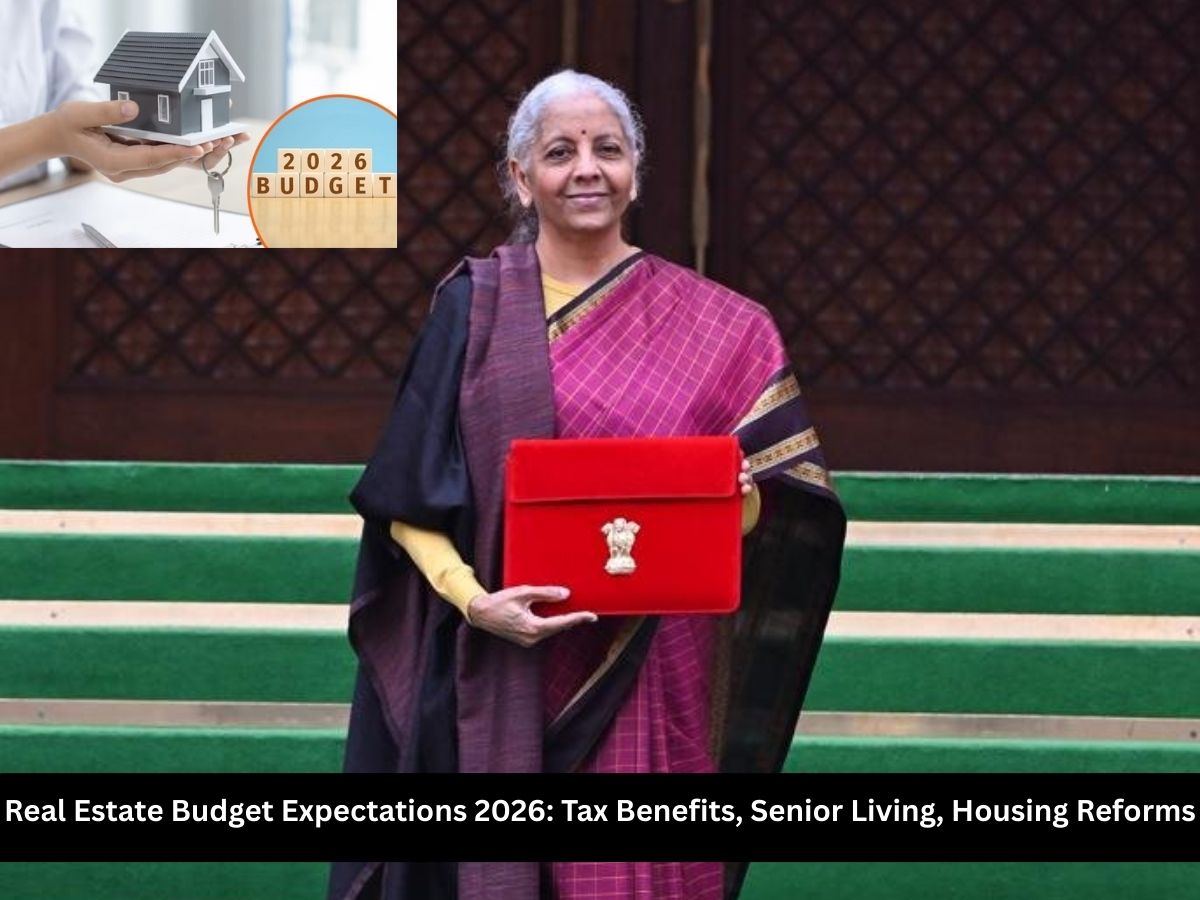
Finance Minister Nirmala Sitharaman is set to present Budget 2026 today at 11a.m. The real estate industry hopes the government will give special attention to affordable housing and rental housing. Developers and Real Estate industry groups want changes in housing definitions, better tax benefits for buyers, and policy support to make budget homes more practical to build.
Union Budget 2026: Should the Definition of Affordable Housing Be Updated?
The current rules for affordable housing have not changed since 2017. At present, unit sizes are limited to 60 sq metres in metro cities and 90 sq metres in non-metros, with a ₹45 lakh price limit. According to CREDAI, this cap does not match today’s rising land and construction costs.
Another issue is that different government schemes like PMAY, RBI, NHB, and RERA use separate definitions, which creates confusion and paperwork challenges.
CREDAI has suggested raising carpet area limits to 90 sq metres in metros and 120 sq metres in non-metros, removing the price cap completely, and using a common definition across sectors. It believes an area-based system will increase housing supply in cities, reduce compliance issues, and boost jobs and economic activity.
NAREDCO also wants the definition revised. It has proposed that homes priced up to ₹75–80 lakh should be considered affordable instead of the current ₹45 lakh limit.
Union Budget 2026: Can Rental Housing Get a Policy Push?
CREDAI has asked the government to introduce a National Rental Housing Mission with tax benefits for both builders and tenants. Rapid urban growth and migrant movement have increased the need for proper rental housing, but the organised rental sector remains weak.
“CREDAI recommends establishing a National Rental Housing Mission to develop large-scale affordable rental stock in tier-1 and tier-2 cities through fiscal incentives for developers, tax relief for tenants, and institutional participation. This initiative will formalise the rental market, curb informal settlements, support workforce mobility, and create a sustainable investment class without significant budgetary outlay,” it said.
NAREDCO also supports rental housing growth. It pointed out that rental income in housing is only 1–3%, which makes projects unattractive for developers. It believes tax incentives and policy support can make rental housing more viable.
Union Budget 2026: Should Housing Loan Interest Deduction Limits Be Raised?
Industry groups say the ₹2 lakh limit on housing loan interest deduction has not been revised in more than ten years. With higher property prices and loan amounts today, many middle-class buyers pay ₹4–6 lakh in annual interest, reducing the benefit of the current limit.
CREDAI has suggested removing the cap for the first self-occupied home and allowing this benefit under the new tax regime too.
NAREDCO has also asked for the limit to be raised to ₹5 lakh and has requested industry status for the real estate sector to support further growth.
Union Budget 2026: Should Senior Living Projects Get Infrastructure Status?
With India’s ageing population, demand for senior living homes is increasing. Developers in this segment want policy backing, especially infrastructure status, which would allow easier access to long-term funding at lower costs.
They also want pension-linked financial products that help seniors turn their savings into steady monthly income.
Experts say infrastructure status will improve funding access and encourage better facilities across cities. Industry players also want a central agency to bring uniform policies across states.
Union Budget 2026: Should Builders Be Held More Accountable to Homebuyers?
The Forum for People’s Collective Efforts, a homebuyers’ group, has said developers must face strict accountability if they delay projects or fail to meet promises.
It suggested that if buyers lose interest subsidy benefits for payment defaults, builders should also face penalties for delays. The group proposed adding all EMIs received by defaulting promoters to their profit as a penalty.
“The underlying principle must be unequivocal: a promoter’s promise to an allottee is sacrosanct and non-negotiable. Balanced accountability on both sides is essential to restore trust in the real estate sector and enable it to contribute meaningfully to the country’s economic growth,” it said.
The real estate sector is hoping Budget 2026 will bring reforms that make housing more affordable, boost rental supply, support senior living, and improve accountability. These steps could help the sector grow while addressing the housing needs of different sections of society.




