
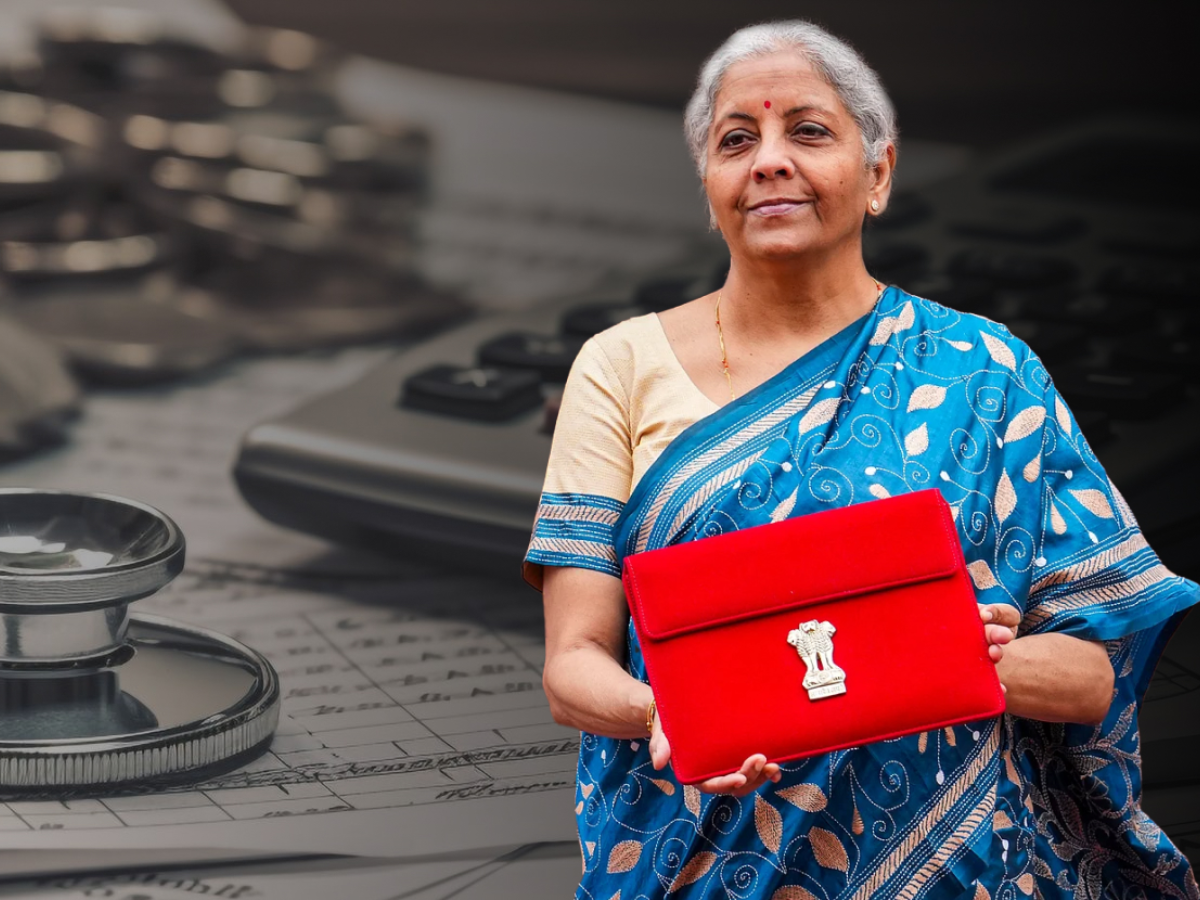
The story of Indian healthcare is not witnessed through policy documents—it is evidenced through the everyday realities driven by our diverse, rapidly growing, and ageing population. While disparities in medical access, the rise of non-communicable diseases (NCDs), healthcare worker shortages, and increasing treatment costs continue to pose complex and intricate challenges, the healthcare system in India continues to evolve. It is amidst these realities that the latest national healthcare budget must find its true impact.
Against this backdrop, the Union Budget 2026-27 offers a moment of cautious optimism. The framework of this budget marks the Indian government’s sustained commitment to building a resilient, inclusive, and future-ready healthcare system. With a record-breaking allocation of Rs 1,06,530.42 crore to the Ministry of Health and Family Welfare, it signals a serious intent to strengthen public health for the Indian population. Indeed, the budget’s emphasis on a “prevention-first and innovation-led” approach is both timely and necessary.
Acknowledging that healthcare is the cornerstone of national development, the Union Budget of 2026-27 seeks to achieve comprehensive growth in multiple aspects of healthcare. One of the most encouraging aspects of this budget is the renewed focus on healthcare infrastructure. Under the Pradhan Mantri Ayushman Bharat Health Infrastructure Mission (PM-ABHIM), funding for critical care blocks, laboratories, and district hospitals has seen a substantial boost of more than 67%. The plan to expand emergency and trauma care capacity across district hospitals is particularly commendable. Too often, patients in smaller towns lose precious hours being referred to distant tertiary hospitals. Strengthening district-level emergency and trauma care can mean the difference between life and death. If implemented well, this initiative could dramatically reduce preventable deaths in underserved regions. Similarly, the proposal for Regional Medical Hubs under public-private partnerships could enhance medical tourism and improve domestic capacity, provided public interest remains central to the mission.
Needless to say, infrastructure is only as useful as the people who govern it. This budget acknowledges the reality that hospitals (especially in resource-limited areas) still struggle with shortages of nurses, technicians, therapists, and caregivers. While previous reforms have focused on expanding medical education, the 2026-27 budget has broadened this vision by investing in allied health professionals and caregivers. Modern healthcare is a team effort. As such, the plans to add thousands of trained technicians, therapists, and geriatric caregivers could strengthen the backbone of our healthcare system and improve the quality of patient care across India.
Affordability is a cornerstone of equitable healthcare and serves as a central theme of the new budget. In this context, increased support for the Pradhan Mantri Jan Arogya Yojana and the National Health Mission promises wider coverage, better care delivery, and stronger grassroots services. The exemption of customs duty for several life-saving drugs and continued financial support for rare disease treatment will cut down the burden of out-of-pocket expenditure. For patients battling cancer, genetic disorders, and chronic illnesses, such measures bring renewed hope, ensuring that economic hardship does not become a barrier to medical treatment and promoting equitable access to advanced but essential therapies.
The Union Budget’s enhanced focus on specialised care and disease control reflects a good understanding of India’s epidemiological transition. Tuberculosis and infectious diseases remain challenges, but lifestyle-related disorders (NCDs) and cancer are becoming increasingly prevalent. As such, investments in cancer centres, transplant units, AI-enabled facilities, and the National AIDS and STD Control Programme reflect a willingness to confront these realities with the latest clinical tools and sustained funding. This forward-looking approach through sustained investment in modern, technology-driven healthcare is exactly what the doctor ordered! This forward-looking approach is also reflected in the overdue attention the budget gives to mental health, which has long been relegated to the margins of public policy. The proposal to establish a second NIMHANS in North India and upgrade major mental health institutes is a mark of maturity in policy development, especially since physical ailments are often interconnected with anxiety, depression, and stress, making psychological well-being an integral component of public health.
Another area where momentum is building is digital health. Increased funding for the Ayushman Bharat Digital Mission seeks to strengthen electronic health records, telemedicine, and interoperable platforms in India. For doctors and patients alike, this could reduce duplication, improve continuity of care, and make the system more transparent. That said, digital tools must be designed with inclusivity in mind, so that rural and elderly populations are not left behind. Digital health will be an essential component of this “prevention-first and innovation-led” forward-seeking approach to healthcare in India.
Despite looking toward the future, the budget does not forget our country’s roots. This budget contains provisions to support India’s traditional medicine system through higher allocations to the Ministry of AYUSH and upgrades to research and training institutions. The continued development of the WHO Global Traditional Medicine Centre in Jamnagar reflects India’s ambition to integrate traditional systems with modern scientific standards and preserve India’s unique healthcare heritage. Such integration could expand patient choice while maintaining safety and credibility, as long as strict scientific standards are uniformly maintained. Perhaps the most ambitious initiative in this budget is the “Bio Pharma Shakti” programme, with an outlay of Rs 10,000 crore over 5 years. By promoting the development of biologics, biosimilars, and clinical research, India has raised a clarion call to cement its position as a global biopharmaceutical leader. For the healthcare sector, this promises greater self-reliance, faster access to advanced therapies, and a stronger research culture. If nurtured carefully, this will also help us retain and develop our country’s scientific talent and boost economic growth.
The overall signals of the healthcare budget remain positive, but the road ahead will be wrought with challenges. Budgets announce intent, but the actual outcomes depend on execution. While implementing the framework of this budget, transparency and quality assurance will be paramount. After all, safety, ethics, and professional standards should not be compromised for rapid expansion. In addition, although allocations have increased over Rs 1 lakh crore for the first time, the overall healthcare expenditure still lags behind many low- and middle-income nations. As our economy continues to grow, perhaps the healthcare budget should also be increased. One hopes that the future allocations for healthcare will exceed the current meagre allocation of 1.93% of the national budget, which will ensure greater public health protection. Ultimately, the proof will be in the pudding of whether the promises of the Union Budget 2026-27 translate into better-equipped hospitals, motivated professionals, affordable medicines, and equitable care for all citizens across geographies and income levels. If implemented well, this budget could mark a turning point in India’s healthcare journey, bringing us closer to the goal of universal, affordable, and high-quality healthcare for a healthy, productive, and prosperous ‘Viksit Bharat’. The ambitious plans proposed by the Honourable Finance Minister should be matched by individual and collective discipline to convert these hopes into tangible achievements.
Dr C. Venkata S. Ram, a globally acclaimed hypertension expert, is a senior consultant at the Apollo Group of Hospitals.




