US stocks crash $1T Today: Dow -453 pts, S&P -91, Nasdaq -361 on Iran oil spike + 92K job losses. Worst week in year, stagflation fears rise.
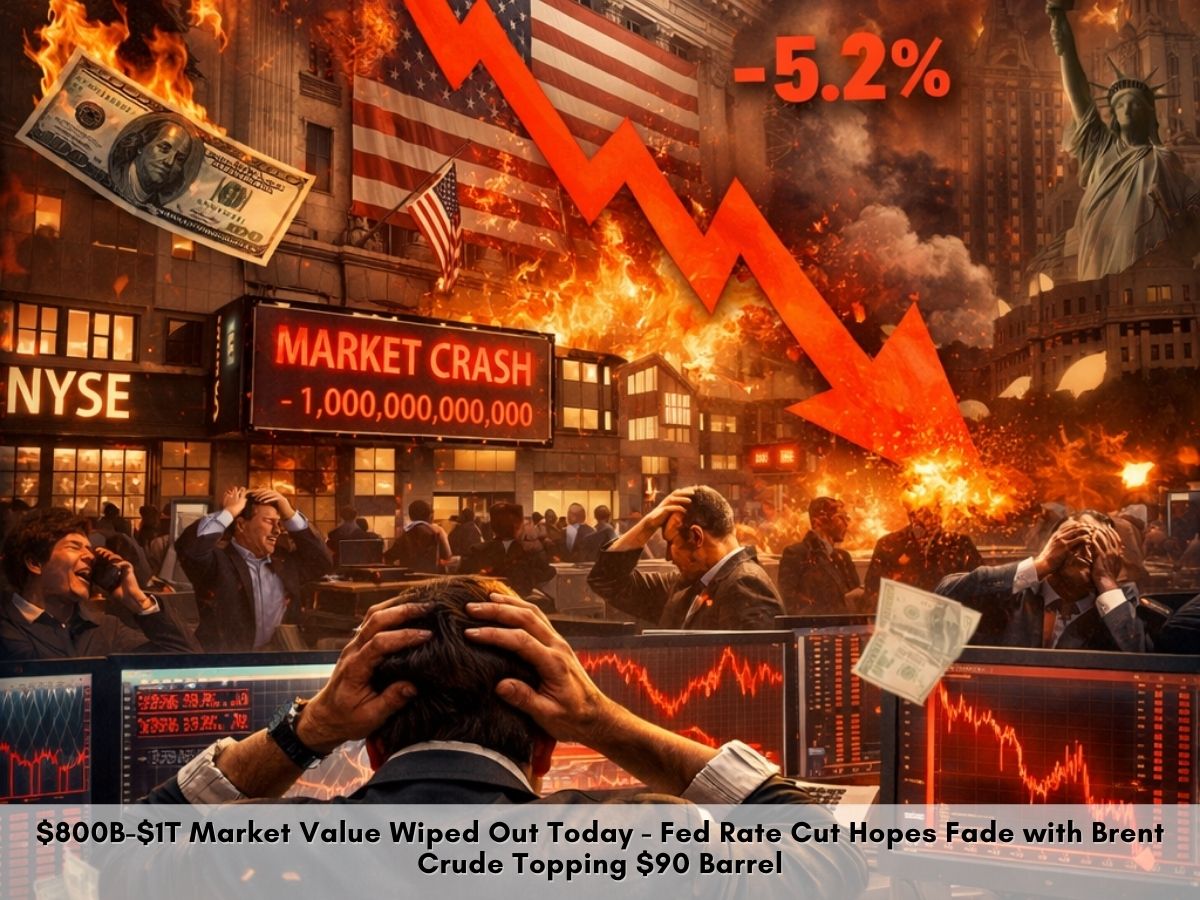
US Stock Market Crashes Today: $1 Trillion Lost as Iran War Oil Surge Meets Jobs Report Disaster (Image: File)
Wall Street traders watched in stunned silence Friday as America's major stock indexes suffered their worst single-day drubbing in months, vaporizing between $800 billion and $1 trillion in market value during a frenetic session driven by war jitters and unexpectedly grim economic numbers. The Dow Jones Industrial Average shed 453 points to close at 47,501, after plunging as much as 950 points in morning trading that evoked memories of pandemic-era panic. What began as a rocky week metastasized into full retreat, with the S&P 500 down 91 points to 6,740 and Nasdaq cratering 361 points to 22,387—marking the steepest weekly losses in nearly a year.
Crude oil prices skyrocketed beyond $90 per barrel due to the relentless drumbeat of US-Israeli assaults on Iranian targets, as speculators priced in the terrifying eventuality of Tehran choking off the Strait of Hormuz, which is the world's oil lifeline transporting one-fifth of global supply. Every missile exchange increased concerns about protracted interruptions, hurting energy-dependent industries like manufacturing and airlines while benefiting primarily the largest oil corporations. Investors who placed bets on a speedy de-escalation are now confronted with a harsh reality: neither the conflict nor the commodities pumps driving inflation are showing any signs of abating.
🚨🇺🇸 BREAKING: $800,000,000,000 has been wiped out from the US stock market at open. pic.twitter.com/efFQS4XVBG
— Jackson Hinkle 🇺🇸 (@jacksonhinklle) March 6, 2026
The global inferno was exacerbated by Friday's labor report, which revealed an unexpected loss of 92,000 jobs last month. This was the first decrease in years, and it immediately brought back memories of the stagflation nightmares of the 1970s, which were characterized by poor growth and skyrocketing prices. Economists had penciled in modest gains, making the shortfall feel like a sucker punch to already rattled markets. The data shredded hopes for aggressive Federal Reserve rate cuts this spring, as policymakers now grapple with resurgent inflation nobody saw coming just weeks ago.
With oil's relentless climb and labor markets stumbling, bond traders sent Treasury yields spiking, pricing out any near-term Fed easing that Wall Street desperately needed. The VIX fear index—the market's panic thermometer—surged 12% Friday and now sits 70% higher year-to-date, reflecting investor terror over a toxic brew no central bank can easily fix. Tech heavyweights led Nasdaq lower while defensive plays offered scant refuge, underscoring how quickly sentiment flipped from cautious optimism to outright flight.
This meltdown caps a 2026 already scarred by turbulence, including January's $1.4 trillion "Greenland tariff" wipeout that briefly halted global trading. Investor confidence is further undermined by every new shock, from concerns about the AI bubble to never-ending war reports. The key issue remains as markets enter an uncertain weekend: will Monday's open be dominated by jobs data or Iran headlines?
A: $800 billion to $1 trillion erased across major indexes in single session.
A: Iran war oil spike over $90/barrel plus shocking 92,000 February job losses.
A: Dow -453 pts (47,501); S&P -91 pts (6,740); Nasdaq -361 pts (22,387).
A: Oil-driven inflation surge kills easing hopes amid weak jobs data.
