
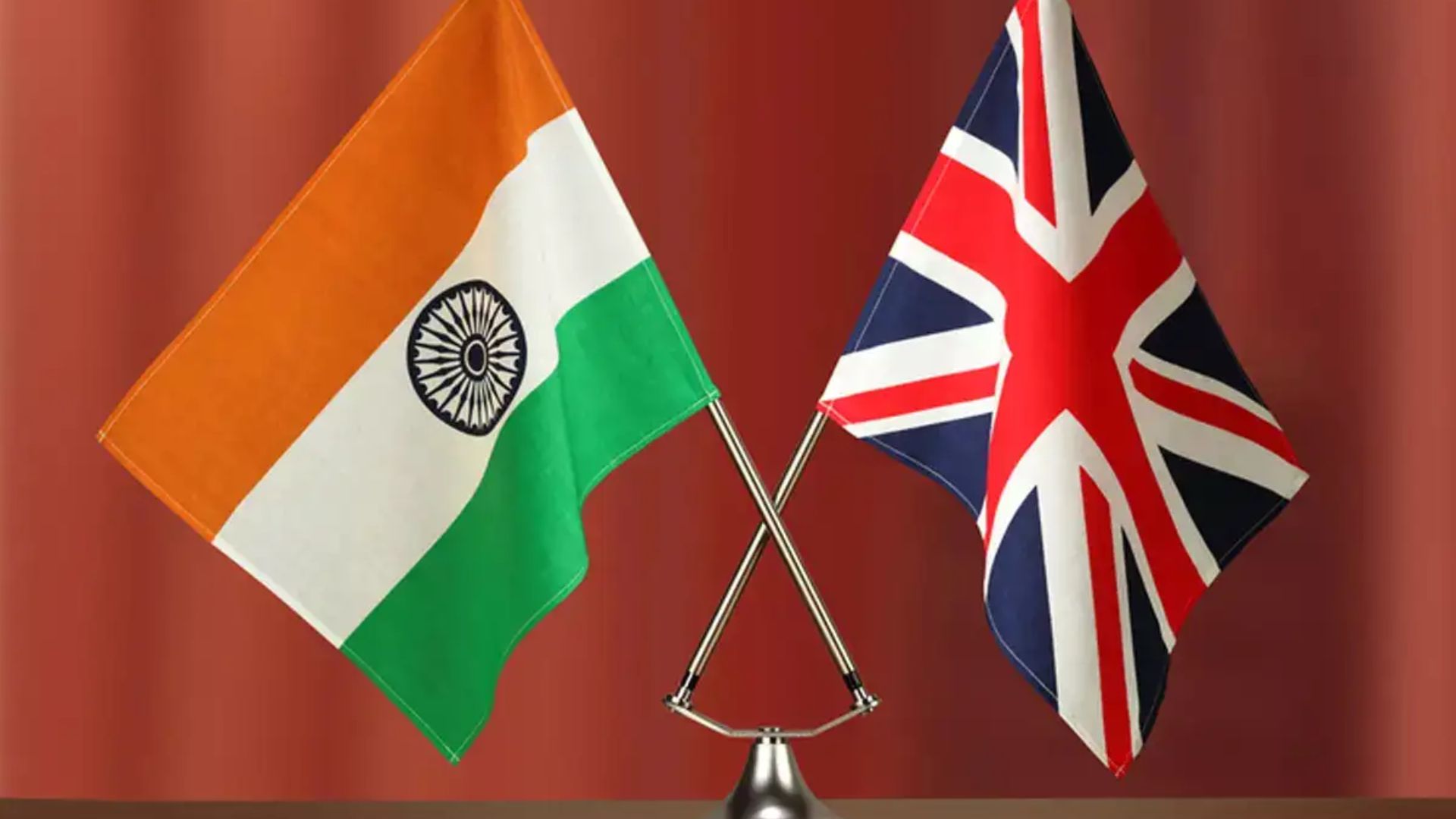
The newly minted UK-India Free Trade Agreement (FTA) isn’t just about boosting £36 billion in bilateral trade. It’s a masterstroke in strategic repositioning for both nations in an era defined by supply chain fragmentation and democratic anxiety. At a time when the U.S. and EU are retreating behind industrial subsidies and China is openly weaponizing trade, this pact signals a bold bet on democratic resilience, economic complementarity, and a shared vision for the 21st century. While critics obsess over market access minutiae, they’re missing the bigger picture: this is Britain’s most consequential post-Brexit partnership, and arguably India’s most potent Western alliance since independence.
Compared to the UK’s relatively modest deals with Australia or New Zealand, the India FTA offers vastly greater upside, which is up to £28 billion in additional trade by 2035. India’s $3.7 trillion economy, its 1.4 billion people (with a median age of 28), and its rapidly accelerating technological ambitions present a scale and dynamism no Anglosphere nation can match. This isn’t a transaction; it’s a fusion of British innovation capital and India’s human capital engine.
In a world still debating how to regulate AI, the UK and India are already acting. They’re constructing a digital corridor between London and Bengaluru. Indian IT giants like TCS and Infosys already employ more than 110,000 people in the UK, driving nearly a third of London’s fintech activity. The FTA’s digital provisions will push joint R&D in emerging technologies like quantum computing and cybersecurity. At a moment when China controls 70% of rare earth processing, this partnership is essential to safeguard democratic tech futures.
India is also the pharmacy to the world, supplying 70% of WHO vaccines and a quarter of the UK’s generic drugs. The FTA’s mutual recognition of drug approvals could save the NHS over £2 billion by the end of the decade. But beyond cost savings, it creates a resilient alternative to China in global pharmaceutical supply chains, especially as India ramps up domestic API production under its £1 billion PLI scheme.
And then there’s education, which is regarded a true soft power superhighway. While the United States is losing ground as an attractive destination for international students, especially under the uncertainty of Trump-era policies, the UK continues to rise in appeal, with its universities consistently ranked among the world’s best and offering globally renowned courses across both STEM and non-STEM disciplines. From engineering and computer science to law, business, and creative arts, the UK higher education sector remains a magnet for top-tier global talent, with QS World Rankings placing four UK institutions in the global top 10 and international student satisfaction rates exceeding 90%.
With 120,000 Indian students in British universities, bringing over £3 billion into the UK economy, this is more than just numbers. It’s a long-term pipeline of talent and diplomacy. One in four UK tech founders is an immigrant, and India tops the charts as a source of that entrepreneurial drive. Yet this asset must be managed wisely. Concerns around visa overstays are real, and must be met with smart, not reactionary policy. Universities need tighter oversight. Institutions with poor records should be monitored, and a public accountability index could incentivise better compliance. But the solution is not to slash post-study work rights. Instead, the government should double down on scrutiny post-visa expiry while preserving the UK’s appeal to top global talent.
There are valid concerns about over-reliance on UK-trained graduates, particularly as India works toward strengthening its own higher education ecosystem. But Rome wasn’t built in a day. Building robust, future-ready institutions will require time, structural reform, and a fundamental rethinking of governance models, especially those still shaped by outdated frameworks like the UGC. In the interim, Indian graduates trained in the UK offer a strategic advantage: bringing global exposure, advanced skills, and innovation capacity that can support India’s development goals while the groundwork for stronger domestic institutions is laid.
Lurking more quietly in the FTA is something few headlines mention: defence-industrial cooperation. India aims to halve its reliance on Russian arms by 2026, and the UK is keen to fill the gap. BAE Systems is bidding for India’s £4.5 billion fighter jet contract. Adani and Rolls-Royce are partnering on engine development. Naval technology sharing, including electric propulsion, could become a linchpin in countering China’s encroachment in the Indian Ocean, especially with the UK’s strategic bases in Oman and Singapore. This is quiet strategy, not headline diplomacy.
Of course, no deal of this magnitude comes without complications. Agriculture is politically charged. India’s 280 million farmers, who contribute 18% to the country’s GDP, are wary of sudden shocks. The UK wants a steep 150% tariff on Scotch whisky slashed. India wants to shield staples like rice and dairy. The lesson from Australia’s FTA is clear; beef exports rose just £16 million over three years. Phased access, not market flooding, is the way forward.
Data localisation is another landmine. India’s push for local data storage adds £700 million annually in compliance costs for foreign firms. Yet localisation doesn’t fix data breach vulnerabilities. India, in this regard, has considerable work to do. A phased digital framework that balances Delhi’s security interests with London’s open data economy is the only pragmatic path.
Then there’s critical minerals. India has 24% of global rare earth reserves but produces just 2%. That could change. UK firms like Cornish Lithium and Indian agency KABIL are exploring joint ventures to end China’s 90% dominance in the battery mineral supply chain. Green technology cooperation between the two nations could be transformative.
This isn’t about vague net-zero commitments as the FTA lays out actionable goals. The UK’s Dogger Bank blueprint is being adapted to help India meet its 30 GW target by 2030. India’s £2.3 billion production push, combined with British electrolyser technology could bring hydrogen costs down to £5/kg from the current £12. And in batteries, Tata’s £4 billion UK gigafactory will source lithium directly from India’s newly discovered reserves. This is climate alignment with teeth.
But great vision can die in the weeds of implementation. Too often, trade agreements gather dust. The answer is in replacing bureaucratic inertia with industry-led action. Governments need to create war rooms where companies and not just ministers shape execution. Let coalitions like ARM and TCS steer digital deliverables. Both the partners must build transparency dashboards to show real-time FTA uptake.
We must learn from history. When the UK-Canada trade agreement came into force in 2021, only 18% of British SMEs took advantage of it despite its favourable terms. The message is clear: even well-negotiated deals fall flat if the businesses they’re meant to serve find them too complex or inaccessible. India has faced similar challenges. The India-ASEAN FTA, signed in 2010, looked ambitious on paper but delivered unevenly in practice. Between 2010 and 2022, India’s trade deficit with ASEAN ballooned from $5 billion to over $23 billion. Despite tariff reductions on over 80% of traded goods, only a fraction of Indian exporters have actively used the concessions, with many citing complex rules of origin and opaque customs procedures. A 2021 report by India’s Ministry of Commerce found that less than 25% of eligible firms had adequate knowledge or institutional support to leverage the FTA effectively. The lesson is simple: trade deals need real-world infrastructure, not just ceremonial signatures. Agreements are only as powerful as the systems that bring them to life. Without real-time support, simplified processes, and proactive outreach, their potential remains theoretical. And we can’t afford to wait for the next disruption to expose our vulnerabilities. From Houthi attacks in the Red Sea to potential flashpoints in the Taiwan Strait, supply chain shocks are now part of the global landscape. A joint UK-India taskforce must be operational from day one equipped to reroute trade, respond rapidly, and keep vital goods flowing when it matters most. For this, if the UK and India are serious about futureproofing trade, they should back the India-Middle East-Europe Economic Corridor. With partners like the UAE, Saudi Arabia, and Israel, IMEC offers a non-authoritarian route that bypasses chokepoints and reinforces democratic connectivity. Israel, in this context, becomes a strategic bridge and just a political actor. While the politics are complex and the corridor still embryonic, it’s a card worth playing. Ultimately, this deal is more than economic policy, it’s a live test of what democratic globalisation can look like in a fractured world. Can two open societies build resilient supply chains that aren’t hostage to authoritarian regimes? Can they drive the green transition without slipping into protectionism? And can they revive trust in the rules-based international order when so many are writing it off? These are the real stakes. The UK-India deal isn’t about the next quarter’s export numbers but a bet on long-term strategic alignment, built on patience, ambition, and mutual trust. If implemented with seriousness and vision, it won’t just reshape two economies; it could redefine how democracies collaborate in an era of global flux. With Prime Ministers Modi and Starmer both entering office with fresh mandates, this agreement now carries the weight and opportunity of political renewal. It stands as a signal that democratic cooperation can still deliver a stronger market, deeper ties, and a shared economic future grounded in shared values.
Dr. Neeti Shikha is a law and policy expert who teaches law at the Bristol Law School, University of the West of England, UK. Views are personal.




