
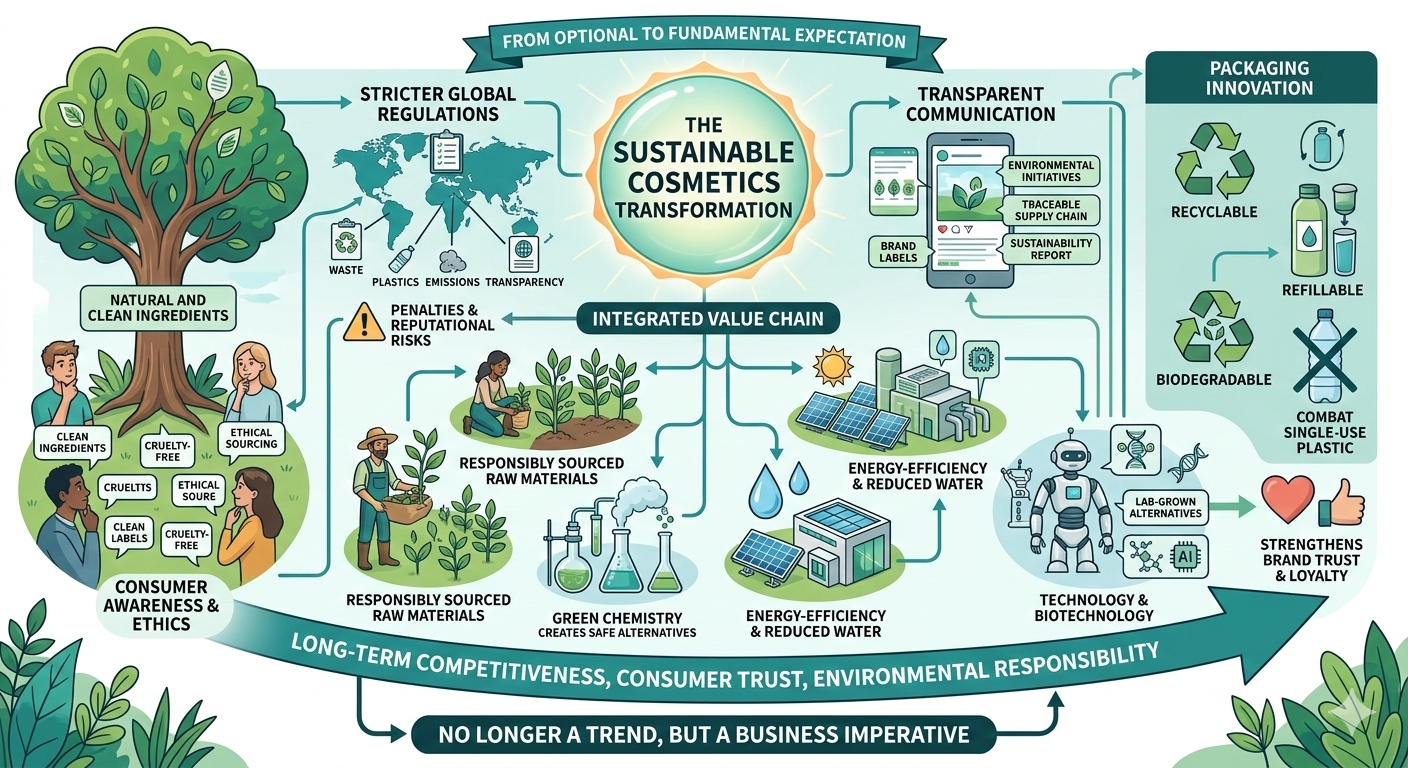
The cosmetics industry has undergone a dramatic shift in recent years. What once revolved purely around beauty, efficacy, and innovation now demands something far more essential: sustainability. Today, sustainability is not an optional brand value, it is a non-negotiable expectation from consumers, regulators, and the global community. As environmental concerns intensify and transparency becomes the norm, cosmetics manufacturers must rethink how they source, produce, package, and distribute their products.
The biggest driving force behind this shift is consumer awareness. Modern buyers are not just browsing ingredient lists; they are studying them. They want clean, ethically sourced, cruelty-free, and eco-friendly products that align with their values. Gen Z and millennials, in particular, place sustainability at the center of their purchasing decisions, choosing brands that demonstrate long-term environmental responsibility. This shift has directly influenced cosmetic companies to adopt greener formulations, invest in traceable supply chains, and reduce environmental damage at every stage.
Regulatory pressure is another powerful motivator. Governments across the world are tightening rules around waste, plastic usage, carbon emissions, and chemical safety. Many regions now demand full ingredient transparency, sustainable packaging solutions, and adherence to environmental standards. Non-compliance is no longer an option; brands risk financial penalties, product bans, and reputational damage. As regulations grow more stringent, sustainable manufacturing becomes not just a moral choice but a legal obligation. Supply chain sustainability has also taken center stage. Beauty brands now work closely with ingredient suppliers to ensure ethical sourcing and responsible farming practices. From organic plant extracts to biodegradable alternatives for synthetic chemicals, the entire sourcing ecosystem is evolving. Manufacturers are investing in green chemistry, renewable resources, and more efficient production methods that reduce energy consumption, limit water usage, and decrease carbon footprints.
Packaging continues to be one of the biggest challenges and opportunities in the sustainability movement. Traditional cosmetic packaging relies heavily on single-use plastics, but the industry is now shifting toward recyclable, refillable, and biodegradable solutions. Brands are redesigning their packaging to minimize material usage, experimenting with recycled plastics, and embracing refill stations that allow customers to reuse containers. This not only reduces waste but also elevates the brand’s environmental credibility. Technology is playing a significant role in accelerating this transition. Smart manufacturing, AI-driven forecasting, and automated processes are helping brands limit overproduction and reduce resource wastage. Meanwhile, innovations in biotechnology are enabling the development of lab-grown ingredients that are safer, more sustainable, and more ethical than traditional harvesting. The integration of sustainability with technology is creating a more efficient ecosystem where environmental impact is minimized without compromising quality.
Beyond production and packaging, sustainability also influences brand storytelling. Consumers want to support companies that take responsibility for the planet. Transparent communication about eco-friendly initiatives—whether it’s reducing water footprints, supporting fair-trade suppliers, or using renewable energy—builds trust and long-term loyalty. Brands that actively demonstrate their commitment through real action, not just marketing claims, stand out in a saturated market. Ultimately, sustainability in cosmetics manufacturing is not just about environmental preservation; it is about business survival. Brands that fail to adapt risk losing relevance in a marketplace where conscious consumerism is rapidly evolving. On the other hand, companies that embrace sustainability gain a competitive edge, attract a more loyal customer base, and contribute to a healthier planet. As the world continues to face climate challenges and resource limitations, the beauty industry must continue to evolve. Sustainability is no longer a trend; it’s the foundation upon which the future of cosmetics manufacturing is being built. In an era where consumers demand responsibility and transparency, going green is not optional. It is essential, transformative, and ultimately, the only way forward for the beauty industry.
Nipun Mittal is CEO of Ananya Cosmetics




