The SHANTI Bill 2025 aims to revive India’s nuclear sector by enabling private participation while ensuring safety, liability reform and energy security.
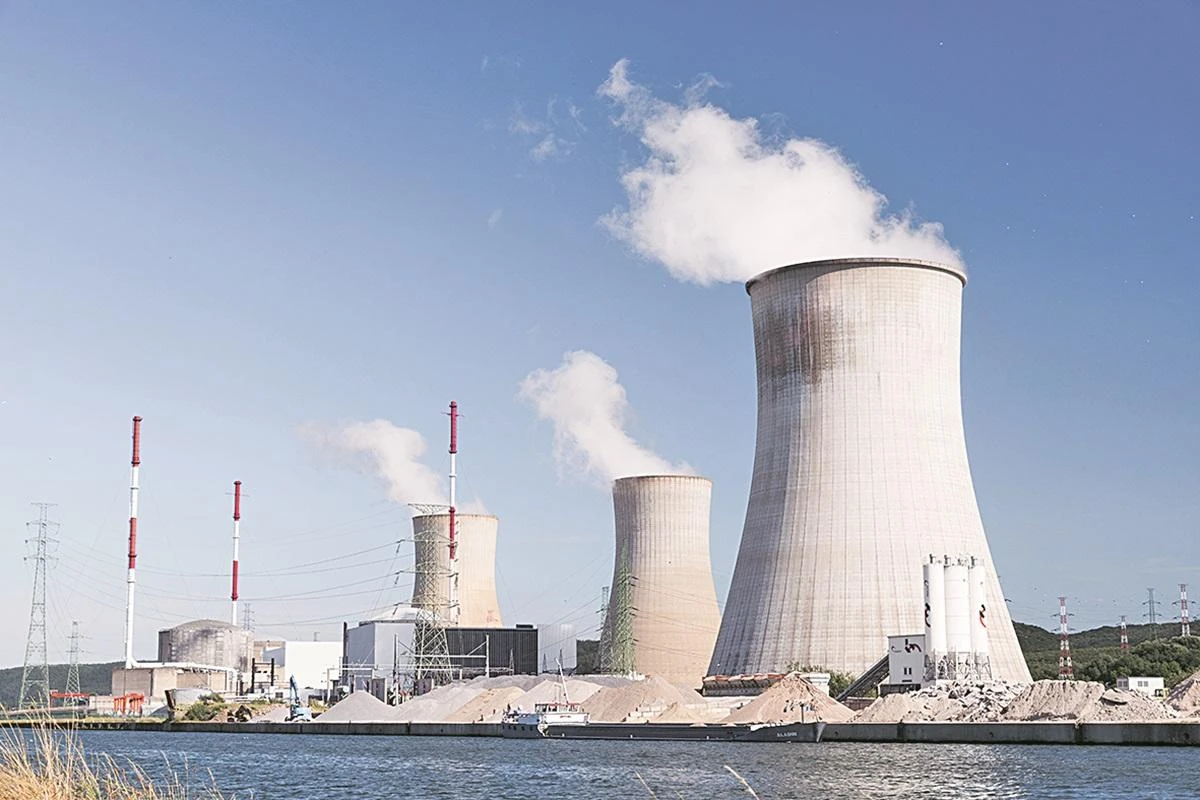
A nuclear power plant symbolising India’s push for reliable, low-carbon energy under the proposed SHANTI Bill, 2025 (Photo: File)
India's clean energy transition is primarily discussed in terms of solar additions, wind corridors, and storage technologies. Yet beneath this lies a more consequential challenge: securing reliable, stable, round the clock, low-carbon power as the economy becomes more industrial, digital, and electricity-intensive. The Sustainable Harnessing and Advancement of Nuclear Energy for Transforming India (SHANTI) Bill, 2025, seeks to address this. It represents a strategic recalibration of India's nuclear energy framework and its long-term energy future, in pursuit of Viksit Bharat and Net Zero goals. Nuclear power has long occupied an uneasy space in India. Its expansion has been slow due to institutional constraints, including a state-centric operating model, capital intensive projects, and a liability regime that deterred private and large-scale public participation.
The SHANTI Bill aims to break this impasse by modernising the legal architecture governing nuclear energy while retaining sovereign control over safety-critical domains. At the heart of the Bill is the recognition that India's future energy needs cannot be met solely through public financing. Demand from advanced manufacturing, data centres, semiconductor fabrication, green hydrogen production, and mobility will require stable, large-scale power. Renewables will remain central, but their variability creates a structural need for firm, non-fossil baseload; nuclear energy, with high capacity factors and low lifecycle emissions, fits this role. The Bill therefore seeks not merely to amend nuclear law but to position nuclear power as a viable pillar of India's clean energy ecosystem.
One of its most significant shifts is opening space for private Indian companies and joint ventures to participate in the construction, ownership, operation, and decommissioning of nuclear power plants. This marks a departure from the long-standing model in which nuclear power remained within the public sector. At the same time, clear boundaries safeguard national interests: uranium and thorium mining, enrichment beyond notified thresholds, spent fuel reprocessing, and waste management remain under the state's control. The Bill thus allows private capital and expertise where they add value without compromising safety, fuel sovereignty, or non-proliferation commitments. This approach reflects India's long-term strategic bet on thorium and the three-stage nuclear power programme. For a country with limited domestic uranium but large thorium reserves, this focus is structural rather than aspirational. Thorium offers a pathway to energy security, with reduced exposure to import dependence and geopolitical volatility. By reserving control over source materials and strengthening support for advanced reactor technologies, the Bill reinforces India's ambition to achieve capability across the closed fuel cycle.
This calibrated shift did not emerge in isolation. Following the announcement of the Nuclear Energy Mission in the Union Budget 2025-26, at Chintan Research Foundation (CRF), we argued that India's nuclear stagnation stemmed largely from the legal and institutional framework. Through a workshop and subsequent policy paper on private sector participation, CRF highlighted that without reforms to licensing, liability, and risk allocation, nuclear power would remain financially unattractive despite its strategic importance. Several of the recommendations are visible in the Bill, particularly in restructuring nuclear liability. For over a decade, India's civil nuclear liability regime has created uncertainty by exposing operators and, indirectly, suppliers to open-ended, uninsurable risk. The Bill replaces this with a strict, definite, and capped operator liability framework aligned with international nuclear liability conventions. Operators must maintain insurance or financial security up to their liability cap, while the Central Government assumes residual liability beyond that threshold, denominated in Special Drawing Rights. Differential liability for reactors of varying capacities bridges differences in risk-taking capabilities and enables wider participation. This shift transforms nuclear power into a proposition that insurers and financiers can realistically engage with.
CRF also stressed that enabling private participation should not dilute nuclear safety oversight. The Bill responds by placing the Atomic Energy Regulatory Board on a firmer statutory footing, expanding its powers to set standards, regulate exposure, conduct inspections, and enforce compliance. This strengthens investor confidence and public trust, both essential for nuclear expansion, while the Central Government retains emergency powers and strategic exemptions to safeguard national security. Equally important is the Bill's approach to public accountability; nuclear power demands a strong social contract. The creation of a specialised Nuclear Damage Claims Commission enables quicker redressal in the event of an incident. Its broad definition of compensable damage, including economic losses and environmental restoration, reflects the understanding that public acceptance depends as much on credible compensation as on assurances of safety. The expanded territorial jurisdiction for claims, including damage in foreign states, aligns with the philosophy of Vasudhaiva Kutumbakam and reinforces India's responsibility as a responsible nuclear power.
The true significance of the Bill, however, will lie in its implementation. It will depend on the subordinate policies and rules governing licensing timelines, insurance mechanisms, tariff setting, operationalisation of the Nuclear Liability Fund, and scaling up of human capacity to operate, manage, and regulate nuclear facilities. Furthermore, certain questions remain about how private participation in small modular reactors will be structured, how collaboration on advanced reactors and thorium research will evolve, and how domestic manufacturing will integrate into the nuclear supply chain. These are not shortcomings but reminders that nuclear reform is an ongoing process rather than a single legislative Bill. The SHANTI Bill represents a decisive yet cautious step in India's nuclear journey. It neither relinquishes state stewardship nor clings to an insular past. Instead, it reflects a maturing consensus that nuclear energy must be scaled responsibly, financed pragmatically, and governed transparently to contribute meaningfully to India's energy future. If matched with effective regulations and institutional capacity, the Bill could move nuclear power from the periphery of the clean-energy debate to its centre as a foundation of a reliable and resilient energy strategy.
Omkar Dhanke is a Research Analyst and Dr Debajit Palit is the Centre Head of the Centre for Climate Change and Energy Transition at Chintan Research Foundation.
