
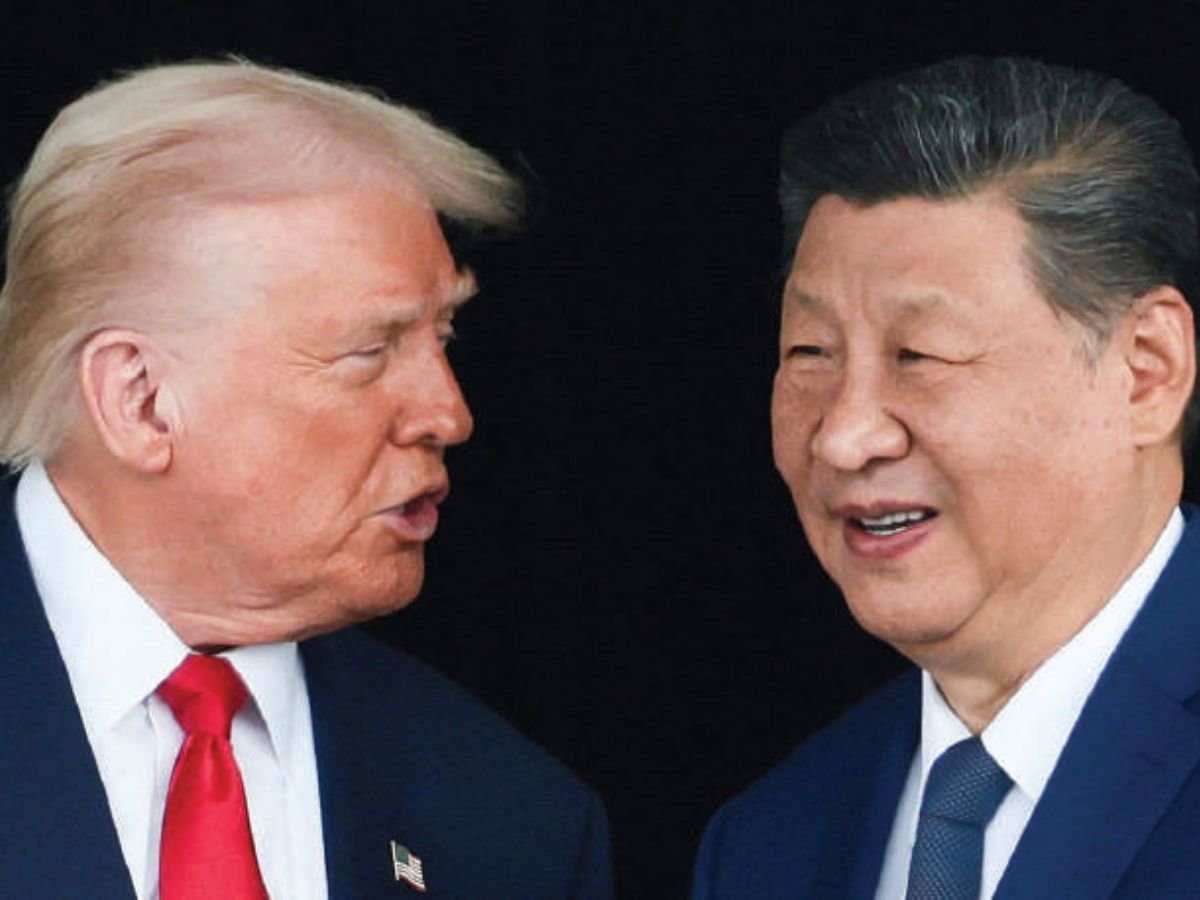
New Delhi: To observers of international relations and foreign policies, the concept and practice of strategic autonomy is almost synonymous with how New Delhi negotiates its terms of engagements with the rest of the world. However, the year 2025 infused strategic autonomy in the lexicon of many other countries attempting to protect and promote their interests in a world witnessing shifting alliances and partnerships. Donald Trump’s re-ascendance to the apex of American politics, his “Make America Great Again” (MAGA) and “America First” politics have reshaped the contours of international relations. Trump’s second administration has heralded an era when all mechanisms of inter-state ties are up for weaponization, most particularly trade and tariffs. Even as he proclaimed a golden era for the United States to reclaim US primacy, retreat from leadership in multilateral platforms and the way he has negotiated with traditional allies in Europe and Asia have exposed new risks in mortgaging one’s own security to the United States. Therefore, countries across the world have found it prudent to take a path of diversification and reinforced the imperative for growing self-reliance and practising strategic autonomy customised to national circumstances.
Nowhere is this new push towards strategic autonomy starkly evident than among America’s western allies in Europe. The region has been at the throes of the Russia-Ukraine war that has created deep fissures between the Trump administration and North Atlantic Treaty Organization (NATO) allies. As the post-World War II security architecture evolved in the European theatre, America’s transatlantic allies had offloaded its security to US commitments, which were broadly regarded as ironclad. Although the question of greater burden sharing and allies taking up more responsibilities for deterrence in Europe prevailed even in the pre-Trump era, the value of the NATO alliance was never up for debate. However, the Trump presidency adopted an economic framing of security alliances and security guarantees, wherein America’s security commitments resembled insurance schemes, with countries called to pay premiums to be insured. Blatant criticism of allies for failing to spend more on defence have shaken the foundations of the western alliance unlike ever before. The consequence is European countries pushing for “strategic autonomy” with European characteristics. France has always been one of the biggest votaries of such an approach among NATO allies, and now Germany is not mincing words either. The German Chancellor Friedrich Merz commented that the latest US National Security Strategy (NSS) “confirms my assessment that we in Europe, and so also in Germany, must become much more independent from the U.S. in terms of security policy. This is not a surprise, but it has now been confirmed again. It has been documented.”
Across the Indo-Pacific region, the uncertain transition in geopolitics and geoeconomics was evidently felt as countries that are in close security alliances with the United States but are economically intertwined with and share overlapping geographic spaces with China have found themselves between sixes and sevens. At the forefront of this strategic dilemma are American allies, such as Japan and South Korea, who have been the most important spokes of the US-led hub-and-spoke alliance in the region. Despite advocating a strong continuity in their security ties with the United States and commitments to what the Trump administration calls “re-establishing deterrence” in the region, these countries have concurrently doubled down on their respective defence capabilities enhancement and enforced strategic ties with other like-minded countries in the region and beyond. Exploring greater latitude and traction in strategic space as the United States turned more transactional and uncertain in its commitments are reshaping the regional security and economic architectures, the consequences of which will evolve in the years to come.
For instance, the Quadrilateral Security Dialogue (Quad) between the US, India, Japan and Australia is under scrutiny as the Quad leadership summit scheduled in India failed to materialise, at a time when India takes up the BRICS presidency, and paces ahead in its diversification move. Even as New Delhi continues to negotiate hard on its trade deal with Washington, it has moved fast in finalising and announcing Free Trade Agreements (FTAs) with a number of countries, and exploring new economic arrangements. In early December 2025, Japan and Australia announced the establishment of the Framework for Strategic Defence Coordination. Australia will, reportedly, provide duty-free access to all Indian exports from January 1, 2026 under the Economic Cooperation and Trade Agreement (ECTA), and are negotiating a Comprehensive Economic Cooperation Agreement (CEPA). Earlier in 2025, New Delhi and Canberra explored a new momentum in opportunities for co-development in high-end defence systems. Despite the change of leadership in Japan, the India-Japan bilateral relationship has grown substantially over the years, infusing mutuality of interests and incentives from stronger habits of cooperation, aimed at leveraging the geopolitical and geo-economic shifts in the region.
Countries in Southeast Asia are no different, with their complex balancing between the United States, China and other regional partners. Even as the Association of Southeast Asian Nations (ASEAN) Summit rolled out a red carpet welcome to President Trump in Kuala Lumpur, much of Southeast Asia continued to hedge their bets, and practise their own versions of strategic autonomy through what many call “Bamboo Diplomacy.” From the North American to the South American neighbourhoods and from West Asia to Africa, Trump’s economic and security policies have ignited new permutations and combinations of pursuing autonomy while engaging the United States. It has unravelled a more naked version of realpolitik to safeguard one’s own interests, in the process, propping up new questions on how to study as well as practice international relations.
Did Trump create this quest for strategic autonomy, including among the closest of American allies? The answer cannot be a simple “yes”. The structural changes in the international system, the material capabilities and coercive powers of the United States and China, plus the growing agency of other rising powers was already producing a flux, pushing countries to seek relative autonomy in their choices, by hedging their bets on multiple partners and reducing over-reliance on one or a few. Countries were already beginning to find ways of building stronger resilience, amid an inequitable distribution of power in an international system that resembled one moving towards multipolarity but filled with uncertain incentives of cooperation and lowering cost of defection. However, did Trump’s ascent to power herald a point of inflection, in the transition already underway? The answer is most certainly “yes”. As he goes about executing his plan of “Make America Great Again” and putting “America First” with a vengeance, which involves a curious concoction of protectionism and interventionism, the curious case of “Strategic Autonomy” is going through its own zeitgeist.
-
Monish Tourangbam is Fellow at the Chintan Research Foundation (CRF), New Delhi.




