America has shown the world that it is the most formidable military power in history. Unfortunately, during the 21st century, America has also shown its ability to lose the peace after winning the war.
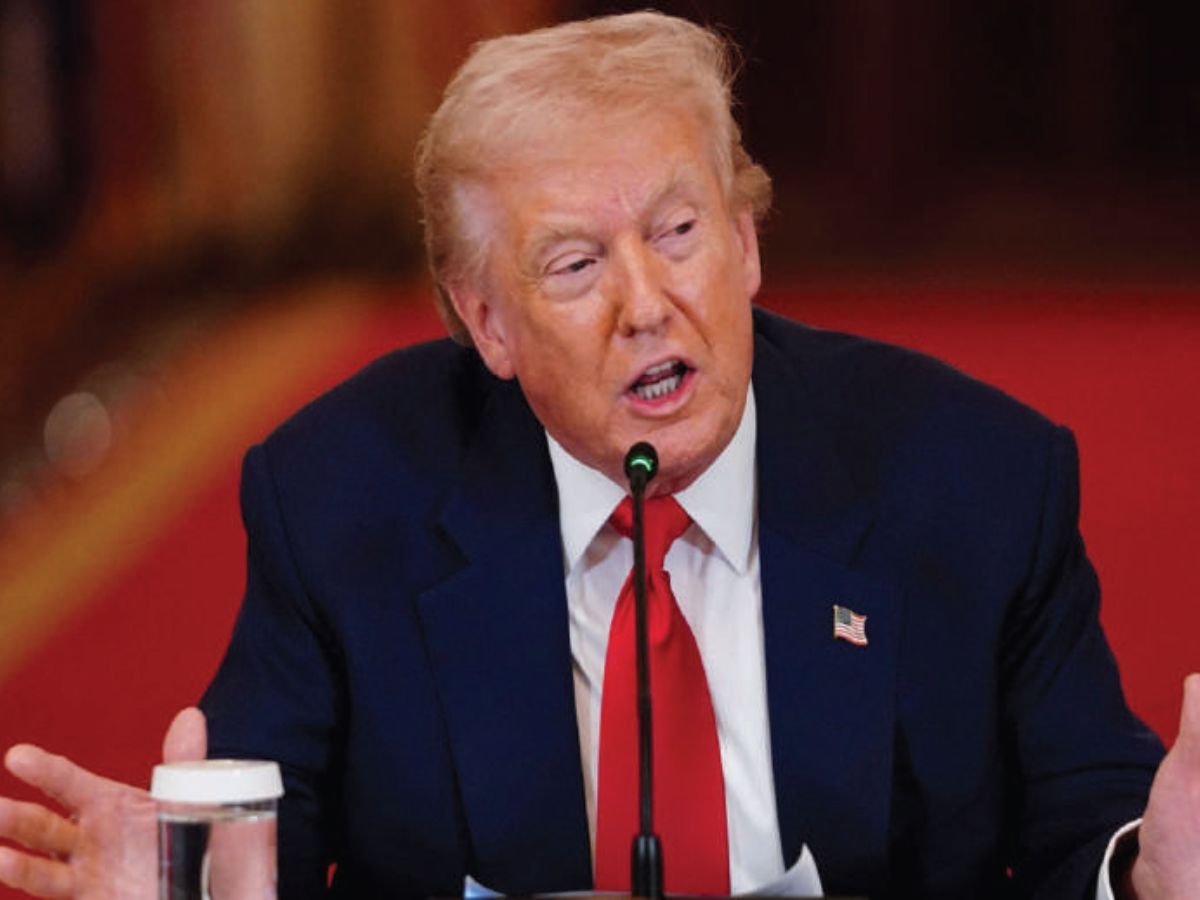
Donald Trump speaks in the White House.
What happens after the shooting stops? This is Washington, DC’s main topic of conversation in the wake of Epic Fury annihilating Iran’s leadership. The answer is fundamental to the balance of President Donald Trump’s Administration. What follows removing Venezuelan President Nicolas Maduro? What is next in Iran? What happens if the Cuban Communists fall?
America has shown the world that it is the most formidable military power in history. Unfortunately, during the 21st century, America has also shown its ability to lose the peace after winning the war. With the end of the Cold War, America guiding nations toward pro-West free societies has ranged from the “good”, to the “bad”, to the “ugly”.
The fall of the Berlin Wall on November 9, 1989, marked the end of 72 years of tyranny for Russia and many “captive” nations. The countries of the USSR, the Baltics, and Eastern Europe had viable opposition elements. Most Warsaw Pact nations were viable democracies before being conquered by the Nazis and Soviets.
Credible leaders, such as Poland’s Lech Walesa and the Czech Republic’s Vaclav Havel, were ready to step in. Dissident movements like Solidarity and Samizdat provided a core of policy and political activists to fill the power vacuum as Eastern European leaders fell.
The United States did not “nation build”. It offered important support to the emerging leaders who were shaking off generations of oppression.
Bipartisanship dominated this effort. The Clinton State Department and Speaker Newt Gingrich hosted delegations from the new nations to personally see Congress in action. Prime Ministers, General Secretaries, and Parliamentary leaders spent days being mentored by the Clerk of the House and the House’s Chief Administrative Officer on how voting, legislative processes, and constituent services could be adopted to their respective settings.
Harvard University’s Kennedy School of Government, under a State Department contract, held week-long training sessions for Members of various Parliaments. Senators, Members of Congress, and the House’s Chief Administrative Officer conducted these interactive seminars to provide real world, hands-on, insights on how to effectively represent their country’s interests while managing debate and opposing views.
The European Union stepped in to help align legal practices and guide the new nations into compliance and ultimately membership in the European Union (EU). Nonprofits, such as the Atlantic Council and The European Institute facilitated dialogue with EU leaders and regional stakeholders. European Ambassadors, posted both the U.S. and in Eastern Europe, served as coaches and mentors to their counterparts.
The key to this success was allowing each nation to evolve at its own pace based upon its own unique identity, history, and culture. Adoption of “best practices” and “lessons learned” were offered but not mandated.
The only failure was Russia. While Duma Members enthusiastically participated in Harvard’s courses, they could not anticipate that Boris Yelstin’s alcoholism and complicity in corruption would lead to the deal that brought Vladimir Putin to power.
The successes of Eastern Europe were totally lost on the Neo-Conservatives (NeoCons) that dominated the inner circles of President George W. Bush.
Afghanistan was a feudal society, divided among villages elders, clergy, and warlords, all owing titular loyalty to the Shah. Mohammadzai tribal leaders ruled Afghanistan for 155 years. The last Shah was toppled in a Sovietbacked coup in April 1978.
What followed were years of unrest. This included civil war, the assassination of the Soviet puppet leader, and the full-scale invasion and occupation of the country by Soviet troops in December 1979.
A long guerilla war was waged by the pro-West Northern Alliance and Islamist factions known as the Mujahideen. Eventually, the most radical of the factions, the Taliban, dominated the Mujahideen.
The Soviet withdrawal on April 14, 1988, left an uneasy coalition government between the Northern Alliance and the Taliban. The leader of the Northern Alliance was assassinated days before the 9-11 attack on America. These events consolidated Taliban control but also led to the United States toppling the regime in December 2001.
The U.S. chose to “nation build”. Ignoring history and culture, Bush officials installed Hamid Karzai in December 2001, after the Taliban government was overthrown. Karzai had been the CIA’s “paymaster” for moving funds to Afghan guerillas. He would prove to be corrupt and untrustworthy, selling the country’s mineral rights to China for $40 million to his overseas bank accounts.
Bush officials prevented the reemergence of the traditional feudal society and refused to bring back to Shah’s family for national unification. Instead, they attempted to establish Western Democracy with a tight timetable of before the 2008 U.S. Presidential election. The fact that it took Western Europe over 600 years to evolve from feudalism to true representative government was lost in the arrogance of occupation.
Billions of dollars poured into the country for training and infrastructure, much of it wasted and defrauded by contractors and Afghan elites.
The weakened local communities depended on NATO and U.S. forces to keep the peace, while Western values and processes were force fed to the populace. This became fertile ground for the Taliban to arise and win. Karzai stole the 2009 Presidential election against several credible opponents. His crumbling credibility, rampant corruption, and suppression of dissent placed Afghanistan in a death spiral.
In September 2014, Ashraf Ghani, one of two opposition candidates in the 2009 stolen election became President. It was too little too late. The Taliban were dominating the battlefield and ultimately the negotiations for retaking power. Their forces rolled into Kabul on August 15, 2021, after a disastrous withdrawal of American forces.
In 2003, Bush’s Neocons waged a war based on highly questionable intelligence. They proceeded to line their pockets with billions in bogus contracts while wrecking the country.
The U.S. likes to establish highly centralized governments. This ignores the federal system and local governance that made America a success. Partly, centralization is lazy. Having everything inside the highly fortified Baghdad “Green Zone” meant diplomats, bureaucrats, and contractors could avoid learning anything about the real situation and not leave the comforts of Western food and entertainment.
Unfortunately, this was the recipe for disaster. Rulers, going back to 1639, understood that Iraq was three separate nations: the Kurds in the north; the Shiites along the coast; and the Sunnis in the centre. The British bundled Iraq together after the First World War to consolidate their hold through a puppet King. This fiction fell apart in 1958 when the Ba’ath Party took control and continued to rule a contrived unitary state. Saddam Hussein emerged as dictator in 1988.
The 2003 war toppled Hussein, ushering in 20 years of waste, fraud, abuse. Instead of pursuing a federal system, Bush occupation officials forced a strong unitary state. It was inevitable that the three historic areas would bridle at this contrivance.
The most tragic were the Kurds. They had enjoyed semi-independence with the establishment of a “no fly zone” over their region since the 1991 war. They had oil and a strong traditional governance structure. They reached out to Western companies to help develop their lands and were crushed by the U.S. State Department.
One example says it all. Kurdistan is populated by small villages isolated in deep valleys by high mountain ridges. These small villages enjoy ample water as each is situated by small streams. This was ideal for deploying small immersible turbines that could generate electricity for each village. A U.S. firm had the proven technology, and a strategic partnership was forged to bring electricity throughout rural Kurdistan.
Enter the U.S. State Department. Bush officials halted the partnership asserting that only electricity generated by hydroelectric dams on the Tigris and Euphrates Rivers would suffice. They declared that decentralized electricity would weaken the Central Baghdad Government. The Kurds and their U.S. company pointed out that (1) there was no plan to create hydroelectric dams to serve the entire country, (2) a network of power lines and substations would be easy targets for sabotage and impossible to defend, and (3) the region was subject to earthquakes that would disrupt a centralized grid. The Bush bureaucrats refused to listen and stopped the project. To this day, these villages are without electricity.
Venezuela has a viable opposition movement that had the last election stolen. It has a Nobel Prize winner, María Corina Machado, as its titular head. Trump seems content to let Interim President Delcy Rodriguez do the heavy lifting of steering the country back to credibility. Her public statements distance her from “Washington’s Orders”, but her actions display begrudging cooperation. Behind the scenes “carrots and sticks” are probably guiding the relationship. What happens next is going to be driven by internal forces, with the U.S. incentivizing a pro-West and free society outcome.
Iran has a viable opposition inside and outside the country. This includes the extensive Iranian diaspora residing in the United States and other countries.
The National Council of Resistance of Iran (NCRI) was formed in 1981. It is a 460-member coalition “committed to a democratic, secular, and non-nuclear republic”. The NCRI’s mission is to “hold free elections within six months of the fall of the theocracy and to ensure a peaceful transition of power to elected representatives”.
Just as Epic Fury started, Maryam Rajavi, the President-elect of the NCRI, announced the formation of a Provisional Government by the NCRI to transfer sovereignty to the people of Iran and establish a Democratic Republic based on a long established ten-point plan.The Ten-Point Plan was presented by Maryam Rajavi in December 2006 at a session of the Council of Europe.
The NCRI’s plan for the future is, “a pluralistic republic based on the separation of religion and state, gender equality, the abolition of the death penalty, peace, coexistence, the elimination of double oppression against Iran’s ethnic and national minorities, and a non-nuclear Iran”.
This well-organized effort, along with the possible symbolic national leader, Crown Prince Reza Pahlavi, could quickly fill the void as the current regime is toppled.
There truly is hope after the bombs…as long as Trump and his team learn from the past.
Scot Faulkner served as Chief Administrative Officer of the U.S. House of Representatives. He was Director of Personnel for the 1980 Reagan Campaign, served on the Presidential Transition team and on Reagan’s White House Staff. He currently advises corporations on implementing strategic change.
