Herof is a Balochi literary term which means ‘Black Storm’ and is extensively used in Baloch poetry. BLA had carried out Operation Herof 1.0 in August 2024.
Operation Herof 2.0
Balochistan is the largest province of Pakistan which has been the cradle of many civilisations and has been ruled by many empires. The region has been a buffer zone to the Indian subcontinent, with the highly strategic Makran coast. The region was incorporated into the Achaemenid Empire around 517 BCE, and became a potpourri of Iranian, Indian, and local cultures, with influence of Zoroastrianism. The Achaemenid Empire ended between 334 BCE and 330 BCE following the invasion of Alexander, who defeated Darius III in three decisive engagements.
From Paratarajas, an Indo-Scythian dynasty, the Sassanian Empire to the Umayyad and Abbasid Rule, the region remained volatile. Arab rule in Balochistan lasted until the end of the 10th century. In 1223, because of a Mongol expedition under Chagatai, Genghis Khan’s son, this region underwent the worst. A few years later, the region briefly came under the rule of Iltutmish of the Delhi Sultanate but went back under Mongol rule. It came under Pir Mohammed and Arghun dynasty which gave way to Babur taking control of the region. From 1556 to 1595, the region was under the Safavid dynasty. Akbar brought the region under the control of the Mughal Empire in 1638 until the rise of the Ghilzai in 1708. Nadir Shah defeated Ghilzai and Ahmad Shah Durrani followed. The region remained under the nominal suzerainty of the Sadozais and Barakzais until 1879, when Pishin, Duki, and Sibi passed into British hands by the “Treaty of Gandamak”.
The Khanate of Kalat, also known as the Brahui Confederacy, was a Brahui Khanate that originated in the modern-day Kalat region of Pakistan. The British ruled for 108 years but the princely state of Kalat, along with its leased areas, regained independence just before the formal partition of British India. On 11 August 1947, Kalat was recognised as an independent, sovereign state and remained independent for 227 days. Over the next seven months, Pakistan applied significant political and diplomatic pressure, eventually securing the accession of the smaller states of Kharan, Las Bela, and Makran by mid-March 1948. This isolated Kalat, geographically and politically, facing the threat of internal rebellion and the movements of the Pakistan Army toward its borders, forced the Khan of Kalat to sign the Instrument of Accession on 27 March 1948, formally bringing the region under Pakistani control.
Since then, Balochistan’s relationship with Pakistan has been uneasy. It remains minerals-rich but one of the poorest regions of the world. Enforced disappearances, resource exploitation and low economic priority of the Punjab-based ruling elite have fuelled the region’s demand for autonomy/independence While the problem has been simmering for a while, the struggle for independence has not died down. The Pakistan Army has committed atrocities that are heinous and thereby several political and armed entities have kept the flame of freedom alive.
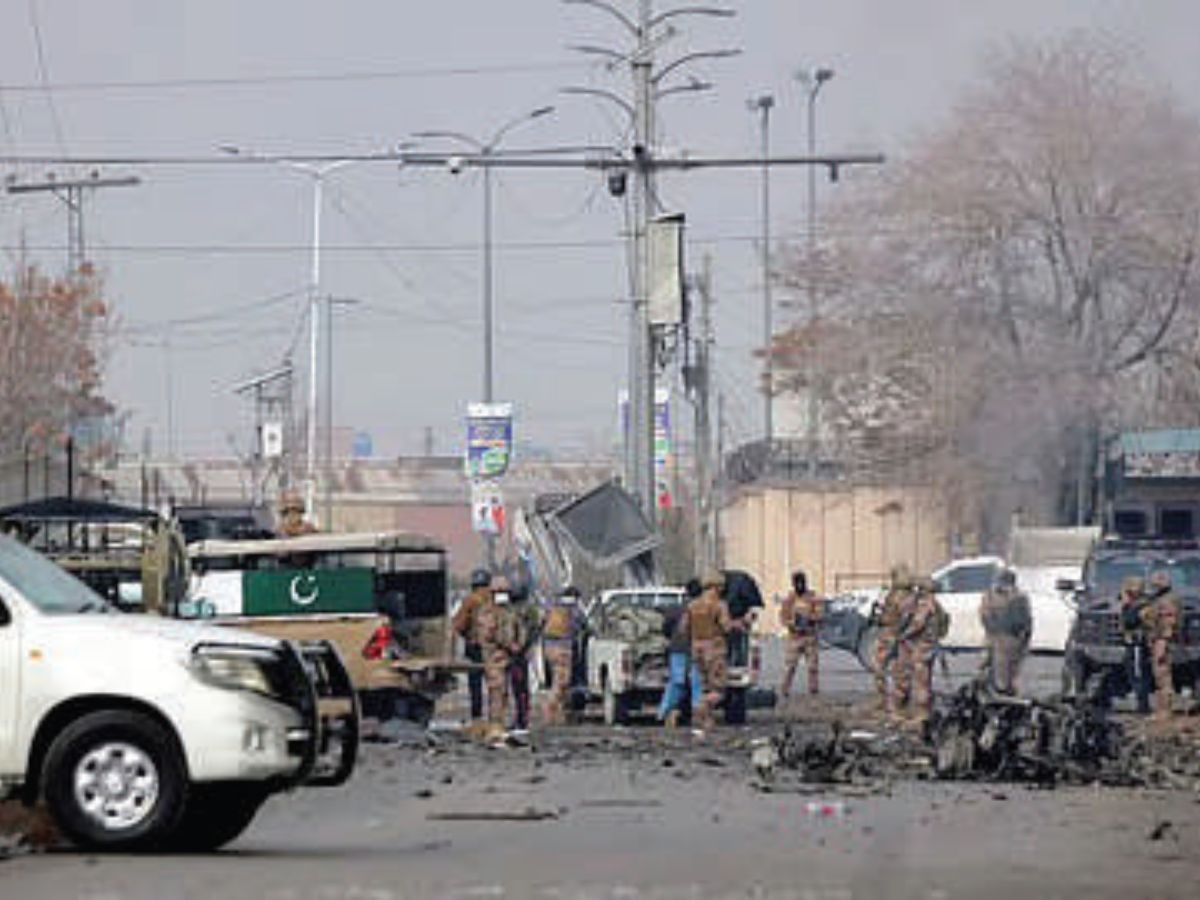
The Balochistan Liberation Army (BLA) was founded at the turn of this century, and its freedom fighters have been the vanguard of the struggle. BLA carried out a series of coordinated attacks on January 31. These covered Gwadar and Pasni along the Makran coast, to Panjgur and Tump on the Pakistan-Iran border. Mastung, Nushki, Dalbandin and Kharan in the shadow of the Durand Line were also targeted. In addition, the BLA also attacked Pakistan Army installations in the provincial capital, Quetta.
While ISI’s media mouthpiece, Inter-Services Public Relations accused India and termed the incidents to have been carried out by terrorists of “Indian-sponsored” Fitna al Hindustan, Pakistan also accused the Taliban of providing shelter and support to the BLA. It also outlines Tehreek-e-Taliban Pakistan (TTP), as a part of this armed uprising by calling them “Fitna al Khawarij”, probably to incite a religious and divisive narrative.
The BLA carried out a series of coordinated attacks on 31 January as part of “Operation Herof 2.0”. Herof is a Balochi literary term which means “Black Storm” and is extensively used in Baloch poetry. BLA had carried out Operation Herof 1.0 in August 2024. The attacks this time have covered multiple locations stretching from Gwadar and Pasni along the Makran coast to Panjgur and Tump on the Pakistan-Iran border with Mastung, Nushki, Dalbandin and Kharan in the shadow of the Durand Line. In addition, the BLA also attacked targets in the provincial capital, Quetta.
The present version can be deciphered as a highly coordinated, multi-pronged strategy designed to create maximum disruption and signal a shift towards larger, sustained operations. Tactics employed during this period have include well-orchestrated, multi-Location attacks. BLA’s specialised Majeed Brigade and organised units to include the “Fateh Squad” carried out suicidal attacks, storming, and attempting to occupy high-security areas, including police stations, military bases and prisons. As a first, female suicide bombers have been trained and utilised by the BLA in the “Majeed Brigade” to carry out suicide attacks, highlighting a shift in overall tactics to include women in the highest-risk operations.
Targeting of state infrastructure to include police training centres, administrative buildings, banks, and railway lines has been done to essentially paralyse local administration. The weaponry utilised for prosecuting operations is advanced and displays a high degree of training. The kinetic realm has also been augmented by a digital outreach and psychological warfare. The BLA has actively used social media to release footage of these attacks in realtime, aiming to amplify the impact and project a larger image of control. Logistical disruption has also been carried out with attacks on major transport arteries, including the coastal highway, probably to sever links between Balochistan and the rest of Pakistan.
On scrutiny, it is further inferred that target locations have been carefully selected and identified for a well-rehearsed force application. The secrecy of plans and the areas of operations have also been purposefully kept dormant. Balochistan’s mineral resource-rich areas are a part of the overall attack matrix, including the famous Reko Diq mines and other locations in the Chagai district, which have been addressed and displays a near collapse of the security situation.
Ideologically, BLA as an organisation seems to have undergone a metamorphosis and has transformed with the larger involvement of the younger generation, thus not completely under the control of the old guard. The current deteriorating relationship between Pakistan and Afghanistan has further led to this violent quagmire.
With Balochistan on the boil, Sindh seems to be reverberating with the Jeay Sindh Freedom Movement (JSFM) and Sindhudesh, decrying Punjabi dominance, resource exploitation, and cultural erasure. Khyber Pakhtunkhwa (KPK) is in turmoil since long with a heavy deployment of Pakistan Army. There are clarion calls for “Pashtunistan” or a unified Pashtun state with large casualties of Pakistan Army. If these current trajectories remain on an ascending curve, the entire region could be badly affected. Pakistan is likely to be severely jolted with a very weak economy, high inflation and a cumulative response of rising factionalism. The map of this volatile region could be redrawn and the lines in the present case will not require an anglophile cartographer- they will be from within.
Anurag Awasthi is a veteran, and CEO of Escape Velocity Mediaworks. He is a known policy expert and a columnist who writes extensively on critical technologies, security and geopolitics. Views are personal.
