Address post-conflict trauma in the community through target programs, says expert.
This report also highlights the need for trauma care in the aftermath of the conflict in the border communities and why regular trauma care is essential to build resilience. (Image: File)
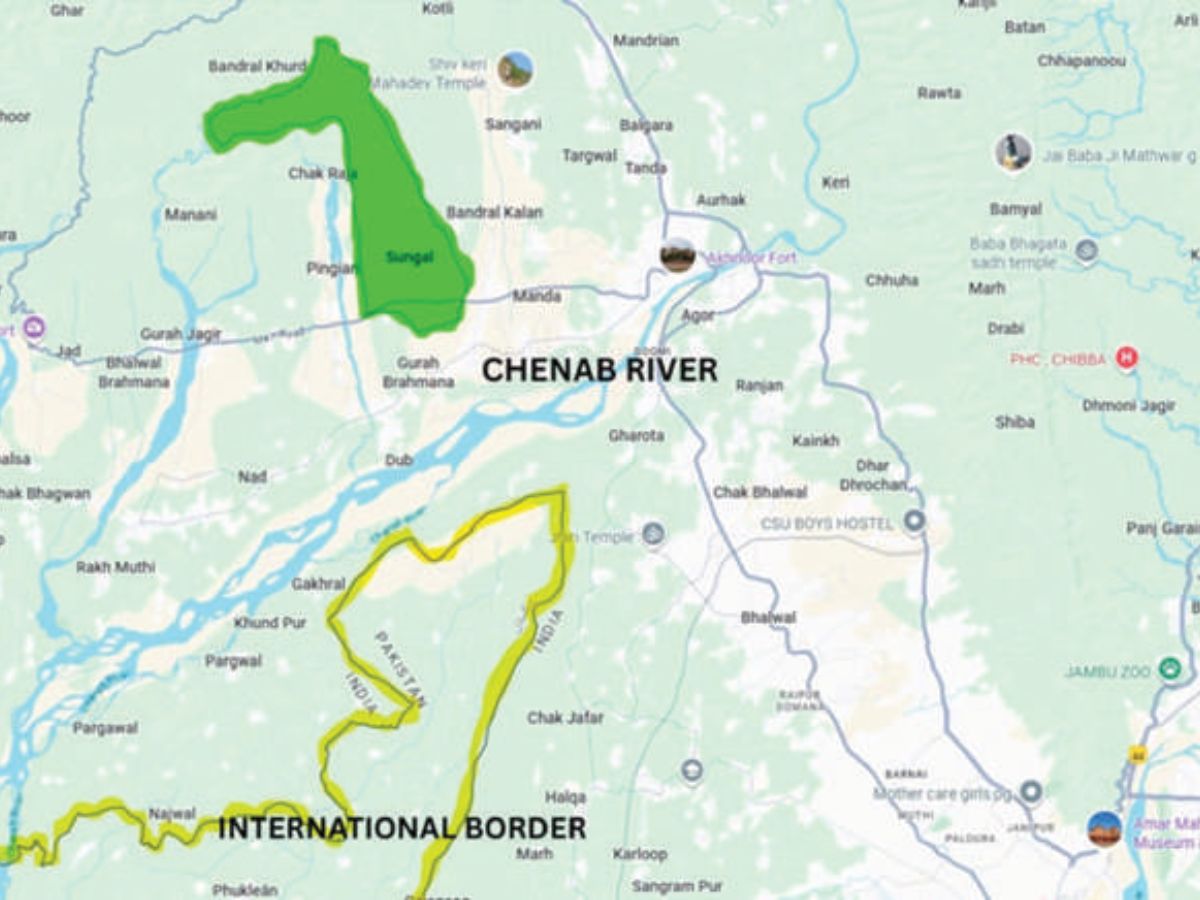
Akhnoor, Jammu: India’s border with Pakistan along which the May conflict took place in Jammu and Kashmir is one of the most complicated boundaries of the world. Partly international and partly disputed, this year the border experienced a new warfare, a new normal and a fresh need for trauma care. In this special report based on an August trip to Akhnoor region of Jammu border stretch, the community in a village called Sungal for the first time publicly talked about their experience of the war and its aftermath. This is the second part of the report—the first was focused on how the residents experienced air wargames for the first time and the stopping of water in river Chenab—and the current is focused on two blasts reported by villagers between May 7 and May 10 in their locality. This report also highlights the need for trauma care in the aftermath of the conflict in the border communities and why regular trauma care is essential to build resilience.
The villages of Sungal reported two blasts in their vicinity before and after May 7. One of these according to them was caused by the crash of an Indian fighter jet in the wee hours of May 7. Another was caused by a cross-border missile in the early morning hours of May 8 in a village called Khugha near Sungal. Shyam Lal Sharma, the chairman of SAMAH Devta Food and Agriculture Organization (FPO), a cooperative of 800 farmers from the adjoining border regions said that on May 6, he and his family attended the wedding reception of his nephew and returned home at around 11 pm and after a few hours at around 2 am of May 7 they heard an extremely loud blast caused by the crash of a fighter jet. “It erupted like a massive ball of fire. It turned everything even brighter than the sun would do. The pilots ejected out and while one was unharmed, another escaped with a fracture,” he said, while adding that he can’t tell what actually caused the crash. Ram Paul Sharma, the sarpanch of one of the four panchayats of Sungal said that the plane crashed in the adjoining village, while the two pilots escaped through parachutes. Pakistan has alleged that it had shot down multiple Indian fighter jets, which India has denied. The international and disputed border stretch in Jammu and Kashmir extends through hundreds of miles and the reporter can’t independently confirm if the blast reported by the villagers of Sungal was caused by any such attack nor could it confirm what kind of jet it was. The reporter reached out to the Indian Defence PRO in Srinagar for a comment on September 25 but didn’t get a reply.
According to the villagers who participated in a group discussion with the reporter, the impact of the war on the local population, particularly on children has been traumatic. “Even a cracker at night makes them think that it’s firing. Children have become clingy. They don’t leave their parent’s side because of fear that drones will come anytime. A strike can happen anytime,” said Anil Kumar, a teacher at the local government run school. The villagers appealed to the Indian government to conduct a fresh audit of the welfare distribution and public infrastructure on the border regions in Jammu and Kashmir, and include more villages in a special welfare category ensured for villages on the International Border (IB). They appealed that Sungal should be included in this IB quota, while currently it’s not. They said children on border regions suffer because any tension on the border closes off their schools. The May conflict impacted the border schools’ normal curriculum for over one month. The villagers demanded a special welfare provision for the education, employment and medical care of the children in border regions.
Trauma care is essential to build resilient communities on the border, particularly in the aftermath of a conflict which has changed the reality of the border once again, according to a psychosocial care expert. Dr Kavitha Puthanveedu, a psychosocial care expert who formerly worked with Bangalore based National Institute of Mental Health and Neurosciences (NIMHANS) in their post-disaster psychosocial care programs and is currently working with the Children’s Line of the Harrow Council of the United Kingdom said that the conflicts, threats, tensions on the border are forms of man-made catastrophes and such an environment causes distress in vulnerable populations. It needs redressal. “Essentially, they endure a daily reality marked by catastrophe. The constant anxiety fosters hypervigilance, which can lead to sleep disturbances. Men often bear the responsibility of protecting their families, while women and children, who are particularly vulnerable, face heightened emotional challenges,” said Dr Puthanveedu. “The repeated displacements caused by conflict, whether to makeshift shelters or supposed safe zones, exacerbate their situation.” She said the trauma can manifest in many individual-level challenges, like emotional problems, psychosomatic disorders and psychological conditions, including PTSD, to family-level issues such as breakdowns, dysfunction, and an increase in single-parent households. “The impacts extend to the broader community, where a lack of trust in one another or in authorities can ferment unrest and further destabilise already vulnerable environments,” she said. According to Dr Puthanveedu, it’s essential to address this situation through a targeted program aimed at working with the vulnerable populations on a regular basis and these programs can be integrated with the existing programs and policies. “Such a program should ensure continuous guidance and preparation for potential catastrophes. Collaboration among government and non-governmental agencies, as well as various sectors—including defence, health, education, disaster management, law enforcement, housing, and revenue—will be essential to develop a cohesive initiative that promotes the psychosocial well-being of these individuals,” she said.
This special report is in two parts. This is the second part while the first part was published on October 12, 2025. Venus Upadhayaya is a senior journalist with special reporting experience in the border regions of Jammu and Kashmir. She’s currently researching India’s unorganized sector and the need for trauma care on the border regions.
