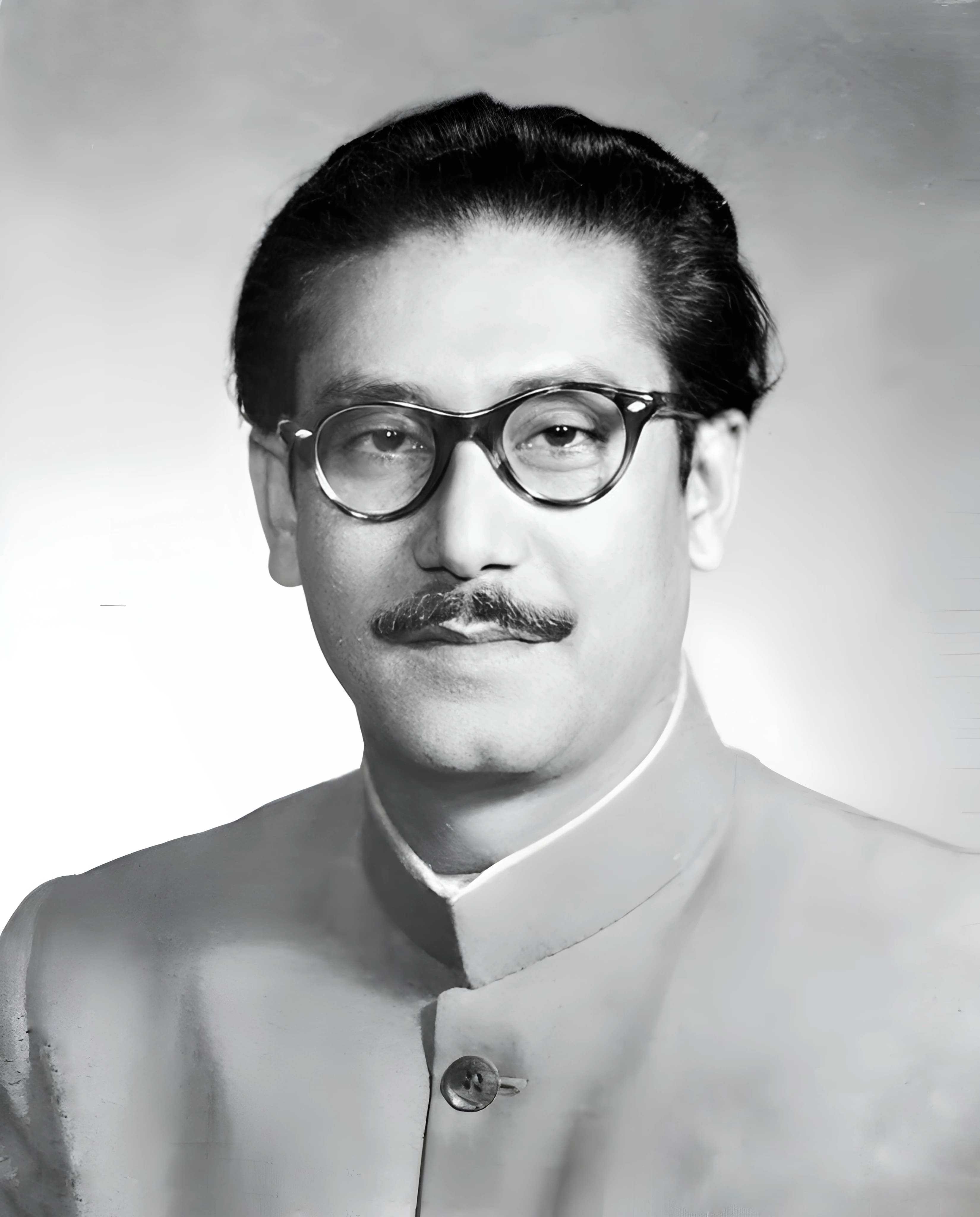
NEW DELHI: Since its independence, Bangladesh’s army has played a controversial and powerful role in the country’s politics, often stepping beyond the traditional military duties of such a force. The violent beginning of the army’s direct political interference was its involvement in the assassination of Sheikh Mujibur Rahman, the nation’s founding leader. This brutal act was followed by years of silence and protection for the killers through indemnity laws.
Later, the mysterious death of Ziaur Rahman, another key military figure who became president, further showed the army’s deep entanglement with political power struggles. Coupled with multiple military coups throughout Bangladesh’s history, these events point to a pattern where the army acts not as a defender of the nation, but as a force shaping, and often destabilising, its political future.
In line with that trend, on August 5, 2024, under military pressure and mass protests, Prime Minister Sheikh Hasina fled Bangladesh, ending her 16-year rule and revealing escalating military dominance over civilian politics. This complicated legacy brings up serious questions about the army’s true role in Bangladesh’s democracy.
The Bangladesh Army was directly involved in the assassination of Sheikh Mujibur Rahman, the founding leader of Bangladesh, on August 15, 1975. A group of mid-ranking army officers, dissatisfied with Mujib’s government, executed a carefully planned coup. Early that morning, these officers divided into teams to attack key locations, including Mujib’s residence— Bangabandhu Bhaban. Major A. K. M. Mohiuddin Ahmed led the operation at Mujib’s home.
The officers killed Sheikh Mujib along with most of his family members, including his wife, sons, and close relatives. Some guards who resisted were also murdered in cold blood. Following the coup, Khondaker Mostaq Ahmad, a cabinet minister, took control with army backing and quickly proclaimed himself president.
At that time, to protect the assassins, the new regime enacted the Indemnity Ordinance, granting immunity from prosecution. Many killers were rewarded with diplomatic posts and other positions of power, and went on to live freely without facing justice for decades. It gives a broad overview of the ethics and morals of the Bangladesh Army.
Claims linking Bangladesh Army officers to the assassination of former President Ziaur Rahman are well-documented and widely considered credible. On May 30, 1981, Ziaur Rahman was killed by a faction of army officers led by Lieutenant Colonel Matiur Rahman during a coordinated attack on the Circuit House in Chittagong.
The conspiracy involved about 16 officers armed with submachine guns, rocket launchers, and rifles. Evidence shows the attack was planned and executed by these midranking officers with clear intent to eliminate the president. Unlike in Mujib’s case, this time, following the assassination, many conspirators were quickly arrested and subjected to a military tribunal.
Twelve officers were executed, too. Though the trial was criticised for rushing and limited defense rights, it underscored the military’s direct involvement. The assassination destabilised Bangladesh politically but confirmed the army faction’s significant role in intragovernmental power struggles.
These are not standalone examples. Since its independence in 1971, Bangladesh has experienced numerous military coups and attempted coups beyond the assassination of Bangabandhu. After Mujib’s death, the country saw two more coups in 1975 that culminated in General Ziaur Rahman seizing power. In 1982, Lieutenant General Hussain Muhammad Ershad overthrew the civilian government in a bloodless coup and ruled until 1990.
More recently, in 2007, the army chief staged a military-backed caretaker government that ruled for two years before elections restored civilian rule. The 2009 Bangladesh Rifles (BDR) mutiny saw paramilitary forces revolt, killing 74 people, mostly army officers. The Bangladesh Army also foiled a coup attempt in 2012 aimed at introducing Islamic law. These repeated interventions have entrenched a cycle of military influence and political instability in Bangladesh.
In July 2024, Bangladesh’s security forces, including the Bangladesh Army, police and paramilitary units, played a brutal role in suppressing protests, with most deaths linked gunfire. According to forensic examinations by Dhaka Medical College, over three-quarters (78 per cent) of the approximately 1,400 deaths were caused by firearms exclusive to state forces, not civilians. High-powered automatic and semi-automatic rifles, standard issue to the Bangladesh Army, Border Guards Bangladesh (BGB), Rapid Action Battalion (RAB) and other Armed Units, were responsible for about two-thirds (66 per cent) of these fatalities. Additionally, shotguns loaded with lethal metal pellets, used widely by police and paramilitary forces, accounted for another 12 per cent of deaths.
These findings point to a deliberate, forceful military and police crackdown on civilians, underscoring the army’s brutal involvement in political violence. The Bangladesh Army’s repeated interference in politics has deeply destabilised the country. Since independence, the army has orchestrated coups, assassinations and political upheavals that undermined democratic governance The Bangladesh Army’s entrenched role in politics has directly contributed to the country’s ongoing instability and weakened democratic institutions.
This culture of impunity and political manipulation undermines rule of law, fuels unrest and stifles genuine democratic development. The tragic reality culminated in the dramatic flight of Prime Minister Sheikh Hasina on August 5, 2024, as the army withheld support even in her final days amid escalating protests and military pressure. Rather than protecting the elected government, the army aided the agitations, exposing its decisive role in shaping Bangladesh’s political crisis. Ultimately, the army’s unchecked dominance continues to hinder the country’s stability, accountability and prospects for a democratic future.
Maj Gen. RPS Bhadauria VSM (Retd) is the Additional Director General of the Centre for Land Warfare Studies (CLAWS), New Delhi, and was formerly the Director of the Centre for Strategic Studies & Simulation (CS3) at USI of India, having served in the Indian Army for 36 years. He can be reached on email: rpsbhadauria99@yahoo.com
