On 18 September 2016, four heavily armed terrorists stormed an Army installation in Uri, Jammu and Kashmir, killing 19 soldiers. For decades, New Delhi had responded to similar provocations with caution, guided by concerns over nuclear escalation and international intervention. Uri proved different.
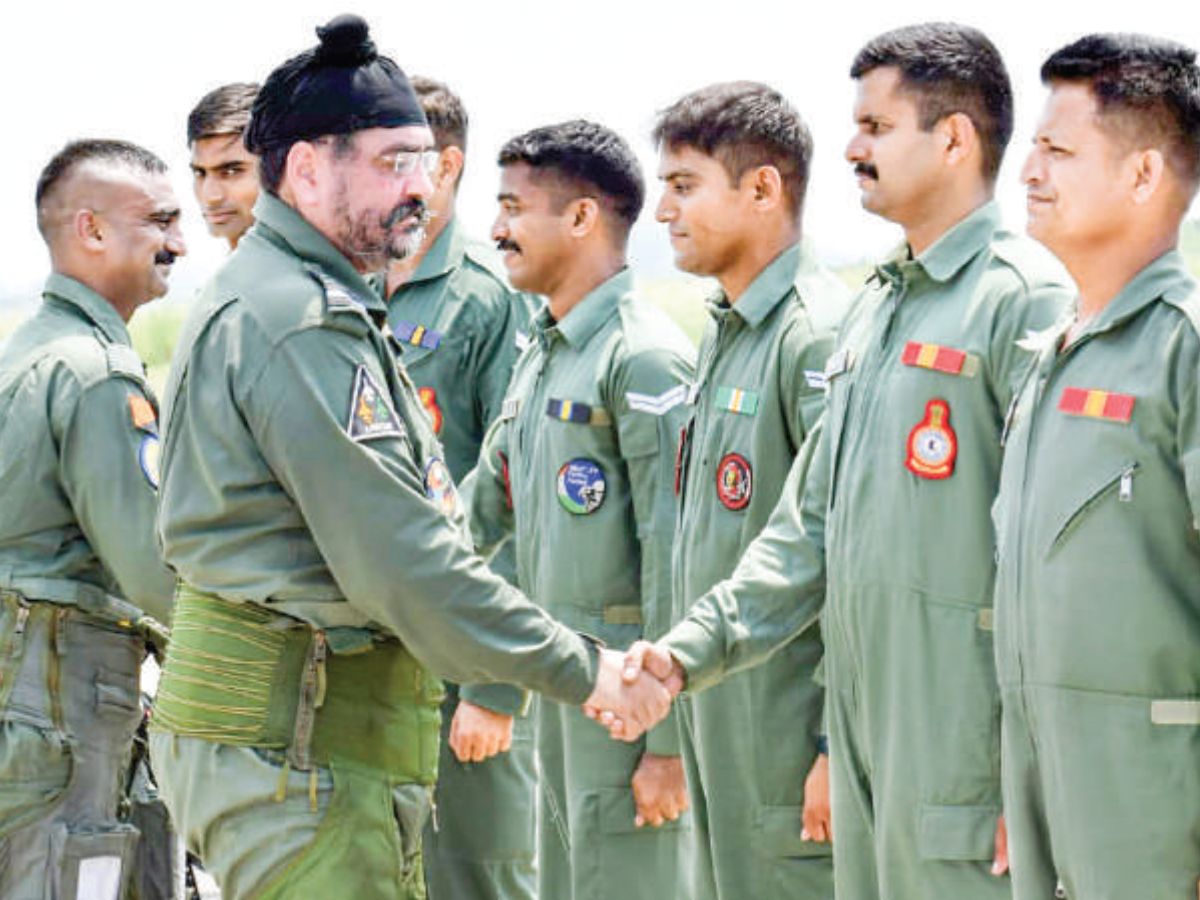
New Delhi: For India’s counter-terrorism and military response doctrine, the September 2016 Uri surgical strike is now believed to be a watershed moment. This cross-border raid in retaliation to a terror attack on Indian soil soon heralded a gradual, but noticeable, change in India’s playbook for dealing with similar Pakistan-sponsored heinous activities.
In hindsight, the Uri attack and surgical strike ignited a reorientation that moved India’s doctrine away from its habitual restraint and towards calibrated, visible retaliation.
The evolution that began from the Uri surgical strikes in 2016, through the Pulwama-Balakot sequence in 2019, and the various thwarted infiltration attempts from 2020-24, has crystallised during Operation Sindoor in 2025.
This change is the story of a country moving from absorbing blows to imposing costs, and from reactive silence to shaping the narrative.
On 18 September 2016, four heavily armed terrorists stormed an Army installation in Uri, Jammu and Kashmir, killing 19 soldiers. For decades, New Delhi had responded to similar provocations with caution, guided by concerns over nuclear escalation and international intervention. Uri proved different.
Within ten days, India authorised surgical strikes across the Line of Control, targeting terrorist launch pads in Pakistan-occupied Kashmir on the night of 28-29 September. Announced publicly by the Director General of Military Operations, the strikes showcased not only military precision but also political will. The choice to publicise the operation was decisive. Until then, covert cross-LoC actions had been carried out, but they were never officially acknowledged. By taking ownership, India reframed both domestic expectations and global perceptions. The precedent of silence was broken, and a new template had been set.
The 2016 operation laid the foundation for a doctrine of limited punitive action under the nuclear shadow. That doctrine was tested again in February 2019, when a suicide bomber killed 40 CRPF personnel in Pulwama. This time, India went beyond the LoC.
On 26 February, the Indian Air Force struck a Jaish-e-Mohammed training facility in Balakot, deep inside Pakistan’s Khyber Pakhtunkhwa province.
The strike raised the bar. It demonstrated that India was prepared to expand the theatre of response, crossing the international boundary to target terror infrastructure. It proved that Pakistan could not dictate escalation thresholds or hide behind its nuclear arsenal. It also showed how global narrative management mattered: New Delhi consistently presented the strike as counter-terrorism rather than war, and in doing so secured tacit international acceptance. Balakot thus became more than a military action—it was calibrated signalling to Pakistan, to Indian domestic opinion, and to the world at large.
Taking no lessons from Balakot, Pakistan continued to probe India’s thresholds. The infiltration attempts along the LoC from 2020 onwards point to this.
In June 2020, an infiltration bid by 6-8 people in two groups was foiled by the Army in Kupwara. By that time that year, there had been 2215 ceasefire violations along the LoC.
November 2020, Indian security forces foiled a planned mass-casualty attack in Jammu and Kashmir, killing four Jaish-e-Mohammad terrorists in Nagrota in the process. Media reports had indicated that the terrorists were planning something big on the anniversary of the 26/11 attacks.
Between these months, intelligence agencies had also raised alarm over Pakistan acquiring military equipment, such as 80,000 rounds of steel bullets, from China which were feared to help arm jihadis and facilitate their cross-border intrusion into India.
Steel bullets, which are able to pierce through bulletproof jackets, had been used by terror groups against security forces in the years prior. A bulk order. While Pakistan pumped money into these nefarious activities, India was strengthening its security, testing out a hybrid model of ‘smart’ fence along the LoC.
Infiltration attempts from Pakistan’s side of the border kept happening. Most were thwarted at the LoC. Those terrorists that managed to slip through were eliminated in separate operations like the one in Nagrota.
In 2023, with melting snow opening up infiltration routes along the LoC came back-to-back incursion bids. In October-November 2024, too, the government spotted a spike in these attempts.
In all of these instances, Indian Special Forces, supported by drone surveillance, precision intelligence, and enhanced border security measures, neutralised militant groups before they could strike.
But the era of pre-emption wasn’t just focused on India’s borders. It went beyond that. Where earlier counter-terror policy relied on surveillance and post-attack pursuit of militants, India had begun to embrace a strategy of denying terrorists the chance to strike in the first place.
This shift had its roots in 2016, when the Uri attack was answered with surgical strikes across the border. The 2019 Balakot aerial strikes expanded the playbook further, signalling that Indian retaliation would not remain confined to the LoC.
By 2025, the counter-terrorism playbook had expanded further. Operation Sindoor blended cyber disruption, precision kinetic strikes, and information campaigns into a coordinated package.
Terror networks saw their communications disrupted and their financing trails cut off. Launch pads were struck by unmanned systems and stand-off weapons.
At the same time, media messaging ensured that the narrative was driven by India rather than Pakistan. By emphasising that Operation Sindoor is not over, New Delhi also clearly signalled that the campaign of hitting terror outposts across the border would not stop until Pakistan’s attempts to undermine India’s security and sovereignty didn’t come to an end.
These changes were not ad hoc improvisations. They were formally codified in doctrinal documents. The Joint Doctrine of the Armed Forces released in 2017 explicitly included surgical strikes and limited punitive actions as part of India’s military options. This gave planners a clear, legitimate framework and reassured political leadership that such actions had institutional backing.
The Land Warfare Doctrine of 2018 took this further. It stressed that the Army must be prepared for swift, precise and proportionate retaliation, supported by the Air Force and other enablers. It also emphasised information warfare, recognising that in today’s battles, perception can often outweigh firepower.
Together, these doctrines signalled that India had moved beyond the Cold War mindset of absolute restraint. They told adversaries and allies alike that New Delhi had developed structured and credible options below the threshold of full-scale conflict.
Nearly a decade later, the legacy of Uri and Balakot continues to shape India’s deterrence posture. The strikes created a credible threat of punishment that altered Pakistan’s calculus, even if they did not eliminate terrorism altogether.
Every infiltration attempt now carries the risk of swift retaliation. Every major terror strike risks inviting not just a local tactical response but a strategic one.
The strikes also broke Pakistan’s long-standing denial strategy. By forcing Islamabad to either deny events and lose credibility or admit culpability and face pressure, India gained a strategic edge. Equally significant was how India framed its actions in global terms. By aligning them with counter-terror norms accepted by the international community, New Delhi insulated itself from diplomatic backlash.
Perhaps most importantly, the strikes introduced flexibility. India is no longer boxed into a binary choice between inaction and all-out war. It has options across the spectrum, from covert denial to overt retaliation, from pre-emptive action to multi-domain punishment. That flexibility is crucial in a nuclearised, asymmetric environment.
Ashish Singh is an award-winning senior journalist with over 18 years of experience in defence and strategic affairs.
