Future Presidents of the United States may continue to adopt Trump’s policies and strategies, either to the same degree or more, not less.
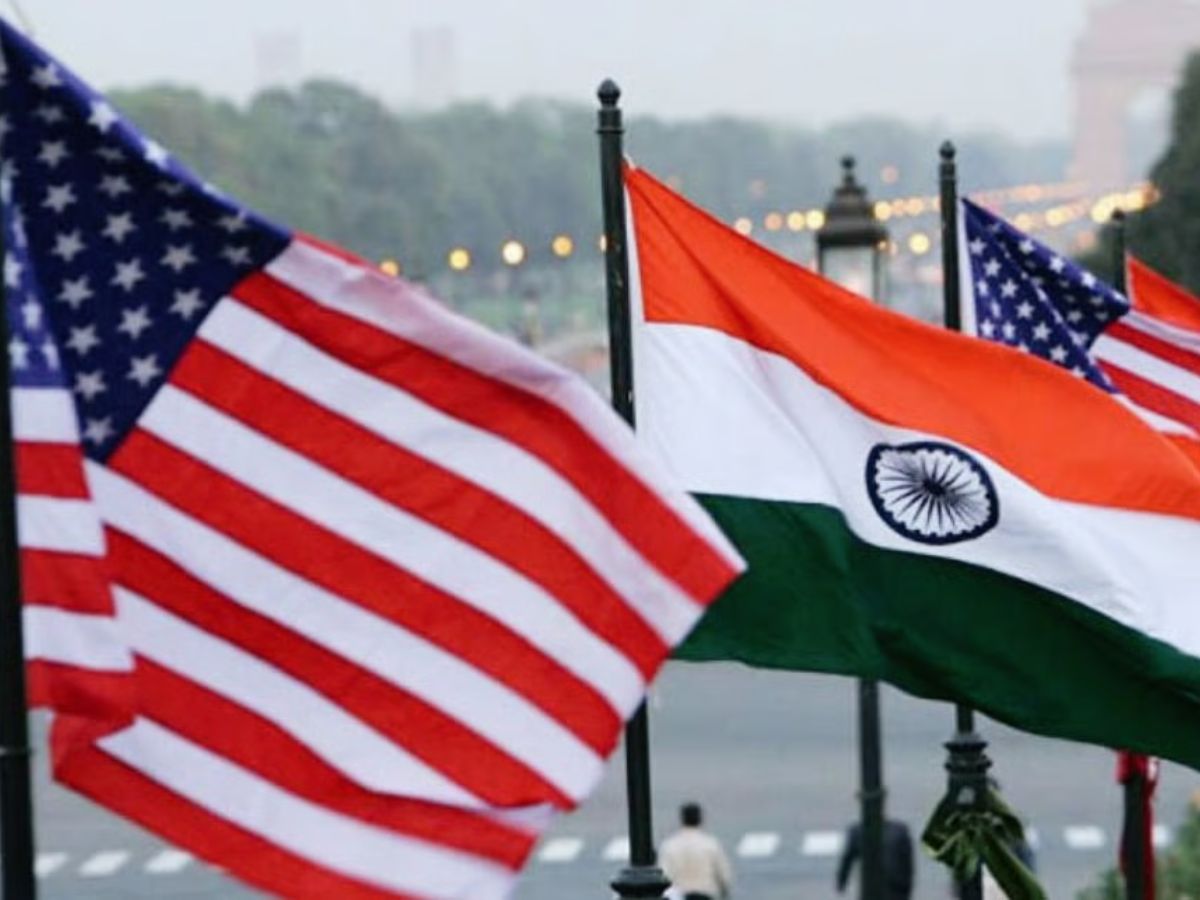
Future of India-U.S. strategic par tnership is indeterminate
Is US policy towards India under the Trump 2.0 Administration in a transitory phase in the evolution of India-US strategic partnership? Is President Trump’s tariff policy selectively targeting India with highest tariff rate on Indian exports to the US just a hard bargaining tool? Does the Trump White House’s embrace of the Pakistani Government and, more particularly the most powerful Field Marshal of the Pakistani Army signal a reduction of India’s place in America’s South Asia policy? Does the ability of China to arm-twist the Trump Administration by weaponizing rare earth and critical minerals to reduce the highest ever announcement of tariff rate on any country—145% to 45%, set the limits on Trump’s Quad strategy in the India-Pacific? Is Trump’s lenient approach to deal with Putin combined with punitive tariffs on India a message that India-US strategic partnership no longer remains the same?
These are the issues that indicate that the upward trajectory of India-US strategic partnership seems to be at least temporarily halted. India does not occupy a priority of place in President Trump’s foreign policy strategy. The belief in the strategic circles in India that the Trump 2.0 Administration would be better for India, or at least less problematic, has proven to be mistaken. The conviction in the foreign policy community that the personal rapport between President Trump and Prime Minister Narendra Modi would alleviate the strategic collaborations between India and the United States too has turned out to be specious.
There is no doubt that the personalities of leaders play a significant role in relations between nations. But that there could be serious exceptions have been amply brought out by the personality of the current occupant of the American White House. President Trump does not believe in the principle of sovereign equality of nations. He leaves no stone unturned to prevent legal hurdles—domestic constitutional constraints or international law, from coming on the way of his political and economic goals. That he has imperial ambitions is clearly reflected in his domestic agenda and the brutal methods that he approves to deal with illegal immigrants. He is punitive in his approach towards his political opponents and critics of his policies at home. Among numerous examples, the instances of criminal investigations against the Chairmen of the Federal Reserve and Governor of Minnesota stand out. President Trump just does not respect the principles of separation of powers and checks and balances, which are cardinal principles of American Constitution. More consequential are his anti-poor and anti-minority policies, reflected in his opposition to the very concept of “equity, inclusion and diversity” and his attempts to control the education system in the US.
His imperial ambitions are, of course, not limited to continental United States. Occupying the most commanding position of the most powerful country in the world, Trump treats other countries as subordinate to the United States. He has marginalized Africa; he tries to set the agenda and prevent the role of other powers in West Asia; he has contempt for contemporary Europe; he aims at reviving the Monroe doctrine of the early 19th century to exclusively dominate over Latin America and seeks to do trade and business with the India-Pacific countries on his terms and conditions.
The way President Trump has humiliated president Volodymyr Zelenskyy of Ukraine, insulted President Cyril Ramaphosa of South Africa, mocked French President Emmanuel Macron of France, declared himself as Acting President of Venezuela, desires to see his Secretary of State Marco Rubio as the President of Cuba, demands ownership over Greenland and many more, throws a clear light on his motivation to be a global monarch.
However, there is a big difference between cultivating an ambition and realising it. By undermining the United Nations, refraining from upholding multilateralism, withdrawing the American membership from scores of international organisations, Trump will certainly succeed in disrupting the current global order and international institutions. But the global order, albeit with a difference, will survive the Trump Administration.
Nevertheless, India needs to draw hard lessons from the foreign policy of the Trump Administration. It is worth deliberating why President Trump undermines India-US strategic partnership painstakingly built over two decades and enjoying bipartisan support in Washington’s Beltway.
First, Trump feels constrained by powerful personalities in other countries and thinks that such personalities could come in the way of his attempt to be the global emperor. While many point out that President Trump adores authoritarian figures and popular personalities, the reality perhaps is his feeling the US political ecosystem would not allow him to achieve his imperial goals.
President Trump perhaps thinks that powerful leaders, such as Vladimir Putin of Russia and Xi Jinping of China are the roadblocks to his imperial ambitions. President Putin stood tall and prevented Trump from ending the Ukraine war in 24 hours. President Xi was not shaken when Trump announced a tariff of 145% on Chinese goods and rather forced him to come to the negotiating table and agree to reduce the tariff to 45%. President Trump, moreover, cannot compete with Prime Minister Narendra Modi in the popularity race either domestically or internationally. The way India under Modi’s leadership has dealt with Trumpian tantrums, including the insulting remarks by him and some of his advisors and Cabinet members, such as describing Indian economy as dead economy, has clearly dismayed President Trump.
In the classic psychological game of personalities, Trump has adopted a strategy to praise the leaders and take measures to create different types of constraints for Russia, India and China. While refraining from directly imposing tariffs or other sanctions on Russia, Trump has threatened countries buying Russian oil, especially India. While reducing tariffs on Chinese goods, Trump has offered $11 billion of arms to Taiwan. While continuing with defence ties with India, Trump has cultivated ties with the Pakistani establishment.
The second lesson that India needs to draw is from the fact that the future presidents of the United States may continue to adopt Trump’s policies and strategies—either to the same degree or more, not less. The simple rationale is that no American President would like to see an India that grows in power and yet maintain strategic autonomy.
The nature and depth of future India-US strategic partnership thus appears indeterminate.
Chintamani Mahapatra is Founder Chairperson, Kalinga Institute of India-Pacific Studies, and Editor, India Quarterly.
