Rather than waiting for the restoration or the rejuvenation of an earlier global order, India has steadily expanded its economic engagement through a wide network of trade agreements. Today, India has 22 free trade and preferential trade agreements in force.
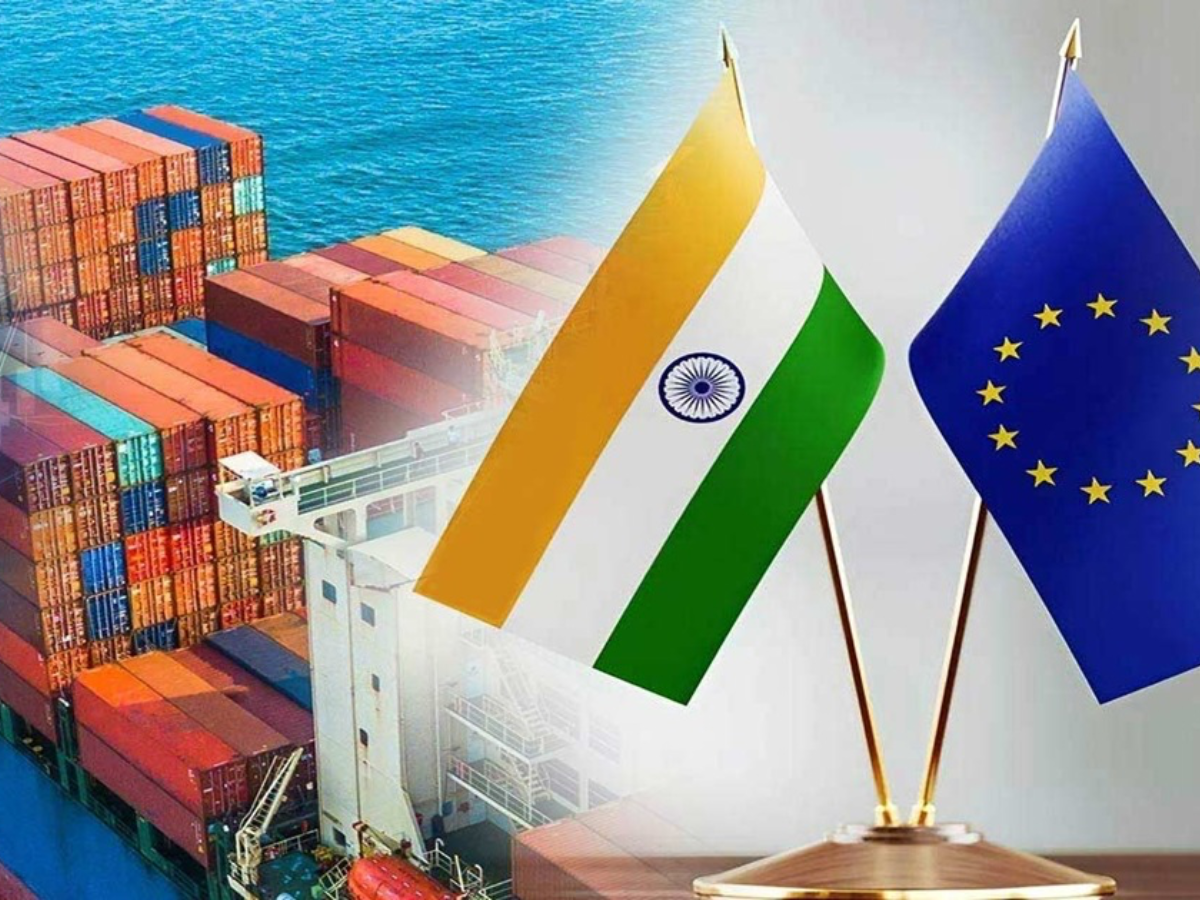
India-EU Free Trade Agreement Building trust in a fragmenting global economy (Photo: File)
NEW DELHI: When India and the European Union announced the conclusion of a Free Trade Agreement at the 16th India-EU Summit, jointly by Prime Minister Narendra Modi with European Council President Antonio Costa and European Commission President Ursula von der Leyen, the moment marked a political affirmation at the highest level that two major economic powers were willing to place trust, predictability and long term cooperation at the centre of their economic relationship.
The partnership brings together, India, the world’s fourth largest economy and the EU, its second largest. Together, India and the European Union account for nearly a quarter of global GDP. At a time when economic ties are increasingly shaped by suspicion, coercion and unilateralism, the decision to forge a comprehensive agreement reflects a shared recognition that growth, stability and resilience now depend on reliable partners. The scale of the agreement underscores its importance. Over 99% of Indian exports by value will now enjoy preferential access to the European Union. Exports worth Rs 6.41 lakh crore, roughly $75 billion, are positioned for accelerated growth. Roughly $33 billion dollars of labour intensive exports in sectors such as textiles, leather, marine products, gems and jewellery stand to benefit immediately. These are sectors that employ millions and connect global trade directly to domestic livelihoods.
The agreement builds on an already deep economic relationship. The European Union is among India’s largest trading partners. In 2024-25, bilateral trade in goods stood at Rs 11.5 lakh crore, or about $136.5 billion. Indian exports accounted for Rs 6.4 lakh crore, while imports stood at Rs 5.1 lakh crore. Trade in services has grown even faster, reaching Rs 7.2 lakh crore, or over $85 billion, in 2024. The FTA provides direction and certainty to a relationship that had already acquired scale.
For much of the last three decades, global trade was guided by the assumption that open markets, supported by multilateral rules, would steadily expand opportunity. That assumption is now under strain. Across regions, trade policy is increasingly shaped by domestic politics, strategic rivalry and concerns over economic security. Tariffs have returned to centre stage. Subsidies have expanded. Supply chains are being redrawn.
The United States has played a decisive role in this transformation. Washington has moved away from free trade orthodoxy toward policies that prioritise domestic manufacturing, supply chain control and technological leadership. Tariff barriers imposed in the last decade remain largely in place. Industrial policies under initiatives such as the Inflation Reduction Act and the CHIPS and Science Act have altered competitive dynamics by privileging domestic production. These choices have reshaped global trade flows and placed new pressures on partners and allies.
China, meanwhile, continues to benefit from access to global markets while maintaining a tightly protected domestic economy. The outcome has been widening and persistent trade imbalances. In 2024, the European Union’s trade deficit with China exceeded 300 billion euros. India’s trade deficit with China has approached $100 billion. These are not temporary distortions but structural features of the current global trading system.
The broader economic environment compounds these challenges. Global GDP growth in the 2020s is projected to average around 2.5%, the slowest rate in more than six decades. Slower growth, higher barriers and fragmented supply chains now define the global economy.
At the same time, the institutions meant to manage trade frictions are weakened. The World Trade Organization remains effectively paralysed, its dispute settlement mechanism unable to function as intended. Rules continue to exist, but enforcement has become uncertain. For countries seeking stability and predictability, reliance on multilateral processes alone is no longer sufficient.
India has responded to this changing reality with pragmatism. Rather than waiting for the restoration or the rejuvenation of an earlier global order, India has steadily expanded its economic engagement through a wide network of trade agreements. Today, India has 22 free trade and preferential trade agreements in force. These include agreements with the United Arab Emirates, Australia, the United Kingdom, the EFTA grouping, ASEAN, Japan and South Korea, alongside preferential arrangements with partners in Latin America and Eurasia. Taken together, the India-EU trade agreement, alongside India’s FTAs with the United Kingdom and the EFTA grouping, effectively provides Indian businesses, exporters and entrepreneurs access to the entire wider European market.
This approach reflects an understanding of contemporary risks. In a world of rising tariffs and declining trade growth, dependence on a single market or trade route becomes a vulnerability. Diversification offers resilience. It allows exporters to redirect flows, firms to plan investments with greater confidence, and policymakers to retain room for manoeuvre.
For Indian exporters, preferential access to the European market provides continuity at a time when global demand is uncertain. Labour intensive manufacturing gains a durable foothold in a high-value market. Engineering goods, automobiles and processed food exports benefit from reduced barriers and greater regulatory clarity. Sensitive sectors such as agriculture and dairy remain protected, reflecting domestic priorities and social considerations.
The services dimension is equally significant. Services are the fastest-growing component of India’s economy and a major source of export earnings. The agreement secures meaningful access across information technology, professional services, education, finance and tourism. A forward looking mobility framework expands opportunities for Indian professionals, addressing workforce shortages in Europe while strengthening India’s position as a global provider of skills.
For the European Union, the agreement addresses a different but related concern. Recent years have exposed the risks of over concentrated supply chains and excessive dependence on limited geographies. India offers scale, a young workforce and an increasingly predictable policy environment. Deeper economic engagement allows European firms to diversify production and investment while accessing one of the world’s fastest-growing major markets.
Beyond market access, the agreement advances India’s long term human capital and innovation priorities. It establishes a framework to engage constructively on social security arrangements over a five year horizon, alongside provisions supporting student mobility and post study work opportunities. Indian practitioners of traditional medicines will also gain the ability to work under home titles in EU member states where such practices are not regulated, opening new avenues for cultural and professional exchange. In financial services, the agreement promotes cooperation in innovation and cross-border electronic payments, while expanding market access across several major European economies, deepening financial integration and services trade. Stronger intellectual property protections aligned with TRIPS commitments are reinforced, while affirming the Doha Declaration and recognising the importance of India’s Traditional Knowledge Digital Library. Cooperation in emerging areas such as artificial intelligence, clean technologies and semiconductors further signals a forward-looking partnership.
Equally important is the character of the partnership itself. The India-EU FTA reflects a conscious effort by two large and diverse economies to build trust in an era of uncertainty. Provisions addressing non-tariff barriers, regulatory cooperation and emerging climate-related measures acknowledge that modern trade is shaped as much by standards and rules as by tariffs.
Taken together, India’s expanding network of trade agreements and the India-EU FTA help sustain economic momentum amid a challenging global environment. Rising tariffs elsewhere, slowing trade growth and institutional weakness have not halted India’s trajectory. Wider market access and deeper integration into global value chains have provided important buffers.
India cannot insulate itself entirely from global headwinds. But, by broadening partnerships, protecting core interests and engaging where opportunity exists, India has built a framework that supports growth even as the global economy becomes increasingly turbulent. The India-EU FTA reflects clarity of purpose in uncertain times. It strengthens India’s position as the fastest growing major economy and reinforces the long term vision of a Viksit Bharat by 2047.
* Anil K. Antony is National Secretary and National Spokesperson of Bharatiya Janata Party.
