
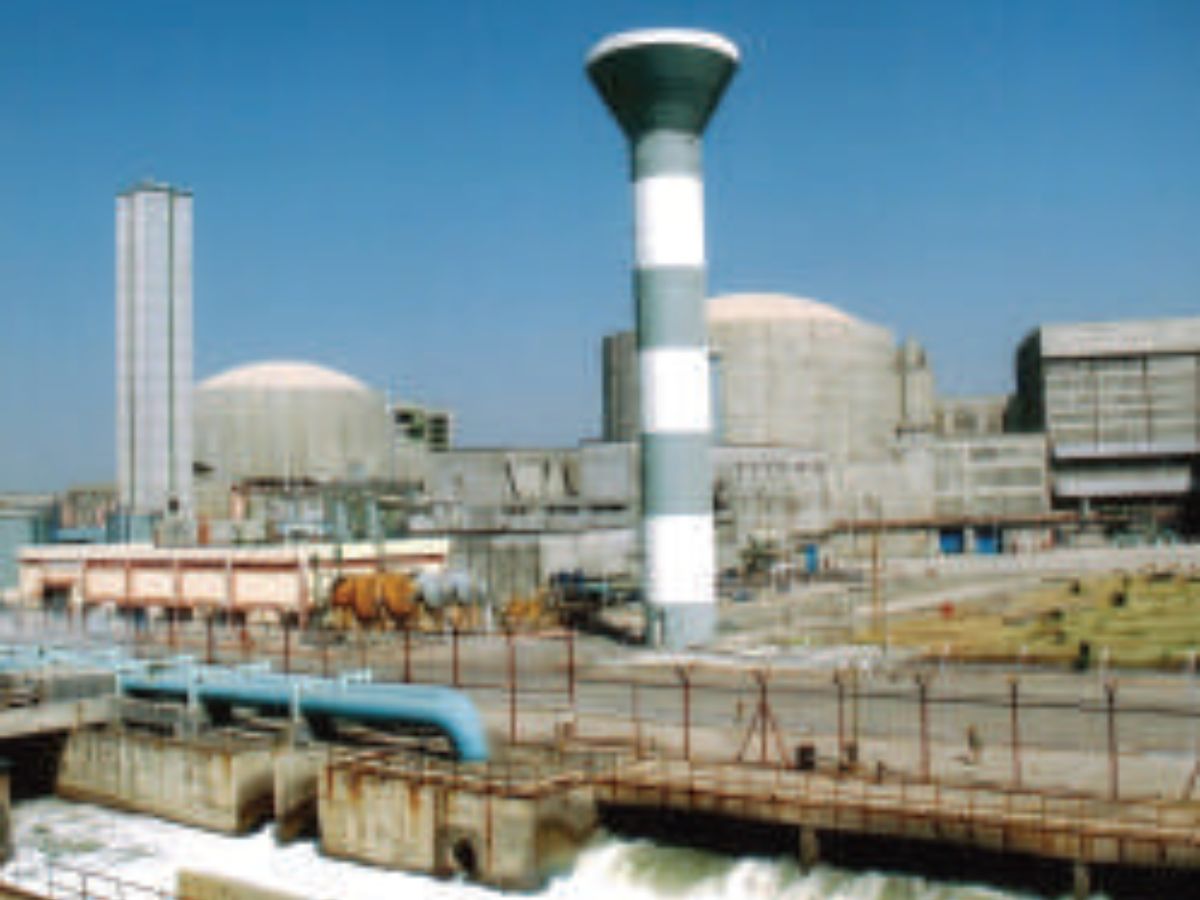
India’s budget 2025-26 puts aside Rs 20,000 crore or around $2.5 billion for a “Nuclear Energy Mission for Viksit Bharat”, and put a year on it: five operational reactors by 2033. Once mired in secrecy, India was ready to leap into the nuclear energy business. At the heart of this transformation is a technology that did not exist in any serious commercial form a decade ago: the Small Modular Reactor, or SMR. Understanding what these machines are, why they matter, and why India in particular has placed such ambitious bets on them is one of the more important stories in global energy today.
WHAT IS AN SMR, AND WHY DOES THE ‘SMALL’ MATTER?
A conventional nuclear power plant is a monument to industrial gigantism. It generates anywhere from 1,000 to 1,600 megawatts of electricity, requires a construction workforce in the tens of thousands, takes between ten and fifteen years to build, and demands upfront capital that routinely exceeds $10 billion, all before a single electron reaches the grid. The logic was always that bigger meant cheaper per unit of power, an economy of scale that made nuclear competitive with coal.
SMRs challenge that logic at every point. They are defined by the International Atomic Energy Agency as reactors with an output of up to 300 megawatts, roughly one-fifth to one-third the size of conventional plants. More importantly, they are designed to be factory-built rather than custom-constructed on site. Their components arrive in standardised modules that can be assembled far more quickly than traditional reactor components, which are often fabricated specifically for a single plant. Where a large reactor might take a decade to build, SMR advocates argue that modular construction, once the supply chain is established, can be compressed to as little as two to three years (World Nuclear Association, 2024 SMR Tracker).
The other crucial word in the name is “modular”. A utility that needs 300 megawatts today can build one unit, and add a second when demand grows. This incremental approach is attractive to electricity planners in developing countries, where demand is rising rapidly but irregularly, and where the ability to match supply additions to demand growth has real financial value.
INDIA’S ENERGY PREDICAMENT
India’s energy situation is not so much a problem as a paradox. It is the world’s third-largest producer of electricity, yet more than 200 million of its citizens still lack reliable access to power. It has the world’s most ambitious renewable energy programme—targeting 500 gigawatts of non-fossil capacity by 2030—yet it remains the world’s second-largest consumer of coal, which accounts for roughly 75% of its electricity generation (IEA, Energy Policy Review: India, 2023). And it has committed to achieving net-zero carbon emissions by 2070, a target that requires decarbonising an economy projected to be the world’s third-largest by that date.
Solar and wind power have made spectacular advances in India—installed solar capacity has grown from 2.6 gigawatts in 2014 to over 90 gigawatts in 2024—but they share a structural limitation that is increasingly difficult to ignore: the sun does not always shine and the wind does not always blow. As renewable penetration rises, the grid needs more and more “dispatchable” baseload power that can run continuously, day and night, regardless of weather. Today that role is played by coal. In a decarbonised future, the most credible candidate is nuclear.
India currently has about 6.9 gigawatts of nuclear capacity, less than 4% of its electricity generation. It is targeting 100 gigawatts of nuclear power by 2047, an increase of more than 14-fold in roughly two decades. Large reactors alone cannot achieve this at the pace required. Sites are scarce, capital is tight, and opposition from coastal and farming communities to large nuclear installations has historically been fierce (the Jaitapur plant in Maharashtra, proposed over a decade ago for six European Pressurised Reactors of 1,650 megawatts each, remains stalled in planning disputes). SMRs offer a way to add nuclear capacity in smaller, geographically flexible increments, including at sites completely unsuited to large reactors.
INDIA’S THREE-TRACK SMR PROGRAMME
What distinguishes India’s SMR ambitions from those of many other countries is that India intends to develop its own technology rather than simply import it. This reflects a longer tradition: India built its first pressurised heavy water reactors domestically in the 1980s and has since developed an indigenous nuclear industry that the government has always regarded as a strategic asset as much as an energy resource.
The Bhabha Atomic Research Centre is designing three distinct SMR variants: the 200-megawatt Bharat Small Modular Reactor (BSMR-200), a smaller 55-megawatt version for remote and off-grid deployment, and a 5-megawatt high-temperature gas-cooled reactor capable of producing hydrogen as well as electricity. The BSMR-200 is a pressurised heavy water reactor drawing on India’s decades of PHWR experience, an important advantage, since it means the design team is not starting from scratch. Lead units for both larger designs are proposed for construction at Tarapur in Maharashtra, India’s oldest nuclear site.
In December 2024, NPCIL issued a request for proposals from Indian energy users to finance and build a fleet of Bharat Small Reactors, opening the nuclear sector to private companies for the first time. The response has been striking: six major industrial conglomerates, including Tata Power, Reliance Industries, Adani Power, JSW Energy, Jindal Steel and Power, and Hindalco, have submitted expressions of interest, identifying 16 prospective sites across six states. The concept being tested here is “captive” nuclear power: large energy-intensive industries building their own reactors to secure reliable, carbon-free power for steel mills, aluminium smelters, and data centres, rather than drawing from the grid.
GLOBAL COMPARISON
India’s SMR programme is ambitious by any measure, but it is entering a field that is already crowded and moving fast. China and Russia have already deployed early SMRs, while the UK, the US, and Canada are progressing towards the first Western commercial rollouts. Russia’s floating nuclear power plant, the Akademik Lomonosov, using KLT-40S reactors, has been operating commercially since 2020. China’s Shidao Bay high-temperature pebble-bed reactor was connected to the grid in 2021—making China the first country to operate a fourth-generation SMR design at commercial scale.
In the West, Canada has emerged as an early leader, with Ontario Power Generation receiving construction approval for a GE Hitachi BWRX-300 at the Darlington site in April 2025, a project targeting operation by 2029. The United Kingdom has selected Rolls-Royce SMR, a 470-megawatt pressurised water reactor backed by a consortium that includes Qatar’s sovereign wealth fund, for deployment at Wylfa in Wales, with the government committing £280 million in initial funding. Romania aims to be the first European country with an operational Western-designed SMR, deploying NuScale’s VOYGR plant by 2029. In the United States, the Trump administration in May 2025 announced a goal to quadruple nuclear capacity to 400 gigawatts by 2050, with SMRs central to the strategy, while tech companies including Google and Amazon have already signed purchase agreements to power data centres with SMR electricity.
India’s position in this global race is distinctive in one important respect: it is the only major SMR programme explicitly designed around an indigenous pressurised heavy water reactor design. Every Western programme is importing or adapting light-water reactor technology, largely derived from the US Navy’s submarine reactor programme. India’s PHWR pathway gives it technological independence but also means it cannot simply license a proven foreign design—its reactors must be designed, tested, and licensed from scratch, which takes time.
SWOT ANALYSIS: INDIA’S SMR PROGRAMME
-
STRENGTHS. India enters the SMR era with genuine technical depth. Its PHWR experience, accumulated across 23 operating reactors since the 1970s, provides a foundation that few developing countries can match. The domestic industrial base, including BHEL, Larsen & Toubro, and a network of precision engineering suppliers, already manufactures major reactor components. The country has a functioning nuclear regulatory body in the Atomic Energy Regulatory Board (AERB) and a well-established site selection and safety assessment process. Political commitment is unusually strong: SMRs have been written into two consecutive Union Budgets, with named allocations and specific timelines, a level of policy clarity that has often been absent from Indian nuclear planning. India has also signed nuclear cooperation agreements with the US, France, the UK, and Russia, all of which are actively developing SMR programmes, creating pathways for technical collaboration.
-
WEAKNESSES. India’s nuclear programme has historically struggled with delays. Kakrapar Units 3 and 4 and the Rajasthan reactor fleet were repeatedly delayed due to supply chain problems and the nuclear liability issue. The Civil Liability for Nuclear Damage Act, 2010, which holds equipment suppliers jointly liable for accidents, has long been a deterrent to both foreign and domestic private investment, and the proposed amendments remain in draft form. India’s Atomic Energy Act of 1962 still prohibits private ownership of nuclear plants; the NPCIL RFP model, in which private companies fund and build while NPCIL operates, is an improvised workaround that lacks explicit statutory authority and creates legal uncertainty for investors. Indigenous PHWR-based SMR designs have not yet been demonstrated at commercial scale anywhere in the world, making India a first-of-a-kind builder in a technology class that already has first-mover disadvantages globally.
-
OPPORTUNITIES. India’s energy demand growth is structurally favourable for SMR deployment. The government’s ambition to replace ageing coal plants—India plans to retire significant coal capacity in the 2030s and 2040s—creates an opportunity to repurpose existing coal plant sites, which already have grid connections, water access, and local workforce infrastructure, for SMR deployment. The emergence of large industrial consumers (steel, aluminium, cement, and now AI data centres) as potential “anchor customers” for captive SMRs could create demand certainty that accelerates the supply chain investment the technology needs. India’s position as a potential SMR exporter to the Global South, Bangladesh, Vietnam, and several African nations have expressed interest in Indian nuclear cooperation, gives the programme a geopolitical and commercial dimension beyond domestic power generation.
-
THREATS. Cost overruns remain the technology’s most credible vulnerability. NuScale, the American SMR pioneer, cancelled its flagship Idaho project in late 2023 after projected costs ballooned from $58 per megawatt-hour to $89, a cautionary tale that has sobered global enthusiasm. The learning curve logic of SMR cost reduction requires a large volume of repeat orders to realise, and India’s initial five-reactor programme is too small to drive significant factory economies. Renewable energy, particularly solar paired with large-scale battery storage, is falling in cost faster than most projections anticipated; by the early 2030s, the cost comparison with SMRs could be unfavourable in sun-rich regions. Public acceptance remains an unresolved variable: while Indian public opposition to nuclear energy is lower than in Europe or Japan, the Fukushima accident demonstrated how a single failure at a distant plant can transform the political environment overnight.
THE STAKES
As energy researchers have noted, the clean energy transition can be understood as a race between two trajectories: the declining cost of intermittent renewables and the declining cost of reliable low-carbon baseload power. If only one of those trajectories reaches its target in time, the energy system will require some form of long-duration storage, demand flexibility, or dispatchable zero-carbon generation to stay stable. Nuclear, and specifically the modular, deployable, industrially-scalable nuclear that SMRs promise, is the most credible candidate for that dispatchable role.
India, the world’s most populous country, growing rapidly in income and energy appetite, is committed to a net-zero pathway that requires decarbonising at a pace and scale without historical precedent. The coal plants that power its growth today cannot run forever; the solar panels that supplement them cannot run at night. In many ways, nuclear is the answer. That bet, placed in the form of the Bharat Small Modular Reactor, the Nuclear Energy Mission, and the quiet opening of India’s most guarded industry to private capital, is now officially on the table.
-
Hindol Sengupta is professor of international relations, and director of the India institute, at O.P. Jindal Global University.




