According to neutral observers, Israel deliberately carried out attack in Qatar to scupper any peace talks and continue its brutal war in Gaza
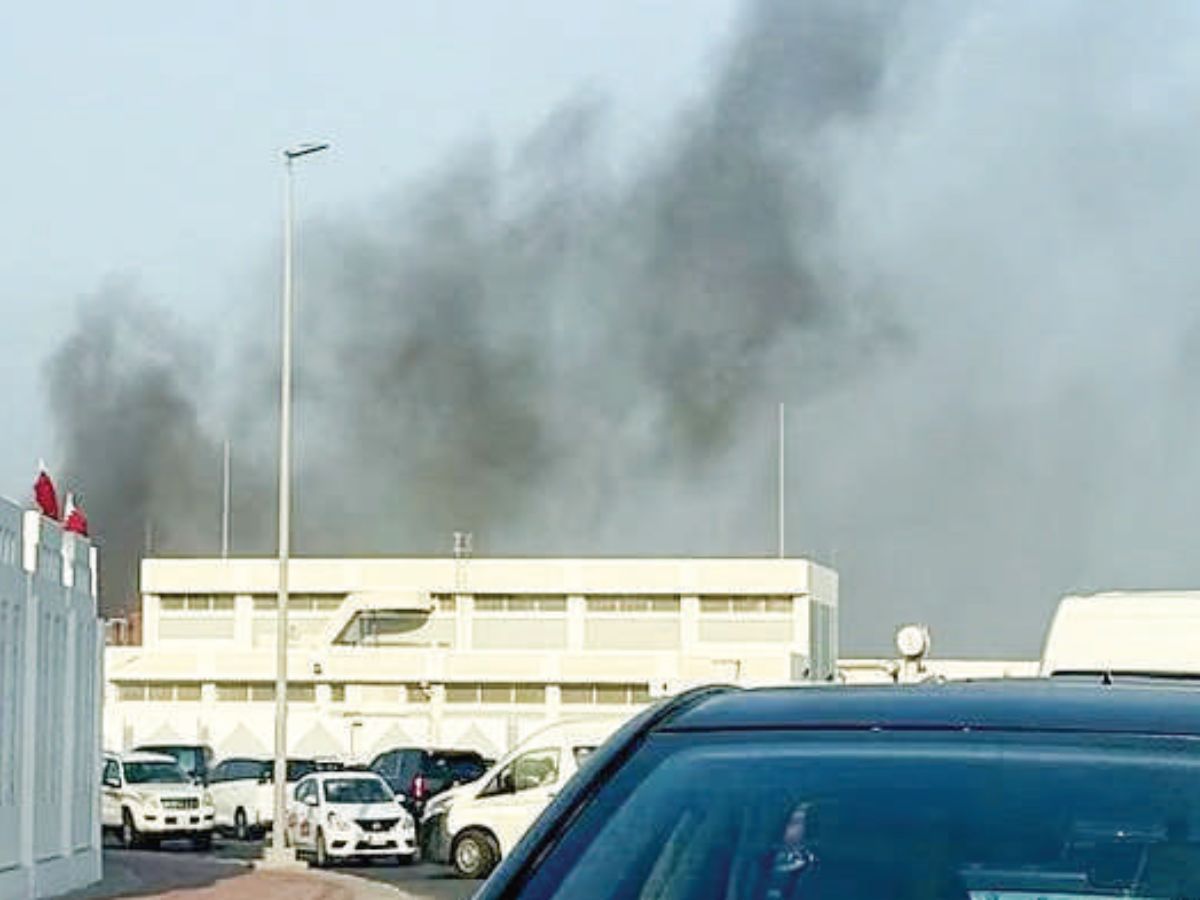
London: They were meeting in their luxurious residential premises in northern Doha when the Israeli bombs fell, killing five of them. Senior Hamas leaders were discussing the latest US proposals for a ceasefire in Gaza and a hostage release deal, which President Trump had called his “last warning,” when Israeli forces carried out Operation Atzeret HaDin, or “Day of Judgement.”
According to Israel’s president, Isaac Herzog, the strike targeted Khalil al-Hayya, the main Hamas negotiator based in Qatar, whom he claimed had repeatedly thwarted attempts at brokering peace. Speaking in a briefing shortly after the event, Herzog said: “We targeted those who refused to accept the deal, including primarily al-Hayya, whose hands carried the blood of thousands of Israelis.”
Neutral observers, however, expressed a different view, arguing that Israel deliberately carried out the outrageous attack in Qatar—America’s ally and a key mediator in the Middle East—to scupper any peace talks and continue its brutal war against the Palestinians in Gaza, aiming for what it calls a “total victory” over Hamas.
Qatar itself was among many regional powers strongly criticising Israel’s airstrike, condemning the violation of its sovereignty and reserving the right to respond. “We will act firmly against the reckless breach that threatens our security,” insisted Qatar’s Prime Minister, Mohammed bin Abdulrahman bin Jassim al-Thani. “I was meeting one of the hostage’s families the morning of the attack. They are counting on this mediation; they have no other hope for that,” he added.
Other nations in the Gulf expressed outrage, slamming Israel and vowing to support Qatar. The United Arab Emirates, a member of the Abraham Accords aimed at normalising diplomatic relations with Israel, called the strikes a “reckless attack” and “flagrant violation” of international law, while Iran and Saudi Arabia characterised the bombing as a “criminal act.”
Based on reports from Washington, the plan being discussed by Hamas officials in Doha featured a 60-day ceasefire as a temporary framework, with the early release of all remaining hostages, both living and dead. At the same time, an unspecified number of Palestinian prisoners held in Israeli jails would be released. Discussions also focused on when exactly the exchange would occur—within 48 hours of acceptance or in phases?
Disarmament of Hamas was included, but did this mean complete or partial disarmament of its fighters, or did it include the removal of leadership? To what extent should Israeli forces withdraw, if at all, during or after the ceasefire, and how long could they remain in any defined buffer zones? Who would guarantee the agreement and supervise compliance? So many questions were abruptly ended by Israel’s deadly action. By attempting to kill the men reviewing Washington’s latest proposals, Prime Minister Netanyahu made the peace proposal itself a target.
President Donald Trump, still hoping for a Nobel Peace Prize, rapidly changed his tone after the bombing. Before the attack, he had posted on Truth Social: “The Israelis have accepted my Terms. It is time for Hamas to accept as well. I have warned Hamas about the consequences of not accepting. This is my last warning, there will not be another one!” After the strike, his tone shifted markedly, insisting he was very unhappy about every aspect. “I’m not thrilled about it. It’s not a good situation,” he said, while quickly shedding any responsibility, stating: “This was a decision by Prime Minister Netanyahu; it was not a decision made by me.”
Many observers saw this as a weak response from the leader of the free world, potentially leading Arab leaders across the Middle East to question the value of America’s security guarantees.
The bombing created a tricky problem for Trump: allowing Israel to bomb Qatar’s capital without clear condemnation could be politically dangerous, but could he, a prisoner of the Israeli Lobby in America, afford to rupture ties with Israel?
Qatar hosts America’s largest military facility in the region, the Al Udeid airbase, placing the Qataris firmly under America’s security umbrella. This gives them some comfort, as for years Israeli officials denounced Qatar as the “Club Med for terrorism,” while Hamas leaders appeared to live there safely. The US Central Command maintains a Forward Command presence at Al Udeid, as does the Air Force Central Command and the 609th Air Operations Centre. Intelligence, surveillance, and reconnaissance assets are also stationed there, along with support, logistics, maintenance, and mission command units.
Altogether, some 10,000 US personnel are based in Qatar, giving Washington an enormously strong foothold in the Middle East. As one commentator framed it: “Washington crouches awkwardly, half ally, half broker, trying to placate both sides while still playing mediator with Hamas.”
So, what might the outcome for the Middle East be following Operation Atzeret HaDin? After Israel’s year-long assault on Hamas in Gaza, a major rocket attack on its territory is unlikely. Should it occur, however, an out-of-control Israel might carry out more extraterritorial strikes.
The attack on Qatar follows a string of Israeli strikes on Middle Eastern capitals in recent months, including Tehran, Beirut, Damascus, and Sana’a. Events could easily spiral into a multi-front war, severely affecting oil prices via the Straits of Hormuz and Gulf shipping lanes, creating global fallout and a severe humanitarian crisis. A brighter outcome could result from restraint on all sides, strong behind-the-scenes diplomacy—especially from the US—and a shared interest in avoiding broader war.
This could be achieved if Israel confirms that the strike was a one-time, high-value target elimination, and Qatar responds diplomatically through the UN without severing ties or escalating militarily. Ceasefire and hostage talks could then resume, possibly with a new mediator such as Egypt or Turkey.
Unfortunately for the hostages, Netanyahu’s government is prioritising Hamas’ total defeat over a ceasefire agreement and hostage release. Despite mounting international criticism, Israel is clearly escalating its efforts to force Hamas to surrender.
The UN General Assembly will meet next week in New York, where several Israeli allies are expected to recognise an independent Palestinian state. Undeterred, Israel has begun operations to seize Gaza City, where the 48 remaining hostages are believed to be held. Families of the hostages are frantic, desperately concerned that Netanyahu’s escalation greatly increases the risk to the 20 or so still believed alive and that retaliatory moves or diplomatic breakdowns could result in harm—or even death—of their loved ones.
They have every reason to be anxious, as Netanyahu’s concern for the hostages appears performative at best. Had he truly wanted to save them, he would have negotiated months ago and certainly would not have ordered the strike on Qatar, which instantly destroyed all prospects of successful mediation. By doing so, Benjamin Netanyahu effectively signed the death warrants of those innocent hostages held in Gaza for the past 708 days.
John Dobson is a former British diplomat, who also worked in UK Prime Minister John Major’s office between 1995 and 1998. He is currently a visiting fellow at the University of Plymouth.
