Pakistan opposed Muttaqi’s exemption request, apparently with support from Washington.
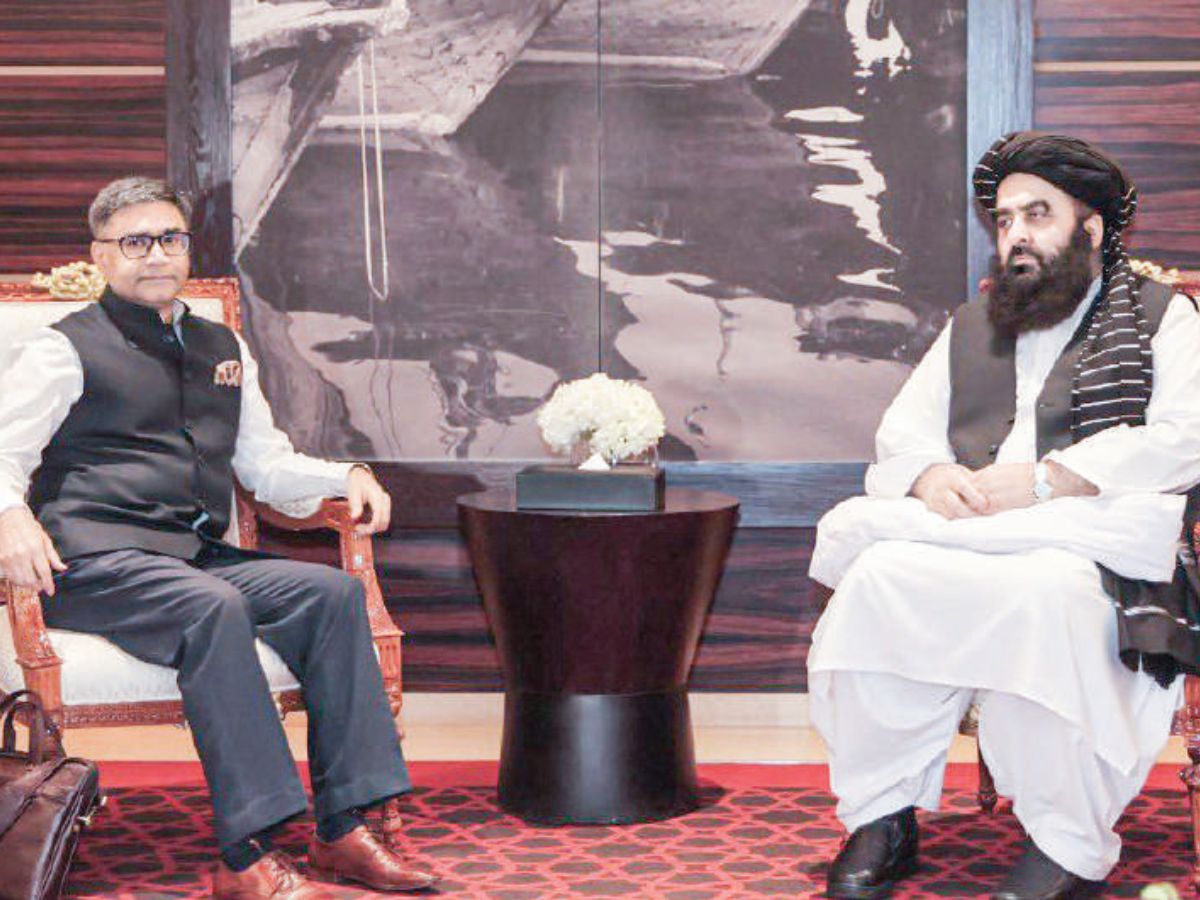
New Delhi: The planned visit of Taliban Foreign Minister Amir Khan Muttaqi to India later this month has been cancelled after the Security Council Committee established pursuant to resolution 1988 (2011) declined to grant him a travel ban exemption, diplomatic sources confirmed.
Muttaqi, who belongs to the Sulaimankhel, a sub-tribe of Pashtun, was scheduled to travel to India in the last week of August, with New Delhi having already completed “all logistical and diplomatic preparations” for the visit. Everything, sources say, was awaited on the basis of the decision from the UNSC’s travel committee. Once that was granted, the exact dates would have been finalized. With the permission refused for now, it is expected that the visit might happen in the coming months after the process is initiated again.
The 1988 Sanctions Committee, which oversees measures against designated Taliban figures, comprises all 15 members of the Security Council and operates by consensus, meaning a single objection blocks approval. The Committee is currently chaired by Pakistan’s Permanent Representative to the UN, Asim Iftikhar Ahmad, with Guyana and the Russian Federation serving as vice-chairs for 2025.
It is understood that Pakistan opposed Muttaqi’s exemption request, apparently with support from Washington, D.C., preventing consensus and leading New Delhi to withdraw its invitation.
Unlike open sessions of the UN Security Council, where decisions are taken by vote with the requirement of nine affirmative ballots and no veto from permanent members, the Security Council Committee established pursuant to resolution 1988 (2011) functions on the basis of consensus. The Committee, which includes all 15 Council members, considers requests such as travel ban exemptions for listed Taliban figures through a “silent procedure.” Proposals are circulated by the Chair, and if no member raises an objection within the allotted time, the request is approved. However, if even a single member objects, consensus is broken and the request is blocked.
In practice, this means that both permanent members and elected members have equal ability to prevent exemptions—one objection is enough. Members may also place a temporary “hold” that delays a decision, but a formal objection kills it outright. This mechanism gives smaller states, including non-permanent members such as Pakistan, an outsized role in shaping the outcome of exemption requests.
India is among the few countries that has continued to provide aid and assistance to Kabul post the fall of the Ashraf Ghani government in August 2021 amidst the retreat of the American forces. It has not stopped its support, focused on food, education and health, despite facing resistance from influential blocs.
The refusal to Muttaqi stands out because the Committee has recently approved similar exemptions. On 11 July, Khairullah Khairkhwah (TAi.093) was granted a waiver to travel to Moscow for urgent medical treatment, while on 1 August 2025, Abdul Salam Hanafi Ali Mardan Qul (TAi.027) was cleared to travel to Doha for medical treatment.
The designation numbers—such as TAi.026, TAi.027, TAi.093—are identifiers used by the UN sanctions list. “TA” stands for Taliban while “i” denotes individuals (while “TAe” is used for entities). The numbers are unique to each person listed, ensuring clarity despite multiple spellings or aliases.
Currently, more than 170 Taliban-affiliated individuals are designated under this regime, making them subject to asset freezes, travel bans, and arms embargoes unless exemptions are explicitly granted. The Security Council itself consists of 15 members: five permanent members—China, France, the Russian Federation, the United Kingdom, and the United States—and ten non-permanent members elected for two-year terms. The current non-permanent members are: Algeria (2025), Denmark (2026), Greece (2026), Guyana (2025), Pakistan (2026), Panama (2026), Republic of Korea (2025), Sierra Leone (2025), Slovenia (2025), and Somalia (2026).
Sources suggest that economic considerations that have started developing between may continue to shape U.S.–Pakistan alignment on Taliban-related decisions, including the handling of travel ban exemptions.
The blocked visit of Amir Khan Muttaqi is not the first attempted channel between Taliban figures and New Delhi. In the past, senior Taliban leader, Mawlawi Ahmadullah Wasiq had visited India, though Indian authorities did not extend any formal diplomatic protocol to the group—highlighting New Delhi’s cautious approach to engaging Taliban officials. Wasiq serves as Director General of Physical Education and Sports and head of Afghanistan’s National Olympic Committee. Prior to this, he had served as Director-General of Radio Television Afghanistan (RTA) and worked in public relations at the Ministry of Information and Culture. During the Taliban insurgency, Wasiq acted as a spokesperson before being captured in Zabul’s Shahjoy district and later detained at the Bagram facility.
