Even as a new global order emerges, World Economic Forum is reorganising itself with a new leadership team.
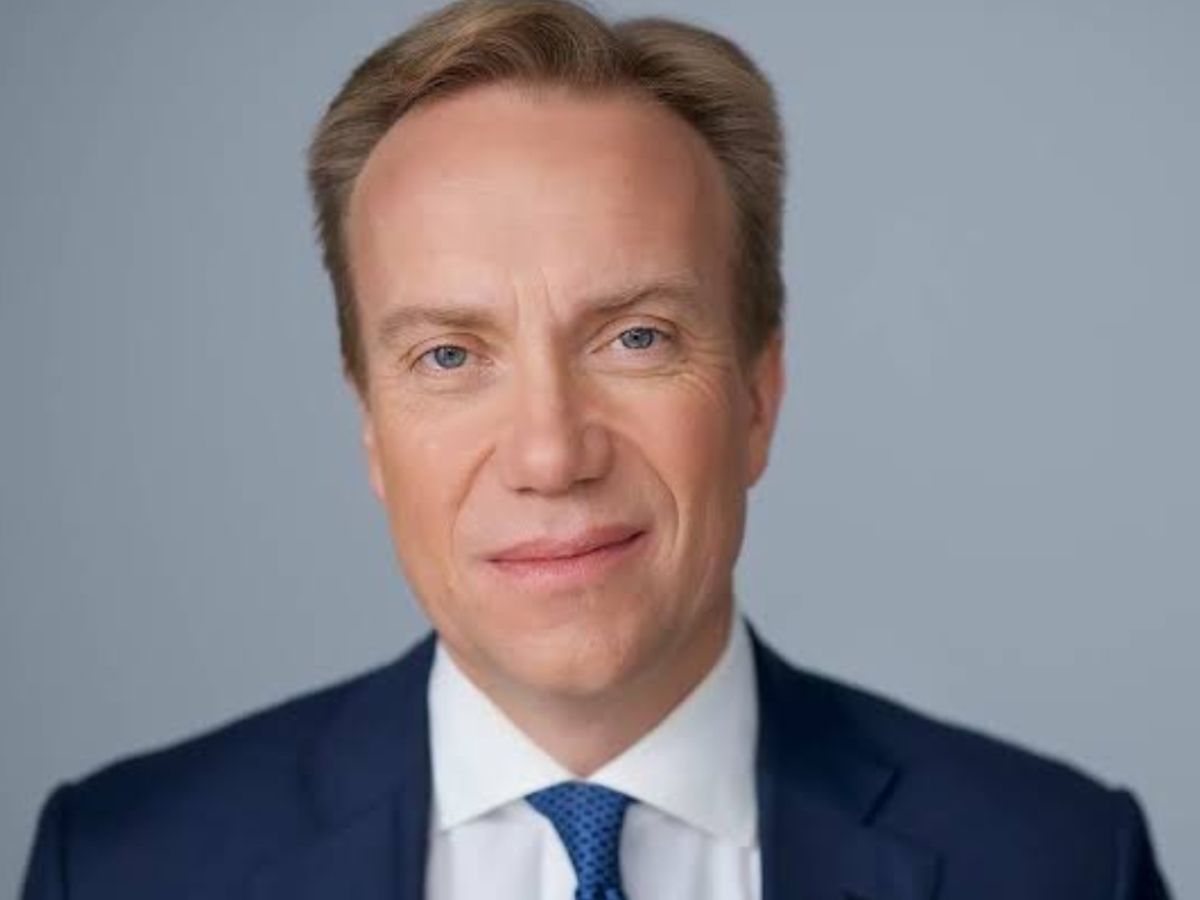
In Frame: Borge Brende (Image: World Economic Forum)
New Delhi: In January 2026, the World Economic Forum (WEF) will mark 55 years of being a global platform for leadership dialogue. The annual meeting in Davos commands unparalleled participation by heads of state and global business leaders.
Started as the European Management Symposium by Founder Prof Klaus Schwab in 1971, it was renamed as WEF in 1987. Since then, WEF has evolved in several phases. From the early years of a European business focus to the next phase of bringing political leadership to dialogue with CEOs. Later WEF created civil society communities that included young leaders, innovators and social entrepreneurs.
Then WEF added insights capabilities and publishes several reports on subjects like innovation, risk and gender that trigger global debates. The phrase “fourth industrial revolution” was coined by Prof Schwab with his landmark book. Since then, WEF has created 11 centres that specialize in subjects like financial systems, frontier technologies, and climate change.
A much-debated leadership transition occurred in 2025 with Prof Schwab stepping away from WEF. The Board of Trustees selected André Hoffmann and Larry Fink as the interim Co-Chairs of the World Economic Forum. Fink is Chairman and CEO of Blackrock, the world’s largest asset manager with over $13 trillion in assets under management. Hoffman is Vice Chairman and fourth-generation family representative at Roche, one of the largest and oldest healthcare companies in the world.
The Forum is guided by a Board of Trustees, exceptional individuals who act as guardians of its mission and values and oversee the Forum’s work in promoting true global citizenship. The renewed Managing Board, chaired by the Forum’s President and CEO, Børge Brende, acts as the executive body of the World Economic Forum.
“This moment marks a pivotal transition for the World Economic Forum. The Board will now focus its attention on institutionalizing the Forum as a resilient International Organization for Public-Private Cooperation. This next chapter will be guided by the original mission developed by Klaus Schwab: Bringing together government, business and civil society to improve the state of the world,” WEF said in a statement.
On his part, Prof Schwab has written a new book, “Thriving and Leading in the Intelligent Age,” which aims to prepare the general public for the tremendous transformations ahead. “I am now convinced that we are experiencing more than a technological revolution—we are witnessing a transition from the industrial to the Intelligent Age,” he says.
As the new leadership team takes charge with a fresh mandate at WEF, there have been many questions about the future and relevance of Davos. Over the previous years, WEF has reduced many regional meetings. WEF used to host annual meetings for South Asia, East Asia, the Middle East, Africa, the US, and Latin America. Local and global leaders marked their calendars for the annual meeting in Davos and regional meetings of their interest.
WEF also hosted several smaller private meetings and roundtables across various countries. Now WEF focuses on fewer in-person meetings and many virtual conferences. Apart from Davos, WEF held meetings in China, UAE, and the US in 2025.
The next few years will see an accelerated rise of growth economies while legacy economies struggle to cope with their stagnating markets. The east is rising while the west is plateauing. The rise of BRICS countries is matched by cracks in the NATO alliance and industrial decline in OECD countries. The weaponising of trade, technology and human capital flows has roiled the world order. Two wars continue while an increase in conflict zones is troubling world leaders.
The relevance of WEF will be tested in this new era of poly-crisis and reordering of the world. Legacy economies and growth economies will witness economic conflict as they compete on more equal terms. Legacy economies are loath to give up their influence to players from growth economies. Dominant currencies will witness challenges from new currency partnerships. Economic and technological sovereignty are mainstream issues. Young, restless consumers and citizens are already demanding accountability from entrenched establishments.
Climate change champions like Bill Gates have reprioritized global goals. “Climate change is serious… But we can’t cut funding for health and development. Although climate change will have serious consequences…it will not lead to humanity’s demise.”
It is in this scenario of multiple global shifts that WEF’s annual meeting will be held in January 2026 under the theme “A Spirit of Dialogue.”
At the next Davos, WEF can ensure that it remains relevant if it can bring people together on these complex issues. It is uniquely placed to do so. Over decades, WEF has encouraged voices from the global south to be heard and understood at Davos. WEF’s community of young leaders and tech innovators allows it a ready audience to engage on talent and technology challenges. Its centres of excellence provide insights to transform global governance.
WEF can be the bridge that the world needs today. It can match the ambitions of the east with the reset in the west. Davos is needed more than ever as the political left deepens its antagonism with the political right. Neglected faiths are asserting their importance and cultural heritage at a global stage. A reinvented WEF may be the platform that the reinventing world needs. Conflicting demands and confusing contradictions can be resolved with candid conversations on an established platform.
Børge Brende, President and CEO, World Economic Forum, has a clear view of WEF’s role and relevance. “In this new, more uncertain era, dialogue is our greatest source of innovation and resilience. Only through open exchange—across disciplines and industries, with a range of perspectives—can we unlock the ideas and trust that we need to move the world forward together.”
—Pranjal Sharma is a geo-economic analyst and the author of “The Next New: Navigating the Fifth Industrial Revolution.”
