Riyadh’s balancing act between Washington, Moscow, and Beijing is not indecision, it is deliberate deception. Saudi Arabia is lying low, watching global fault lines deepen, while quietly building its economic and military muscles.
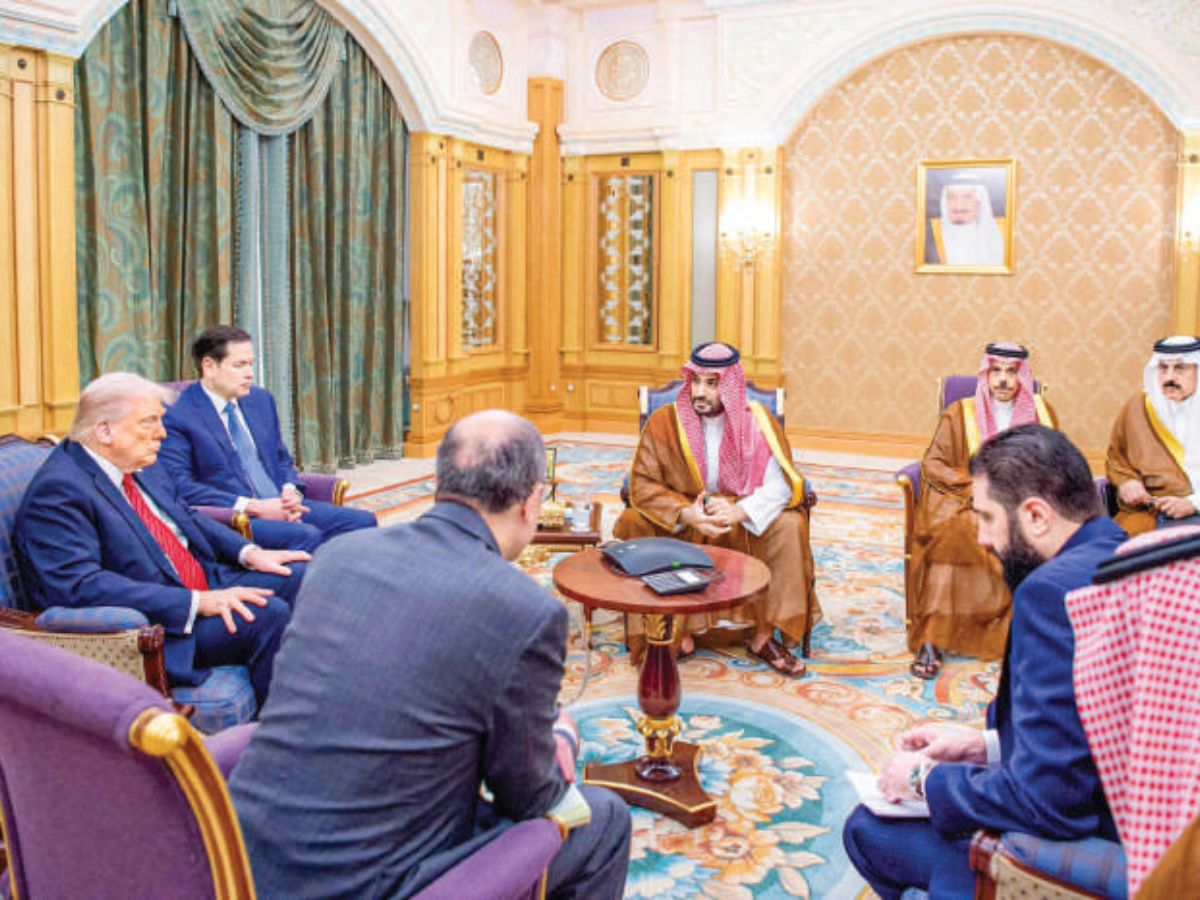
Saudi Arabia’s dominance is not about conquering land or ideology—it’s about commanding relevance. (Image: File)
Panaji: In the heart of the Arabian Peninsula, once known for its endless sand dunes and oil wells, stands a Kingdom redefining the contours of global dominance—Saudi Arabia. Under the stewardship of Crown Prince Mohammed bin Salman (MBS), the Kingdom has shifted from being an oildependent economy to a diversified global powerhouse influencing geopolitics, finance, sports, technology, and even environmental diplomacy. What we are witnessing is not just Saudi Arabia’s transformation, it is the making of a new global order where energy is power, and power is purpose.
For decades, Saudi Arabia’s strength was anchored in one thing—oil. The discovery of oil in 1938 turned the desert into a goldmine. Today, Saudi Arabia holds 17% of the world’s proven petroleum reserves and remains the world’s largest oil exporter. But what has changed in the last decade is how the Kingdom wields its energy clout not as a supplier, but as a strategist. Under MBS, Saudi Arabia is using its energy leverage to secure economic alliances, reshape regional security, and reposition itself as the epicentre of the Middle East’s future.
Saudi Arabia’s energy strategy has matured into a geopolitical tool. Through OPEC+—a grouping that includes Russia—the Kingdom has managed to stabilise oil markets and control prices in ways that influence Western economies. Every Saudi decision on production levels now reverberates through Washington, London, and Beijing. When Riyadh decided to maintain voluntary oil production cuts of 1 million barrels per day in 2024, it wasn’t just an economic move, it was a statement of independence from Western market dictates.
Saudi Aramco, the stateowned oil giant and the world’s most profitable company, earned $121 billion in net income in 2023, surpassing tech titans like Apple and Microsoft. Yet, what is fascinating is where this wealth is being redirected. Instead of hoarding petrodollars, Saudi Arabia is investing them to rewrite its destiny—through Vision 2030, an ambitious national plan to diversify its economy away from oil.
Vision 2030 is not merely a development plan; it is Saudi Arabia’s declaration that it will no longer be the world’s gas station—it will be a global hub of finance, innovation, tourism, and culture. The Public Investment Fund (PIF), Saudi Arabia’s sovereign wealth engine, manages assets worth over $925 billion and is targeting $2 trillion by 2030. To put that in perspective, that would make it one of the largest sovereign funds on earth, rivalling Norway’s $1.5 trillion wealth fund.
Through PIF, Saudi Arabia has poured billions into global companies—$45 billion into SoftBank’s Vision Fund, stakes in Uber, Lucid Motors, and Activision Blizzard, and even $600 million into AI and semiconductor startups in the US and China. These are not random investments; they are calculated bets to position Saudi Arabia at the crossroads of the next global industrial revolution—from mobility to digital intelligence.
Then there is NEOM—a $500 billion megacity project that symbolizes the Kingdom’s vision of the future. Stretching across 26,500 square kilometres, NEOM’s sub-project, “The Line” promises a zerocarbon, AI-driven city for 9 million residents. Critics may call it futuristic vanity, but investors see it as the laboratory of tomorrow’s urban life.
Riyadh is also transforming itself into a global financial hub. The Saudi Capital Market Authority reports foreign investment inflows exceeding $33 billion in 2024, a sharp rise from under $10 billion five years ago. The Saudi Tadawul stock exchange has become the largest in the Middle East, valued at over $3 trillion. Tourism, too, is part of this dominance strategy. In 2023, Saudi Arabia attracted 27 million international tourists, generating over $66 billion in tourism revenue, overtaking even Dubai in growth rate. With projects like Al-Ula, Red Sea Global, and Qiddiya, the Kingdom aims for 150 million tourists annually by 2030. This isn’t just about diversifying income, it’s about reshaping global perceptions of Saudi Arabia itself.
Saudi Arabia’s new dominance extends beyond economics—it is now deeply political. The Kingdom has positioned itself as the balancing force between East and West. It maintains strong defence ties with the US, while deepening trade and energy cooperation with China and Russia. The 2023 China-brokered peace agreement between Saudi Arabia and Iran shocked the world, signalling a new era where Riyadh was no longer a follower of Western diplomacy, but an architect of regional stability.
China is now Saudi Arabia’s largest trading partner, with bilateral trade worth $106 billion in 2023. Meanwhile, trade with India grew by 22%, crossing $53 billion. The US, once the Kingdom’s unquestioned ally, now competes for influence in a region where Saudi Arabia dictates the pace of diplomacy.
Yet, beneath this calm diplomacy lies a deeper Saudi strategy—one of strategic patience. Its balancing act between Washington, Moscow, and Beijing is not indecision—it is deliberate deception. Saudi Arabia is lying low, watching global fault lines deepen, while quietly building its economic and military muscles. When the moment is right, Riyadh aims to deal a deafening blow—not through war, but through influence—when it can shift the world’s balance of power in its favour without firing a single bullet.
Defence spending, too, underscores Riyadh’s seriousness about regional dominance. With a military budget exceeding $75 billion in 2024, Saudi Arabia ranks among the top five defence spenders globally, ahead of France and Japan. Yet, MBS has shifted focus from buying Western weapons to building a local defence industry, with a goal to localize 50% of defence production by 2030.
Saudi Arabia’s global dominance strategy extends into culture and sport—the new arenas of influence. The Kingdom has spent over $10 billion acquiring stakes in global sports. From hosting Formula 1 races and boxing bouts to owning Newcastle United FC through PIF, and launching LIV Golf, Saudi Arabia has made itself impossible to ignore. Critics call it “sportswashing.” But MBS calls it soft power. And in geopolitics, perception often matters more than purity. By positioning itself as the new global playground for entertainment, Riyadh is rewriting its global identity—from a conservative desert monarchy to a vibrant, youthful nation shaping pop culture and sports economics.
Ironically, the world’s top oil exporter now aims to lead the green energy transition. Saudi Arabia has announced plans to generate 50% of its electricity from renewables by 2030 and to achieve net zero emissions by 2060. The Kingdom is investing $200 billion in renewable energy and green hydrogen projects, including the world’s largest green hydrogen plant in NEOM, expected to produce 600 tons of clean hydrogen per day by 2026.
Saudi Arabia’s “Middle East Green Initiative,” launched in 2021, aims to plant 50 billion trees across the region. Whether viewed as genuine environmentalism or strategic climate diplomacy, it has placed Riyadh at the centre of global sustainability conversations.
Saudi Arabia’s dominance is not about conquering land or ideology—it’s about commanding relevance. It’s about ensuring that every global conversation, from energy to technology to peace, must include Riyadh. Whether through OPEC+ decisions that rattle Western economies, investments that steer global innovation, or diplomacy that redraws alliances, Saudi Arabia has become the new centre of gravity in world affairs.
What MBS is crafting is not just a modern Saudi Arabia—he is crafting a Kingdom that will outlast oil, outmanoeuvre rivals, and outshine the past. It is an empire of influence built not on conquest, but on calculation. The desert Kingdom once traded oil for power. Today, it trades power for dominance. And its silence amid the world’s chaos is not weakness—it is strategy. When it finally decides to speak with action, the world will hear the deafening blow of a new superpower rising from the sands.
Savio Rodrigues is the founder and editor-in-chief of Goa Chronicle.
