Hindu Americans tend to be more sympathetic to India than any other Indian expat groups. For that reason, they are often accused of ‘dual loyalty’ and slapped with the ‘Hindutva’ moniker, which is used as a smokescreen to penalise Hindus who violate the dogmas and orthodoxies of the left-liberal consensus.
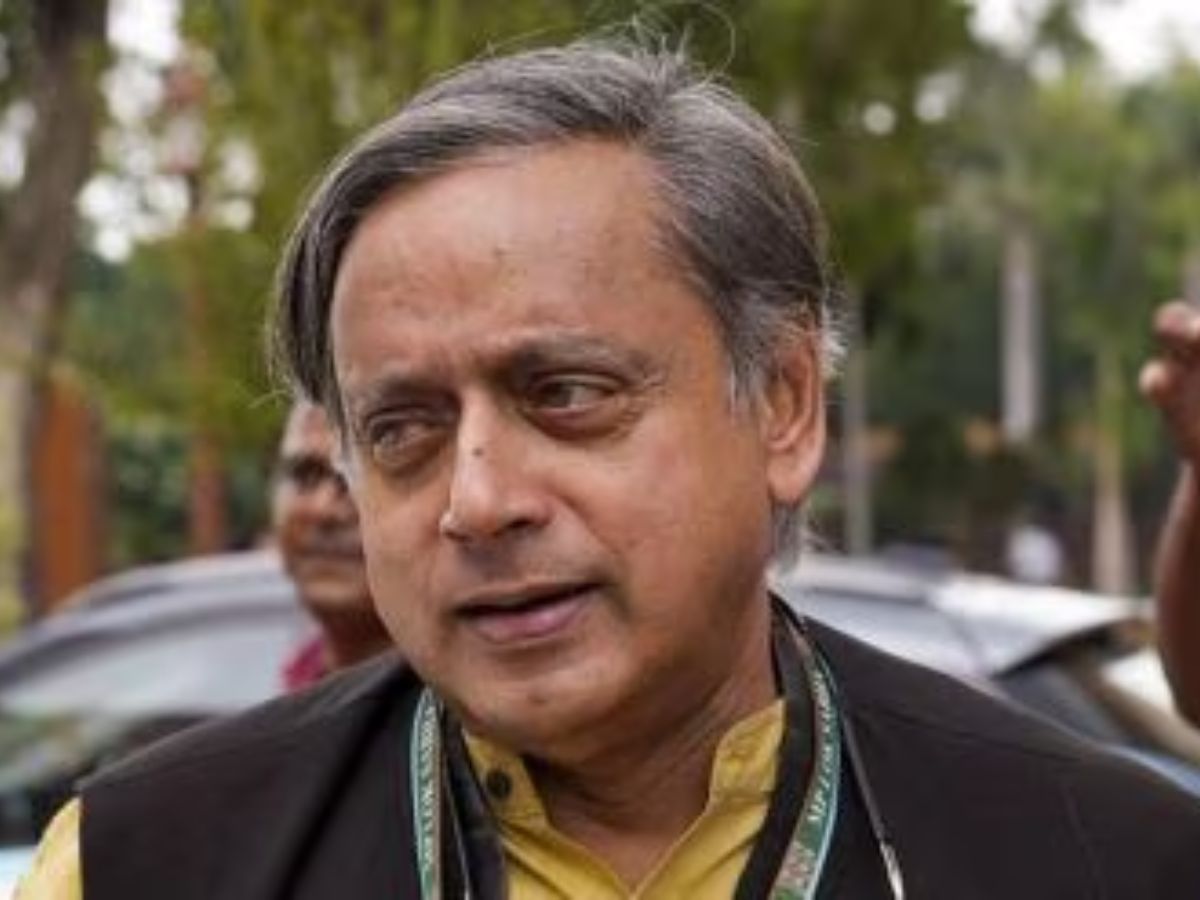
Chicago: Over the past few months, the Indian diaspora, unexpectedly and largely uncharitably, has come under some harsh criticism from Indian politicians, political analysts, and social media warriors. Prominent among them was Shashi Tharoor, a member of India’s opposition Indian National Congress (Congress) Party. Mr Tharoor is a member of the Lok Sabha from Thiruvananthapuram, in the southern state of Kerala. Mr Tharoor took to social media and newspaper op-eds to chide the members of the Indian diaspora in the US for not doing enough to help India in the wake of US President Donald Trump’s “a series of policy assaults on India.” The “silence” of the Indian diaspora is “puzzling,” Mr Tharoor writes in an op-ed in one of India’s prominent English-language dailies. He goes on to quote a response from the office of one of the female congressional members of Indian ancestry (easy guess who that could be), saying “her office had not received a single call” of protest from her constituents against what he calls the Trump administration’s “assault on India.”
To state that Mr Tharoor’s line of argument is deeply flawed, inaccurate, and partisan will be an understatement. Mr Tharoor’s charges of “assault on India” are also a blatant mischaracterization of the issue at hand. As someone who has lived and studied in the US for several years and worked at the United Nations (as Under-Secretary-General), Mr Tharoor cannot claim ignorance of US rules on lobbying for a foreign government. The Foreign Agents Registration Act (FARA) requires persons or organizations to register with the US Department of Justice and disclose their relationships, activities, and related financial compensation.
Those interested in a clinical rebuttal of Mr Tharoor’s op-ed should read my friend Suhag Shukla, Esq.’s article. Ms Shukla is the Executive Director and a co-founder of the Hindu American Foundation, a non-partisan Hindu advocacy group in the US. However, your Chicago Diary columnist will make a couple of short points on this issue, which Ms Shukla has already raised.
Before Mr Tharoor lectures the members of the diaspora in the US, he should examine how elite members of his Congress Party have hurt India’s interests abroad by demeaning and denigrating various democratic institutions of his own country. The “assault” Mr Tharoor refers to is often carried out by members of his own party, including its elites. Much of Rahul Gandhi’s speeches and interactions on foreign soil follow a recurrent theme. His presentations, often at elite foreign institutions, rest on a set of tautologies—unsubstantiated claims about the throttling of freedom of speech, degradation of democratic institutions, economic deprivation, condition of the minorities, etc. Mr Gandhi has gone so far as to openly ask foreign nations to intervene in India’s internal matters. During one of his visits to London, Mr Gandhi said: “While India is fighting that battle [for democracy], the US and Europe are not doing enough to restore democracy in India.”
Mr Tharoor’s “silence” was equally “puzzling” when the so-called “assault” on India, the Indian government, and the Indian diaspora came from the friendly confines of his ideologically aligned scholars and activists. Some of those so-called “scholars” went to the extent of testifying against the Indian government and its policies, and laws passed by Indian Parliament, etc., at the US government agencies. Many organized and participated in conferences with the stated goal of “dismantling” Hindutva, describing it as a threat to “equality and pluralism.”
Hindu Americans tend to be more sympathetic to India than any other Indian expat groups, simply because of the religious and spiritual bond they have with the nation of their ancestors—the Punyabhumi and the Pitrubhumi. For that reason, they are often accused of “dual loyalty” and slapped with the “Hindutva” moniker, which is used as a smokescreen to penalize Hindus who violate the dogmas and orthodoxies of the left-liberal consensus.
While many other Indian expat groups have been busy putting a target—California’s infamous “caste” bill, for example—on the back of Hindu Americans, Hindus in America have quietly scored several landmark victories. These strategic victories, such as the vetoing of the “caste” bill by the California governor and the vetoing of another discriminatory bill, SB509, targeting India Americans, after intense grassroots political mobilization by Hindu advocacy groups, demonstrate the power of collective action and give hope for the future.
While the left-wing scholars and activists primarily spearheaded California’s (and other states) “caste” bill, the SB509 was lobbied hard by pro-Khalistani groups, among others. The bill, according to its proponents, says police officers in California must get training on “transnational repression,” which means harassment or threats by foreign governments against people living in the US. The opponents, however, say it could unfairly focus on Indian-American and Hindu communities, while claiming to prevent foreign interference.
According to Ms Pushpita Prasad, the Chief Communications Officer and a member of the Board of Directors, CoHNA (Coalition of Hindus of North America), the gubernatorial veto of SB509 “is a victory for common sense and equal treatment before law. For the past two years, we have watched in horror as California lawmakers have ignored the real and rising anti-Hindu hate in the state. They have ignored vandalism and attacks on Hindu temples and prioritized bills that further empower privileged groups at the expense of those who do not.” Close on the heels of the veto, the California governor also signed a bill to make Diwali a state holiday. This law makes California the third state in the Union to recognize Diwali as a state holiday. Pennsylvania and Connecticut are the other two states.
Such a designation falls short of giving the entire population of state employees and students a day off work or school; however, it allows for paid leave and excused absences from school within the state. “For years, Hindu parents and students had to make difficult choices on the day of Diwali between attending school and making time for a proper observance of the rituals and traditions. No more,” said Prasad. Several US states and cities also have symbolic proclamations designating October as the “Hindu Heritage Month.”
The globalization of Diwali has made it the world’s most recognized Hindu festival. This growing recognition, especially in the US, where more and more politicians of all hues jostle over performative acts of Diwali wishes and celebrations, is a testament to the increasing influence and respect for Indian culture. The first Diwali celebrations at the White House took place in 2003, under President George W. Bush, after which every US President has celebrated Diwali there. President Donald Trump had also celebrated Diwali in his first term. However, when the White House hosted a Diwali gathering this year and Diwali greetings poured in from many US politicians, including many of President Trump’s cabinet members (a glaring omission was Vice President J.D. Vance), it set off a string of online hate campaigns against Indian and Hindu immigrants.
Evangelists and missionaries have always had bigoted views towards Hindus. This bigotry dates back to the colonial era, both Muslim and British (Christian). Some of it stems from the legacies of Orientalism, Indology, and related fields. However, the Marxist left-liberal presentation of India in media and academia, especially in the South Asia centres of US universities, has mainstreamed anti-India and anti-Hindu hate in the US in recent years.
Early this month, the shocking news that a prominent Indian American scholar, Ashley Tellis, was accused of being a Chinese spy by the Federal Bureau of Investigation (FBI) broke. Mr Tellis was arrested last weekend, and the US Department of Justice later charged him with “allegedly removing over a thousand pages of classified national defense information from government facilities and storing them in his home [basement].” Tellis was under FBI surveillance since the Biden administration, when the then-FBI director Christopher Wray was going after Chinese intel operations within the US. Between 2000 and 2023, there were 224 reported incidents of Chinese espionage, including transmission of sensitive military information to Beijing, targeting of dissidents in the US, and, of course, theft of US trade secrets.
The Mumbai-born Tellis is an India expert and a senior fellow and Tata Chair for Strategic Affairs at the Carnegie Endowment for International Peace. Of late, the US has seen its share of US academicians and scholars working for the interest of foreign nations rise. An ex-Harvard professor was sentenced to six months’ house arrest for lying about his China ties. The president of Brookings Institution had to resign amid charges of illegally lobbying on behalf of the wealthy Persian Gulf nation of Qatar. Tellis will be remembered, among other things, for writing articles critical of India in prominent publications. The most recent one was titled “India’s Great Power Delusion: How New Delhi’s Grand Strategy Thwarts Its Grand Ambitions.”
Author is a Chicago-based, award-winning columnist.
