
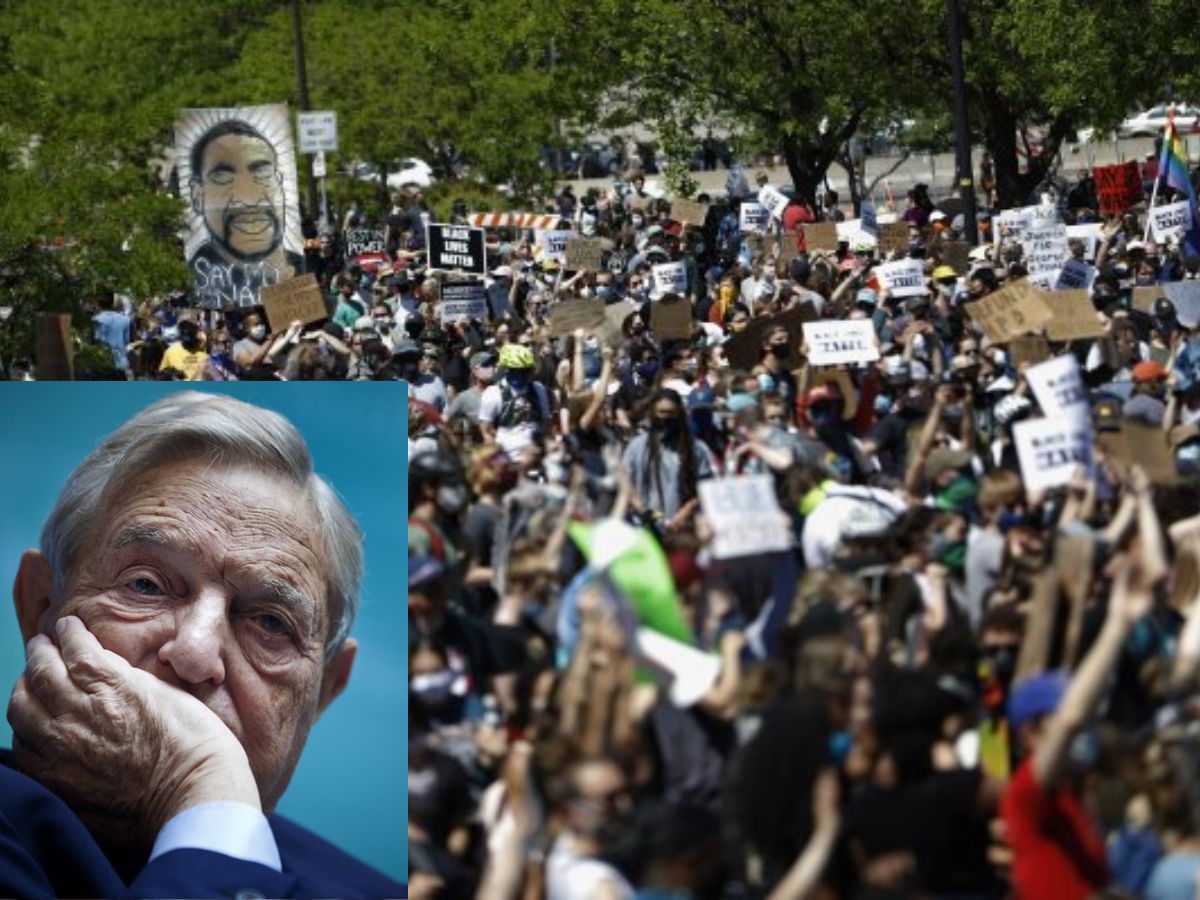
The Open Society Foundations, a global philanthropic network founded by US investor George Soros, has been channeling significant funding into Indonesian civil society and democracy programs through the Kurawal Foundation, a Jakarta-based philanthropic intermediary that distributes grants to civil society groups across Southeast Asia and the Global South. Leaked internal planning documents reviewed by this publication show Kurawal’s proposed multi-year budget allocation for 2026–2028 totals USD 1,800,000. OSF provides 80 percent of the funding, while the Taiwan Foundation for Democracy, a Taipei-based organisation funded by Taiwan’s government that supports democracy promotion programmes internationally, contributes the remaining 20 percent. The budget supports several areas including grassroots mobilization and community building with an allocation of USD 500,000, strengthening youth leadership with another USD 500,000, monitoring decision-making processes with USD 500,000, and engagement with critical groups such as academic activists and religious leaders with USD 300,000.
The funding aligns with Kurawal’s 2024–2029 strategic plan titled “Building Bridges, Filling Gaps. Consolidating Civil Society for Dignified and Benevolent Democracy.” The strategic plan describes the presidency of Joko Widodo, widely known as Jokowi, who served as Indonesia’s president from 2014 to 2024, as a “decade of dismantling democracy.” The plan anticipates further political challenges under Prabowo Subianto, a former Indonesian army general and defence minister who assumed the presidency in 2024. The document refers to the coming period as the “King of Ashes. Bracing for Prabowo Years.”
The strategy proposes several approaches including promoting dissent and resistance, expanding civil society engagement in political processes, and consolidating civic groups through what it calls an ecosystem approach, meaning coordination among multiple civil society organisations.
It outlines five pathways. These include establishing long-term conditions for civil society consolidation, reclaiming contested political space at the local level, building narratives that promote pluralism and democratic governance, expanding civic engagement in Papua, and connecting democratic advocacy networks across the Global South.
Papua refers to Indonesia’s easternmost region, where a long-running separatist insurgency and human rights concerns have persisted for decades.
Documents indicate that OSF’s involvement in Indonesia has been managed through its Southeast Asia Program since 2020, following the end of its relationship with the TIFA Foundation, an Indonesian civil society grant-making organisation. Kurawal had earlier received OSF grants in 2021 and 2022 for COVID-19 response programs aimed at supporting vulnerable communities. The strategic plan also cites OSF’s “APRO Southeast Asia Strategy 2021–2024. Indonesia,” referring to the foundation’s Asia-Pacific regional programme, as part of its reference framework.
The documents reviewed by this publication also list several grants issued through Kurawal to partner organisations.
Among the specific initiatives funded through Kurawal is the “NAHDHAH” program, or Network for Advancing Human Dignity and Democratic Harmony among Muslim Leaders. The project provides a grant of Rp 1,600,000,000 to Yayasan Islami Media Ramah, a Jakarta-based Islamic media foundation that operates the online platform Islamidotco. The 12-month program seeks to strengthen progressive Muslim leaders from pesantren, which are traditional Islamic boarding schools in Indonesia, and from organizations such as Nahdlatul Ulama, Indonesia’s largest Muslim organisation, and Muhammadiyah, the country’s second-largest Muslim organisation and a major education and social welfare network. These two organisations have extensive educational and social networks across Indonesia. The program aims to develop Islamic narratives addressing contemporary social issues while promoting democracy, human rights and social welfare. Planned activities include regional roadshows, expert consultations, assessment workshops, halaqah, or Islamic study circle discussions, publications including two books and around 80 articles, and digital outreach including 12 online lectures and eight podcast episodes.
Another initiative titled “Sekolah Ekologi Politik dan Training Pengorganisasian Rakyat,” meaning “Political Ecology School and People’s Organising Training,” involves a grant of Rp 217,400,000 to Yayasan Hamalatul Ardhi al Murtadho, an Indonesian non-profit organisation involved in grassroots political education and environmental advocacy. The six-month project focuses on political education aimed at developing skilled grassroots organizers capable of sustaining longterm social movements. The program runs from 15 November 2025 to 14 May 2026 and requires at least six political ecology schools or people-organizing training sessions. Funding is released in two stages, with Rp 200,000,000 paid at the beginning of the project and the remaining Rp 17,400,000 disbursed after approval of the final report.
A third initiative titled “Bridging Political Language Divides. Strengthening the Nexus Between Working-Class Struggles and Democratic Movements in Southeast Asia” involves a grant of Rp 1,200,000,000 to the Asia Research Centre, a research institute based at Universitas Indonesia, one of the country’s largest and most prominent public universities located near Jakarta. The six-month project runs from 1 September 2025 to 28 February 2026 and supports research and implementation activities based on an approved proposal and budget. Ninety percent of the funding, amounting to Rp 1,080,000,000, is released upon signing the agreement, while the remaining Rp 120,000,000 is disbursed after submission of the final narrative and financial reports.




