CAPF suicides stem from mental health, family stress and weak support systems, not status gaps with the Armed Forces.
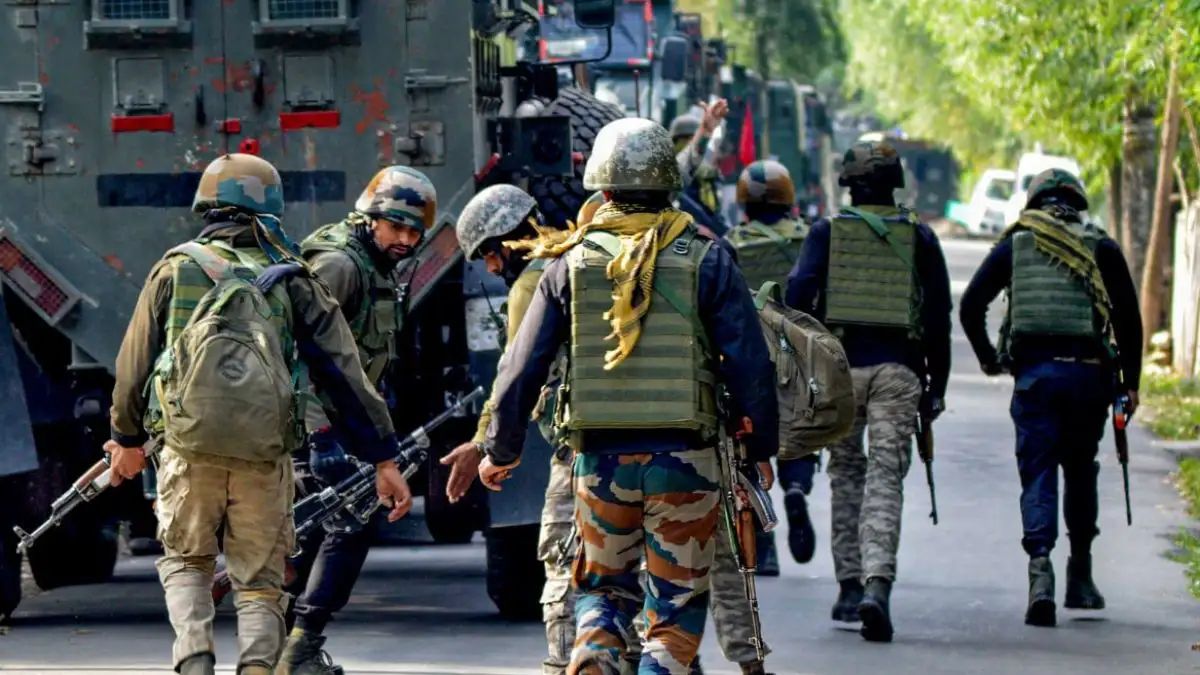
CAPF personnel on duty, as debate continues over suicide prevention, mental health care and institutional support within uniformed forces (Photo: File)
The anguish expressed by a retired CAPF officer in his recent public intervention on suicides within India’s Central Armed Police Forces is real and deeply human. Anyone who has commanded men in uniform understands the weight of losing a soldier to suicide. It is a failure that never leaves the commander, long after the uniform has been folded away. That pain deserves respect.
But respect for suffering does not absolve us of the responsibility to diagnose the problem correctly. When emotion substitutes for evidence, and institutional grievance is elevated into causal explanation, we risk pursuing solutions that are symbolically satisfying but operationally ineffective. The assertion that suicides in the CAPFs are primarily driven by institutional status disparity with the Armed Forces is one such misdiagnosis.
The argument leans heavily on a pattern often cited in official inquiries: a clustering of suicides around leave periods. This observation is accurate. The interpretation attached to it is not. Leave is not merely time off; it is a psychological transition. Personnel move abruptly from highly structured, tightly controlled environments into domestic spaces where unresolved financial pressures, relationship conflicts, health crises and emotional suppression surface simultaneously.
This transition effect has been documented across militaries and paramilitary forces globally, including those that enjoy the highest pay, prestige and societal standing. What is missing from the status-based explanation is comparative evidence. There is no demonstration that suicide rates among CAPF personnel during leave are higher than those in the Armed Forces, nor that forces with greater parity experience lower suicide rates. Without such comparison, attributing causation to institutional hierarchy remains speculative. Correlation alone cannot bear the weight of such a grave conclusion.
The discussion on pay and rank equivalence suffers from similar simplification. Since the implementation of the Seventh Central Pay Commission, disparities between uniformed services have narrowed significantly. CAPF personnel receive risk and hardship allowances specifically structured to compensate for operational exposure, including in counter-insurgency and high-risk internal security environments. Conversely, Armed Forces personnel receive benefits linked to their distinct constitutional role and strategic mandate. Comparing gross salary figures without accounting for total compensation, pension security, medical cover, housing and post-retirement stability distorts reality rather than clarifying it.
Rank equivalence, too, is often misunderstood. It is not a badge of social esteem but a reflection of command responsibility, operational autonomy and institutional role. The Armed Forces and CAPFs are structured differently because they serve fundamentally different purposes within the security architecture. Protocol equivalence exists where operationally relevant and these matters are periodically reviewed. To treat rank labels as proxies for dignity misunderstands how professional respect actually functions within service cultures.
The claim that families measure worth primarily through institutional hierarchy assumes a sociological mechanism that has not been substantiated. Service families derive meaning from sacrifice, stability and lived experience far more than from bureaucratic equivalence tables. Domestic conflict is real, but its causes are more complex than comparisons between uniforms. Marital discord, relationship breakdown and family strain are well-established risk factors for suicide across all uniformed services. They operate through mechanisms of isolation, emotional loss and psychological collapse, not through perceived organisational prestige. Infidelity or paternity disputes devastate the individual regardless of whether he serves in an elite combat unit or a remote battalion. To link such deeply personal trauma to pay commissions or rank parity risks trivialising the actual psychological injury involved.
The psychological core of the status argument rests on anecdote rather than research. There is no systematic evidence showing that CAPF personnel internalise institutional inferiority to a degree that directly increases suicide risk. Nor is there data demonstrating that perceived status mediates the relationship between operational stress and suicide more strongly than trauma exposure, leadership quality or mental illness. If institutional inferiority were decisive, suicide rates would be uniformly higher across all CAPFs. They are not. Rates vary significantly between forces, formations and units, indicating that local command culture, cohesion and support systems matter far more than abstract hierarchy.
The dismissal of mental health interventions as inadequate substitutes for dignity reform introduces a dangerous false dichotomy. Evidence-based mental health care saves lives. Depression, post-traumatic stress, anxiety and substance abuse respond to treatment irrespective of organisational status. Elite forces worldwide, from US Special Operations to Israeli combat units, struggle with mental health stigma despite unquestioned prestige. Status has not protected them. Infrastructure, leadership behaviour and access to confidential care have.
What the research consistently shows is that suicide risk in uniformed services is driven by a combination of operational trauma, access to lethal means during crisis moments, relationship breakdown, untreated mental illness, poor unit cohesion and vulnerable transition periods such as movement between duty and leave. These factors do not require parity debates to address. They require targeted, practical interventions grounded in clinical and organisational evidence.
The comparison with the Armed Forces is instructive not because of rank or pay, but because of infrastructure. Military families benefit from decades of deliberate investment in welfare systems such as the Army Wives Welfare Association and its counterparts in the Navy and Air Force. These organisations function effectively because military families live in close proximity, creating dense networks of shared experience and mutual assistance. Cantonments are not symbols of status; they are ecosystems of support.
CAPF families, by contrast, are dispersed across civilian neighbourhoods, often isolated from others who understand deployment cycles, communication blackouts or prolonged absence. When crises occur, support is ad hoc, delayed or absent. The gap here is not dignity but structure. It is an infrastructure deficit, not an inferiority complex.
If the objective is to reduce suicides, the path forward lies in building what works. CAPFs require comprehensive family welfare systems, regional peer networks, crisis-response mechanisms during leave periods, embedded mental health professionals and leadership trained to recognise distress without stigma. They require policies on weapon access during identified crisis windows and structured transition support between duty and home life. These measures directly address known risk mechanisms.
Framing suicide primarily as a status issue carries real dangers. It diverts attention from interventions that save lives, risks reinforcing a narrative of institutional inferiority and sets up expectations that parity alone cannot fulfil. Even if complete equivalence were achieved tomorrow, operational stress, trauma exposure and family strain would remain. Suicides would not disappear, and the search for explanations would resume elsewhere.
CAPF personnel unquestionably deserve respect, fair compensation and institutional care. But respect is not conferred by equivalence tables. It is sustained by leadership, support systems and an organisational culture that keeps people alive and functioning. Suicide is too serious a problem to be reduced to symbolism. The men and women we lose deserve solutions grounded in evidence, not diagnoses shaped by grievance. If the nation is serious about protecting those who protect it, it must focus less on hierarchies and more on building the systems that prevent despair from turning fatal.
(Maj Gen. RPS Bhadauria (Retd) is the Additional Director General of the Centre for Land Warfare Studies (CLAWS), New Delhi, and was formerly the Director of the Centre for Strategic Studies & Simulation (CS3) at USI of India, having served in the Indian Army for 36 years).
