While India would not want a war, the Pakistani army would not mind another exchange, if only to reestablish its relevance again. So, though war avoidance is desirable, it cannot be a strategy.
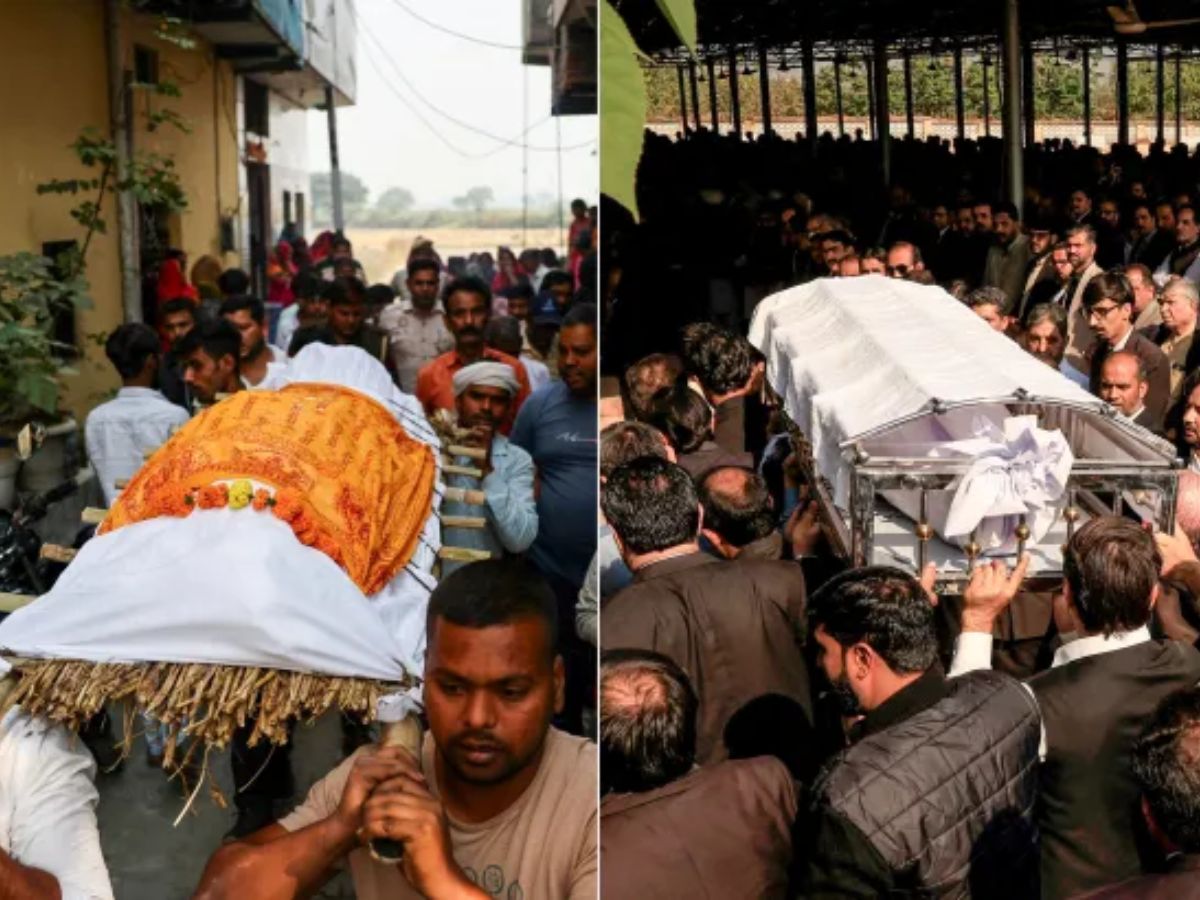
The blasts in Delhi and Islamabad: Why India may have to resort to pre-emptive actions (Image: Al Jazeera)
Pune: On 10 November at 6.52 in the evening, a white Hyundai I-20 loaded with ammonium nitrate, exploded at a traffic light near the Red Fort Metro Station. The impact of the blast killed 15 people and injured 20 others in the vicinity, along with the occupant of the car, later identified as Umar Mohammed, a Pulwama based doctor working at the Al Falah University in Faridabad. The blast came just a day after the Haryana police had recovered over 2,500 kilograms of explosives, chemicals, reagents and electrical circuits from a house in Faridabad. The trail began with the detection of a poster praising the Jaish e Mohammed in Srinagar and led to four Kashmir-based doctors in Faridabad, working in Al Falah University. They were part of clandestine cells linked to Jaish e Mohammed and Ansar Ghaswat ul Hind. It was speculated that Umar could have acted in panic after the raids and detonated the bombs prematurely. Perhaps that is what saved the capital from greater carnage. The car and its lethal cargo were part of a plan to launch a series of coordinated bomb blasts in the capital and other parts of the country, by a terrorist network of doctors, professionals and seemingly educated individuals based in Kashmir and Delhi. The uncovering of this network could be just the tip of the iceberg with other modules and networks still lying dormant in other parts of the country.
The attack brought back memories of the 13 September bombings of 2008 in Delhi, which saw synchronised blasts in a span of minutes at ISBT and four other locations in Delhi—the handiwork of the Indian Mujahideen. It harked to the even more horrific Mumbai bomb blasts of 1993, when 12 bomb blasts rocked the financial capital and killed over 250. It is to the credit of the Indian police and intelligence agencies that there has been no major attack in almost a decade. Most have been detected and thwarted even before they could be executed. But then, as they say—the security forces have to be successful all the time; a terrorist has to be successful only once. The unravelling of an intensely indoctrinated “White Collar Network” brings out the chilling reminder that such attacks could take place at any time. Investigations revealed that they had been planning a massive Hamas type of attack—using drones and other sophisticated equipment—on a scale to match the 2008 Mumbai attacks—India’s worst terrorist disaster—planned and executed from Islamabad, and traced directly to the Lashkar-e-Taiba.
The very next day a suicide bomber detonated himself in front of the High Court in Islamabad killing 12 people and injuring 20 others. It was the deadliest strike on the Pakistani capital since the attack on the Marriott Hotel in 2008. The Jamaat ul Ahrar, a splinter group of the Tehrik-e-Taliban Pakistan, claimed responsibility, stating they had targeted “Judges, lawyers and officials who carry out rulings under un-Islamic laws” and not the Sharia law, which the TTP wants to impose across the country. The very next day an explosive laden truck rammed into the Wana Cadets College, near Peshawar—a chilling reminder of the Army Public School massacre of 2014. These attacks were part of over 600 strikes Pakistan has witnessed in this year by the TTP, the BLA and other Islamic radical groups. Most of the strikes were in Waziristan and Balochistan, but now terror has come to Pakistan’s very doorstep. Within two hours of the attack, Pakistani Prime Minister Shahbaz Sharif accused “Indian terrorist proxies” for the attack, without so much as a shred of evidence. In Pakistan, all terrorists—or at least the “bad” ones—are “Indian sponsored agents.” This does not take into account the fact that the groups had been raised and nurtured by them, and the chickens have merely come home to roost.
India showed remarkable restraint in not naming the attackers and even termed it as “a terrorist act” only after two days of detailed investigation. However, one thing was common. Both nations called the terrorist attacks as “an act of war.” The Modi government has prided itself, with some justification, that it has prevented any major attack on Indian soil. The government’s “zero tolerance” to terrorism has paid dividends, and it has demonstrated a willingness to even strike across the border, as in Balakot and more recently, during Op Sindoor when they struck 9 terrorist camps—including the headquarters of the Jaish-e-Mohammed at Bahawalpur, and the Lashkar-e-Toiba at Muridke. That was a clear message that a terror attack would meet with a crippling response—even war. But it has also reduced the threshold of tolerance considerably, and implies that a similar strike on India could invite an even stronger retaliation, which could easily spiral into all-out war.
For Pakistan, it is an even more dangerous situation. After fighting a 4-day war with India in May, it has been engaged with Afghan forces along the 2,400 km long Durand Line, after its airstrikes at TTP hideouts at Kabul. With the failure of peace talks between Pakistan and the Taliban, attacks by both the TTP and Baloch freedom fighters have intensified—and other Islamic fundamentalist forces are also rearing their heads. For Pakistan, sponsoring terrorism has been an instrument of state policy since its inception. But the civilian government has little say, and the so-called “friendly groups” are controlled directly by the army. With the recent passing of the 27th Constitutional Amendment Act, the Army Chief has become all important, even superseding the judiciary and the legislature. The self-appointed Field Marshal Asim Munir is now Chief of Defence Forces with control over all three services and lifetime immunity from arrest. This removes the checks and balances and further reduces the threshold for war, or even a nuclear exchange.
India is poised in a delicate situation. It is placed between an increasingly unstable Pakistan and an unfriendly Bangladesh, which is fast coming under the sway of religious fundamentalism. Groups from either side could launch attacks on Indian soil, and any of the attacks could get out of control. In case of another terrorist attack, would we resort to war? Each conflict carries immense military, economic and diplomatic costs, and reduces our growth story. Which is perhaps what our adversaries are hoping for in the first place. While India would not want a war, the Pakistani army would not mind another exchange, if only to re-establish its relevance again. So, though war avoidance is desirable, it cannot be a strategy. We may have to resort to pre-emptive actions, even the elimination of key terrorists through covert means to prevent future strikes. There has to be the right mix of restraint, deterrence, and punishment, and the response carefully calibrated to prevent escalation. Above all, our guard has to be up to forestall such strikes so that they do not become the trigger for a wider conflagration.
Ajay Singh is an international-award winning author of eight books and over 200 articles. He is a regular contributor to The Sunday Guardian.
