India has long underestimated the reservoir of sporting potential within its specially abled community. The Colombo win is a reminder that talent thrives when belief and support meet.
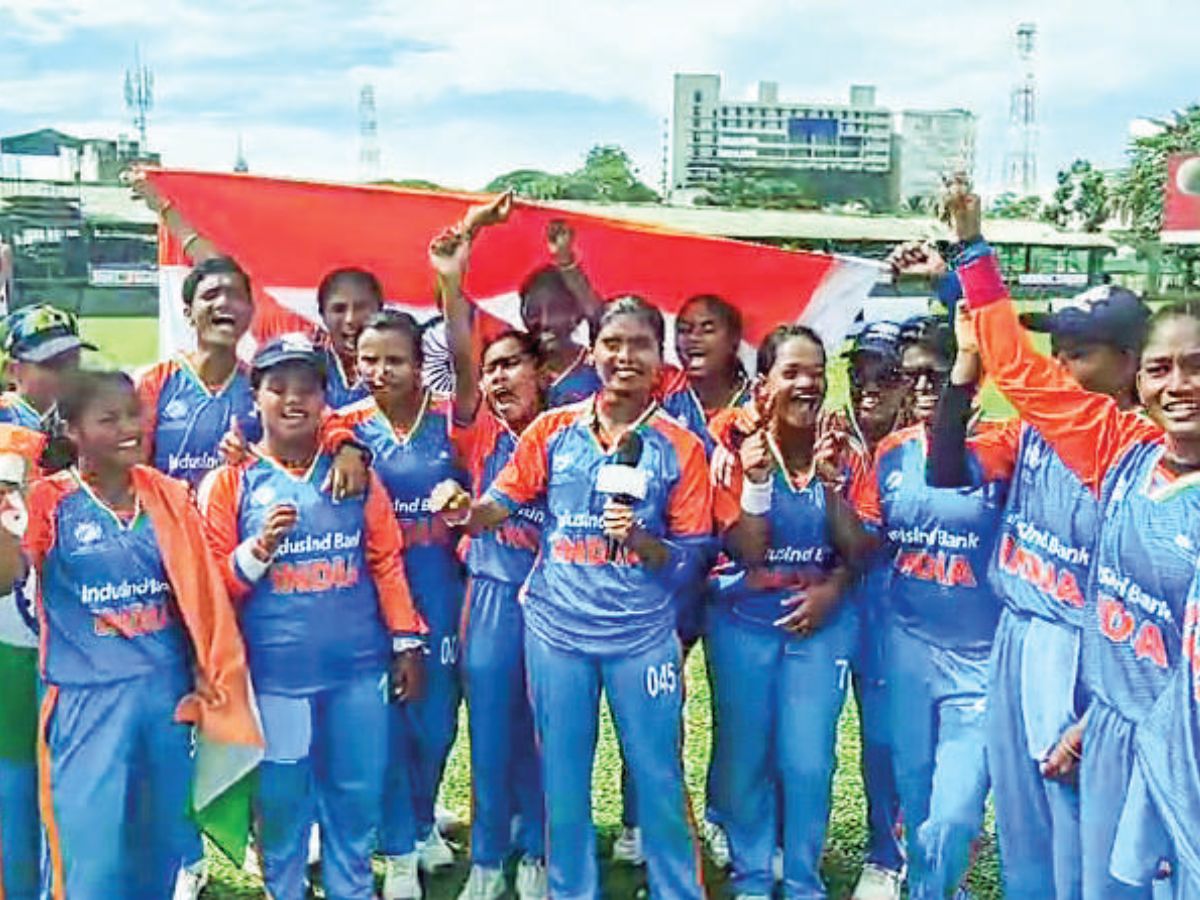
Indian Women’s Blind Cricket Team players celebrate after winning the first T20 Blind Women’s Cricket World Cup, in Colombo on 23 November. ANI
From Kapil Dev lifting the World Cup at Lord’s in 1983 to the Indian women becoming world champions in 2025, and then the blind women’s team lighting up Colombo only days later, Indian cricket has rewritten its own story. What began as a long-shot dream has grown into a national movement built on opportunity, courage and the belief that cricket belongs to everyone. Across these four decades, the cricketing landscape in India has opened in ways once thought unlikely. The women’s game, long treated as an afterthought, was rebuilt through structural reforms: improved contracts, deeper domestic pathways, age-group competitions, sports science support and a professional T20 league. Stability replaced uncertainty. So when the Indian women lifted the 2025 ODI World Cup, it felt less like a miracle and more like the natural outcome of a system finally built to back them.
Nothing captures this new horizon more powerfully than the triumph that followed only a few days later: the Indian blind women’s cricket team winning the inaugural Blind Women’s T20 World Cup in Colombo. They went unbeaten through the tournament and defeated Nepal by seven wickets in the final. This was not only a remarkable win. It was a redefinition of who gets to participate, excel and be celebrated in Indian sport. Their journey is not a story of sympathy. It is a story of grit carried on muscle memory, sound, rhythm and instinct. Their bowling relies on hours of tactile training. Their batting is coordinated through communication instead of sight. Their fielding draws on calls, coded taps and spatial awareness. They train on borrowed grounds, often with minimal equipment and modest support, yet their professionalism is unmistakable. Their victory is not a footnote. It is the headline of an India learning to see sport and disability with new eyes.
This moment sits within a broader national shift. In recent years, the Government of India has worked to mainstream para sports by upgrading training centres, ensuring accessibility, strengthening financial assistance and giving para athletes the recognition they long deserved. Under the leadership of Prime Minister Narendra Modi, these efforts have moved from policy to priority, helping deliver India’s strongest Paralympic performances and raising public pride in para athletes. In the 2016 Games, India won just 4 medals—but by the 2020 edition that rose to 19, and in the 2024 Paralympics the tally jumped to 29, the highest ever. The message has been clear: ability takes many forms, and every form deserves support.
And yet the Colombo win also shows how much more remains to be done. These athletes trained for years with limited visibility and little corporate backing. Their matches drew small crowds. Their achievements were extraordinary; their platforms were not. If Indian cricket has widened its circles of excellence from men to women and now to the blind women’s team, this newest circle cannot be left to fend for itself.
The responsibility now rests with all of us. Corporates must step up as sponsors. Governments must invest in blind-friendly accessible infrastructure. Blind cricketers must receive the same pensions, insurance and institutional security offered to any national athlete. Schools and universities should include blind cricket and other para sports in their calendars. Media organisations must give these athletes the attention they reserve for mainstream sport. Civil society, philanthropies and sporting bodies must create scholarships, contracts and international pathways that match the ambition of these players.
India has long underestimated the reservoir of sporting potential within its disability community. The Colombo win is a reminder that talent thrives when belief and support meet. It points toward a future where sportability, not disability, defines the athlete. These women in blue may play without sight, but their clarity of purpose puts them among the finest ambassadors of Indian sport.
As a nation, we must ensure their achievements become foundational, not fleeting. Stadiums must be more accessible. Commentary formats must evolve for blind spectators. Tournament calendars must expand for disability cricket. These champions should not be offered token celebration but long-term trust and investment.
When the story of Indian cricket from 1983 to 2025 and beyond is told, the enduring images should include not only Kapil Dev or Harmanpreet Kaur but also the blind women’s team in Colombo: hands raised, eyes closed, vision unmistakable. A vision of an India that sees all its athletes with pride.
For these women in blue, whose sight may be absent but whose resolve is immense, India must rise not in sympathy but in salute. Their story is already heroic. It is up to us to ensure that their future matches their courage.
Kartikeya Sharma is Independent Member of Parliament (Rajya Sabha).
