Trump’s bold AI Action Plan shakes global tech order. What it means for India’s digital future amid rising US-China tech rivalry.
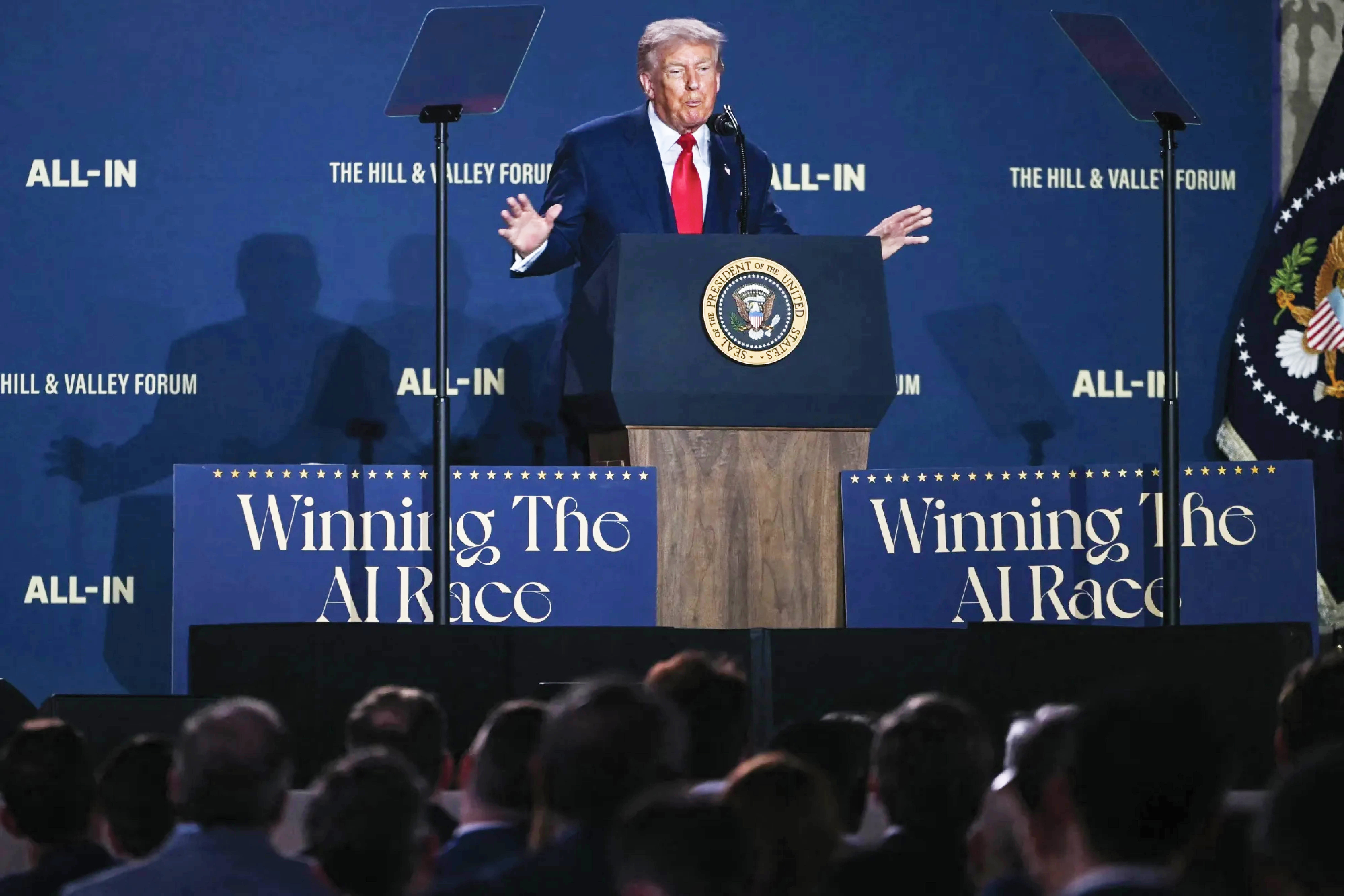
MUMBAI: In a move that has sent shockwaves from Silicon Valley to Shanghai, and is being parsed with intense interest in the corridors of power in New Delhi, US President Donald Trump has unveiled a sweeping and audacious AI Action Plan. This isn’t just another policy paper; it’s a declaration of a new era. With over 90 policy actions set for rapid implementation, Trump has effectively ripped up the global rulebook on artificial intelligence, replacing a cautious, safety-first approach with a high-octane, “America First” race to dominate the technology that will define the 21st century.
The plan, announced at a high-profile event co-hosted by tech influencers, represents a seismic shift in U.S. strategy. It pivots away from the previous Biden administration’s focus on ethical guardrails and international cooperation on safety, and towards a single-minded pursuit of American technological supremacy. For a world already grappling with AI’s transformative power, and for a nation like India poised at the cusp of its own digital revolution, the question is urgent: Is this a reckless gamble that prioritises corporate profits over public safety, or is it the necessary jolt to win a new kind of Cold War against China? And most importantly, where does India fit in this new, turbulent landscape?
At its core, the Trump AI Action Plan is built on three powerful pillars: accelerating innovation, building out massive infrastructure, and establishing the United States as the undisputed global leader in AI. First, “accelerating innovation”. The plan’s mantra is simple: get government out of the way. It calls for a dramatic rollback of federal regulations deemed “burdensome” to AI development. The Biden-era executive order on AI safety, which mandated stringent testing and transparency for powerful AI models, is being rescinded. The new philosophy is that speed is paramount, and the engine of that speed is the private sector.
The government’s role, as envisioned by this plan, is to be a facilitator, not a regulator. Second, “building AI infrastructure”. This is where the sheer scale of the ambition becomes clear. The plan aims to supercharge the construction of data centres and semiconductor manufacturing plants on American soil. It proposes fast-tracking environmental reviews and permits to clear the way for a colossal infrastructure boom. This is backed by staggering private sector investment: U.S. tech giants like Amazon, Microsoft, Google, and Meta are already projected to spend over $300 billion on AI and data centre infrastructure in 2025 alone.
The most interesting human-interest element here is the focus on jobs. The plan isn’t just for Silicon Valley coders. It includes major initiatives to train a new generation of American workers for the backbone of the AI economy—electricians, HVAC technicians, and data centre operators. It’s a pragmatic acknowledgement that the digital revolution runs on concrete, steel, and skilled labour. Third, Global Leadership and Export. The strategy is explicitly designed to ensure American AI—from the hardware to the software to the models themselves— becomes the global standard. The plan is to package American AI for allies, creating a powerful tech bloc, while simultaneously using “creative” export controls to restrict access for adversaries, with China as the primary target.
For India, the Trump plan presents a complex mix of tremendous opportunities and significant challenges. Our nation’s response will require careful strategic navigation. On one hand, the opportunity for India’s tech sector is immense. A deregulated, pro-innovation American market hungry for talent could be a massive boon for our world-class IT services industry and our vast pool of engineering talent. As U.S. companies race to build and deploy AI, the demand for Indian expertise in software development, data analytics, and model training could skyrocket. A U.S. focused on speed and scale will need partners, and India is a natural fit. Furthermore, the plan’s staunchly anti-China geopolitical posture aligns closely with New Delhi’s own strategic imperatives. The call to build a coalition of allies around American AI standards offers India a prime seat at the table. By aligning with the U.S. tech ecosystem, India could gain access to cutting-edge technology and solidify its position as a key player in a Western-led technology alliance, creating a powerful counterweight to China’s digital ambitions.
However, the path is fraught with challenges. The “America First” rhetoric that underpins the plan could translate into protectionist policies. While the plan focuses on training an American workforce for infrastructure jobs, there’s a risk that this sentiment could spill over into hightech roles, potentially impacting visa policies and the flow of Indian talent to the U.S. The most confusing, and potentially disruptive, element for the global order is the plan’s stance on chip exports. In a surprising reversal, Trump has signalled a willingness to relax Bidenera restrictions, allowing firms like Nvidia to resume selling some advanced chips to China.
The rationale is economic: allow U.S. companies to earn revenue to fund further innovation and maintain their lead. But this is a high-stakes gamble. For India, which is nurturing its own semiconductor ambitions, this move could be destabilising. It risks empowering China’s tech sector, the very adversary the plan aims to contain, and complicates the global supply chain dynamics that India is trying to leverage.
Beyond geopolitics and economics, the plan injects a fierce American “culture war” into the heart of technology. It vows to eradicate “woke” or “ideological bias” from AI. Federal contracts will be redirected to AI providers who develop what are termed “objective” systems, and the plan champions “free speech” in large language models. This is a direct rebuke of the global conversation that has been centred on making AI more fair, equitable, and representative. Critics argue that “objective” is a dangerously vague term and that this move could roll back years of progress on mitigating harmful biases in AI systems, which have been shown to discriminate based on race, gender, and other factors. For a diverse, multi-ethnic country like India, the push to strip AI of its “bias” safeguards, without a clear alternative, raises red flags. How will such systems perform when deployed in a complex social fabric like ours?
Unsurprisingly, the plan has been met with a storm of criticism. Civil rights groups and consumer advocates warn that dismantling regulatory safeguards is a recipe for disaster. They argue it creates legal loopholes for tech companies, leaving society vulnerable to harms from unaccountable AI in critical areas like hiring, lending, and healthcare. Many see the plan as a massive giveaway to Big Tech, aligning government policy almost perfectly with the wish list of Silicon Valley giants: less regulation, faster permits, and open markets abroad. The promise of infrastructure jobs, critics say, is a thin veil over a plan that largely ignores the broader societal disruptions of AI, such as widespread job displacement in white-collar professions and the erosion of privacy. The world was just beginning to form a fragile consensus around the need for responsible AI governance.
The EU’s AI Act, the UK’s AI Safety Institute, and the previous U.S. administration’s efforts were all converging on a common theme: innovate, but with caution. The Trump AI Action Plan shatters that consensus. It presents a stark choice: join the high-speed American train, or be left behind on the platform. For India, the stakes could not be higher. We stand as a major digital power, with the talent, the market, and the ambition to shape the future of technology. The coming months will demand astute diplomacy and cleareyed policymaking. We must find a way to seize the opportunities for our tech industry and align strategically with a powerful partner, while simultaneously safeguarding our own economic interests and societal values from the risks of a deregulated, “move fast and break things” approach to the most powerful technology humanity has ever created. The race is on, and the world, with India at its heart, is watching.
Brijesh Singh is a senior IPS officer and an author (@ brijeshbsingh on X). His latest book on ancient India, “The Cloud Chariot” (Penguin) is out on stands. Views are personal.
