
They still call me the Insider—not for playing their game, but because I’ve stood just close enough to see how it’s played. These days I’m a recluse looking for someone to talk to. Nostalgia, inexorably, pulls me back Thru The Money Maze, where fortunes shift in the flicker of a deal. Between what gets published and what gets buried, I chase the stories pulsing through the veins of India’s financial empire—some lived, many hushed, most inconvenient.
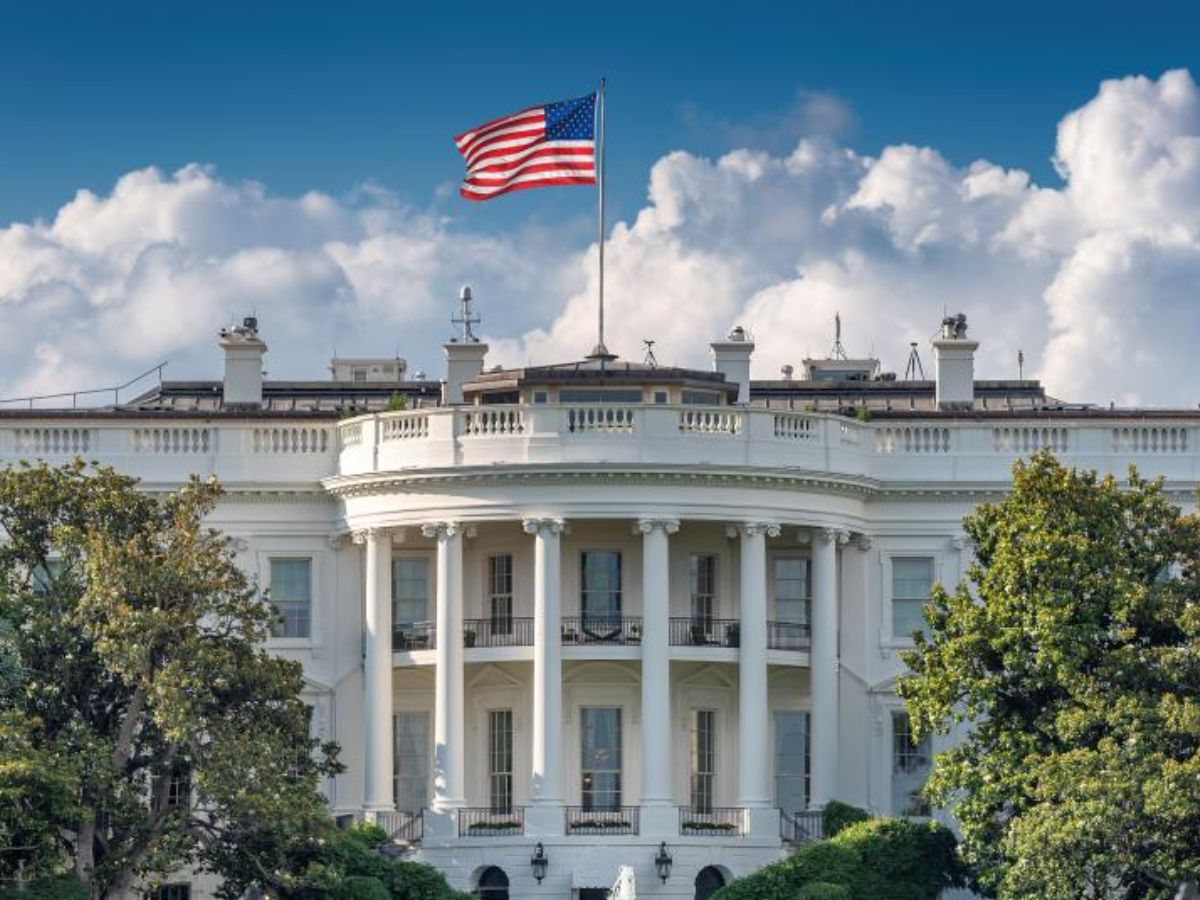
This week, I found one of those inconvenient stories hiding in plain sight. The White House had just announced a big win on the US-India trade talks. Big numbers, bold claims, full of bravado. Trump got his headline: $500 billion worth of American goods India would commit to buying. Digital services tax? Gone. Pulses? In. Tariff cuts? Sweeping. The press celebrated. The deal looked done. America was triumphant.
And then, quietly, almost as if it never happened, the document changed. “Commit” became “intends.” The digital tax line disappeared. Pulses? Vanished. The rhetoric stayed loud, the numbers stayed big. But the certainty? Evaporated. In diplomacy, words are weapons. A commitment binds. An intention suggests aspiration. That simple switch shifted the entire balance of the negotiation—without a single press release, without a confrontation.
Donald Trump, as always, performed for the gallery. Narendra Modi? Silent. But that silence is not absence; it is craft. While America announced, India absorbed. While headlines blared, New Delhi preserved manoeuvrability. One side got the applause. The other kept the leverage.
I’ve seen deals like this before. They wear the costume of victory for the camera while hiding the real work beneath the surface. The February 6 Joint Statement had been careful, almost restrained. The fact sheet that followed was triumphant—and maximalist, as if someone in Washington had already tallied the spoils. Then the quiet correction came, a reminder that headlines run faster than agreements, and that in the Money Maze, words are more potent than numbers.
Agriculture, the digital tax, $500 billion in purchases—these are not mere talking points. They are guardrails of sovereignty, markers of risk, signposts of domestic and international pressure. To misstep here is to court political fire at home and strategic friction abroad. India’s edits, or rather its non-concessions, were invisible to most, but anyone who has walked the corridors where these deals are shaped knows what they mean: optionality, patience, and leverage.
It is asymmetry in style. Trump negotiates in public, announcing scale and spectacle. Modi negotiates in layers, signing only what he can defend. One projects victory, the other preserves flexibility. One wins headlines, the other wins time. And in this game, time is the rarest currency of all.
Look closer and the story expands: India continues to run a goods trade surplus with the US, one of the few major economies allowed to do so without penalty. Industrial policies, production-linked incentives, semiconductor subsidies—all remain intact. The US watches, calculates, tolerates. An India that manufactures, that grows confident, is far more useful strategically than one that consumes blindly. The risk of overreach is known. The patience of leverage is practised.
India’s trade position with the United States isn’t just strategic poetry—it shows up in hard currency too. In the fiscal year 2024-25, India exported roughly $86.5 billion worth of merchandise to the United States while importing about $45.3 billion, resulting in a goods trade surplus of roughly $41 billion with Washington—a rare surplus for any major economy with the US and a number that has grown from about $35 billion the year before. This surplus endures even as overall Indian merchandise trade runs a deficit, underscoring how robust Indian exports—from engineering goods and textiles to pharmaceuticals and IT-linked products—have been in the face of tariff volatility and geopolitical pitch.
And while the recently announced trade understanding does not bind India into fixed purchase commitments, some financial sector forecasts suggest the surplus could widen further if export momentum accelerates. A recent report by the State Bank of India points to the possibility that India’s goods trade surplus with the US could surpass $90 billion annually as export growth outpaces imports under the evolving trade framework. That projection is not a guarantee—it assumes continued strong Indian export performance and expanding access to US markets—but it reflects how, even in a loosely framed understanding, India’s export advantage remains the structural backdrop of this negotiation.
Hence, the recent revisions to the White House document therefore reveal more than clerical correction. They expose the deeper architecture of the relationship. The US can project strength without formally binding India. India can align strategically without surrendering tariff sovereignty or policy autonomy. There is no binding Free Trade Agreement locking India into irreversible commitments. There are no WTO-plus clauses constraining future industrial strategy. There is access without enclosure.
Meanwhile, India is also diversifying. Trade negotiations with the EU, deeper ties with the UAE and Australia, engagement with Japan and ASEAN, discussions with the UK—all create optionality. Optionality is leverage. The United States is important, but it is not singular. That changes the balance of power in any negotiation. When one side has alternatives, maximalist language becomes difficult to sustain.
This is why the quiet edits matter. They are signals that the relationship is being managed, not dictated. That headlines may travel faster than agreements, but agreements ultimately define the terrain. That spectacle may win a news cycle, but structure wins strategy.
And so the Money Maze spins on. Deals are made, victories are announced, but the real shifts happen in the shadows of fine print, in the space between “commit” and “intend,” in the silence after the microphones go cold.
Trump won the microphone. Modi won the clock. And in a world reorganising into blocs, that clock is the most valuable currency of all.
-
Palak Shah is a senior business journalist and author.




