As deterrence weakens around the world, in a new age of proliferation, there are difficult questions appearing for India and its nuclear umbrella.
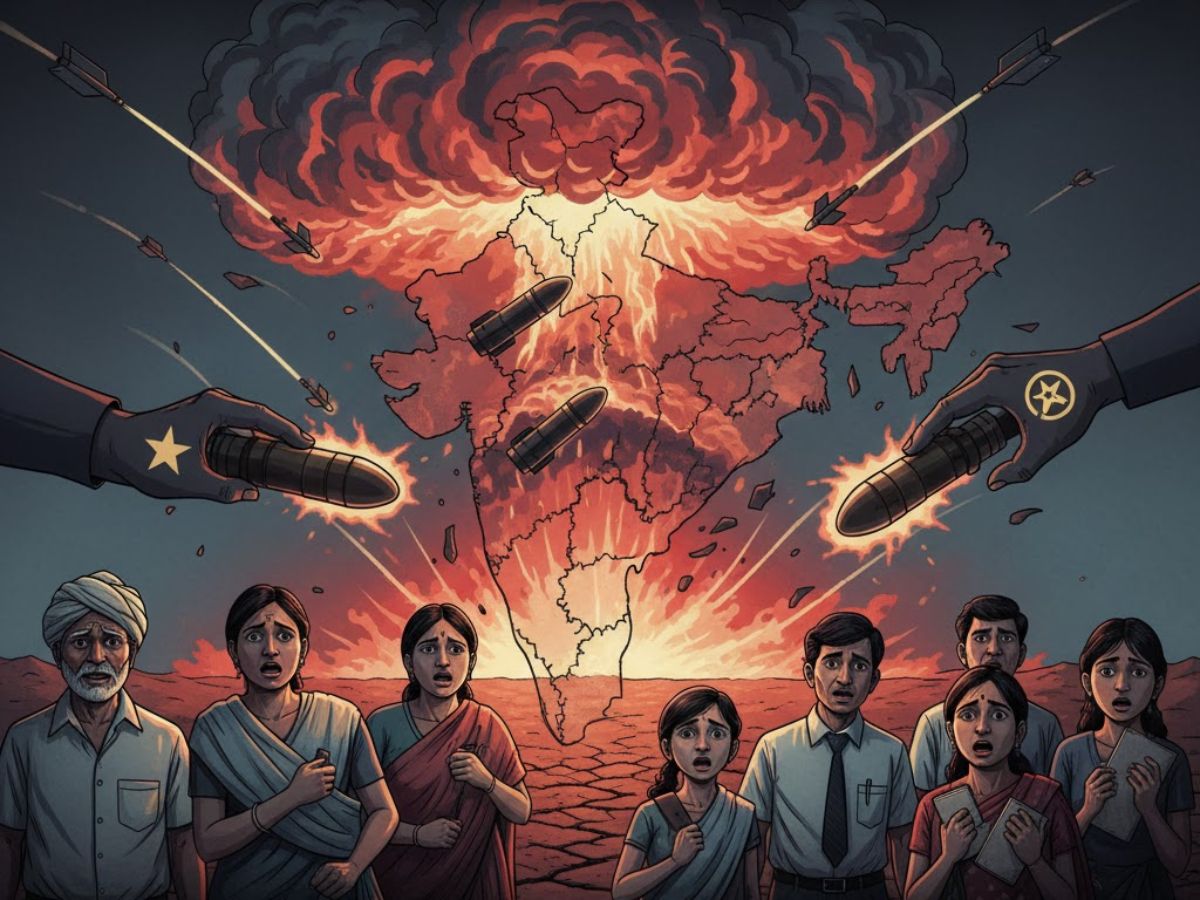
Why India should be scared of ‘nuclear sharing’
New Delhi: The global crisis of “nuclear sharing” and the weakening of nuclear deterrence draws from the erosion of longstanding arms control treaties, heightened strategic mistrust among major powers, and the proliferation of both state and non-state nuclear ambitions. In South Asia, recent convergences among China, Pakistan, and Bangladesh have intensified regional calculations, raising concerns over Bangladesh’s strategic trajectory, especially amid the political rise of Islamists.
Nuclear sharing—whereby nuclear states extend deterrence through the forward deployment or potential transfer of nuclear weapons to non-nuclear allies—has come under increasing scrutiny. This practice blurs the line between nuclear-weapon states (NWS) and non-nuclear-weapon states (NNWS) as enshrined in the Non-Proliferation Treaty (NPT), leading to growing discontent among NATO allies and external actors.
Nuclear sharing is a concept in deterrence theory where a nuclear-armed state deploys its nuclear weapons on the territory of a non-nuclear-weapon state, extending its nuclear deterrent to that host country. Critically, it involves joint planning, training, and maintaining delivery systems (such as dual-capable aircraft) for the potential use of these weapons.
The most prominent example is the NATO nuclear sharing arrangement, where the United States maintains nuclear gravity bombs in several European member states (Belgium, Germany, Italy, the Netherlands, and Türkiye). More recently, Russia has begun deploying tactical nuclear weapons in Belarus.
Major arms control agreements have eroded notably in recent years. The Intermediate-Range Nuclear Forces (INF) Treaty has collapsed, and the New START Treaty faces uncertainty beyond 2026 amid worsening U.S.-Russia relations. The growing operational ambiguity and transactional attitudes among allies, particularly in the U.S.-Europe context, have undermined confidence in extended deterrence, encouraging proliferative tendencies in exposed regions.
Russia’s de-ratification of the Comprehensive Nuclear Test Ban Treaty (CTBT) and the renewed threat of nuclear use in regional conflicts have contributed to the perceived reduction of the nuclear use threshold.
These dynamics have several broader implications:
• increased risk-taking by nuclear-armed adversaries, emboldened by the precedent of nuclear coercion in conflicts like Ukraine;
• escalation ladders involving the use of more “usable” theatre-range nuclear weapons challenge established deterrence doctrines;
• growing distrust in alliance guarantees, which could incentivize proliferation among U.S. partners and further destabilize nuclear order.
There is credible evidence that Myanmar has longstanding ambitions to develop nuclear capabilities, but current indications suggest the focus is on civilian nuclear energy with Russian assistance, amid persistent—but unproven—suspicions about secret military nuclear activities and past cooperation with North Korea.
In 2025, Myanmar signed an agreement with Russia’s Rosatom for the construction of a 110 MW small modular reactor, intended to serve as a power source, with future expansion potential. The location, timeline, and precise technical details for the planned facility remain undisclosed; some monitoring states (e.g., Thailand) express concerns about the plant’s potential dual-use capabilities, but Rosatom and Myanmar insist the project is strictly peaceful and subject to international safety standards.
Myanmar has received training for its scientists from Russia and continues to develop nuclear-related infrastructure at the technical and academic level.
Historical reports from defectors, dissident groups, and international intelligence have alleged the existence of covert nuclear reactors, uranium mining, and reprocessing sites in Myanmar, often in cooperation with North Korea.
Documents and testimony—including from the Democratic Voice of Burma and high-level defectors—pointed to secret programs for uranium enrichment and plutonium extraction in the late 2000s and early 2010s, with suspected underground facilities in Mandalay division.
Myanmar has refused to adopt the IAEA Additional Protocol, which limits international verification to only declared nuclear installations, making independent monitoring of alleged clandestine sites difficult.
Most open-source and IAEA analyses find no conclusive evidence of operational secret military nuclear reactors or reprocessing facilities as of 2025; some earlier suspected sites were found to be cement plants or other industrial installations.
Nevertheless, ongoing missile and arms cooperation with North Korea persists, and the U.S. continues to sanction individuals and companies tied to weapons technology transfers, which raises ongoing proliferative risk concerns.
Myanmar’s military regime views nuclear capability—civilian or otherwise—as a means to enhance security, international leverage, and regime survivability, particularly as international isolation has worsened since the 2021 coup.
Russia’s growing support underpins the current nuclear agenda, but historical and still-unresolved ties to North Korea suggest latent interest in at least maintaining the option for clandestine military nuclear development.
Despite the lack of open evidence for an operational secret military reactor or reprocessing plant, Myanmar’s opacity, limited IAEA access, ongoing training and procurement, and past intent mean the country remains under close scrutiny by non-proliferation analysts and neighbouring intelligence agencies.
Against this background, South Asia is witnessing a potential strategic realignment. There is increasing concern from Indian and international analysts regarding the burgeoning ties between Bangladesh, China, and Pakistan, and their implications for regional stability and nuclear dynamics.
Bangladesh remains party to the NPT and CTBT and maintains a civilian nuclear program, primarily for energy and agriculture, with Russia and China as key technological partners. China’s Belt and Road Initiative (BRI) involvement in Bangladesh includes nuclear-related infrastructure, such as a gamma irradiation facility, enhancing its technical foothold but falling short of direct weapons-related proliferation.
Military and economic collaboration between Bangladesh, China, and Pakistan is deepening, driven by mutual concerns over India’s regional posture. Recent strategic commentary points to a possible “China-Pakistan-Bangladesh axis” aiming to erode India’s strategic depth.
The political rise of Islamist factions in Bangladesh raises additional proliferation concern. Since early 2025, Bangladesh has witnessed a notable surge in extremist activities, weapons seizures, and operational space for groups linked to Al-Qaeda and IS, amid political instability.
Political Islamists such as Jamaat-e-Islami and affiliated groups have a history of advocating radical causes and have, at various times, engaged in or supported acts aligned with transnational jihadist organizations. Should Islamist factions dominate Bangladeshi governance, the risk calculus may shift.
Alignment with Pakistani security paradigms (and Chinese strategic ambitions) could, in the long term, open doors for clandestine WMD or nuclear dual-use cooperation under the cover of broader economic or technological partnerships.
Bangladesh is constructing its first civilian nuclear power plant, Rooppur, with significant assistance from Russia. This program is under IAEA safeguards designed to prevent the diversion of nuclear material for weapons.
China/Pakistan connection: while Bangladesh has strong defence and economic ties with China and a complicated history with Pakistan, there is no verified information linking Dhaka to nuclear weapons collaboration.
Developing a nuclear weapon is a decades-long, resource-intensive enterprise. Bangladesh lacks the testing space, infrastructure depth, and strategic flexibility required for a deployable arsenal.
Bangladesh’s economic dependence on Indian raw materials and electricity, along with potential Western sanctions, makes any clandestine weapons pursuit highly risky.
Most assessments conclude that while Dhaka may seek “strategic autonomy” through balancing China and Pakistan, outright proliferation is unlikely at present. However, the rise of Islamist influence and tighter Pakistan-Bangladesh links require sustained monitoring.
The present crisis of nuclear sharing and weakening deterrence reflects broader trends of arms control collapse, transactional security guarantees, and risk-prone posturing by major powers.
In South Asia, the evolving triad of China, Pakistan, and Bangladesh—especially under Islamist ascendancy in Dhaka—poses a latent, though not yet overt, risk of nuclear or dual-use proliferation.
Though there are currently no confirmed indicators of Bangladesh actively pursuing nuclear weapons, deepening military-security ties with China and Pakistan, coupled with rising political Islam, mean this scenario warrants close, continuous scrutiny.
Hindol Sengupta is Professor of International Relations at O.P. Jindal Global University, and Director of the India Institute at the university.
