
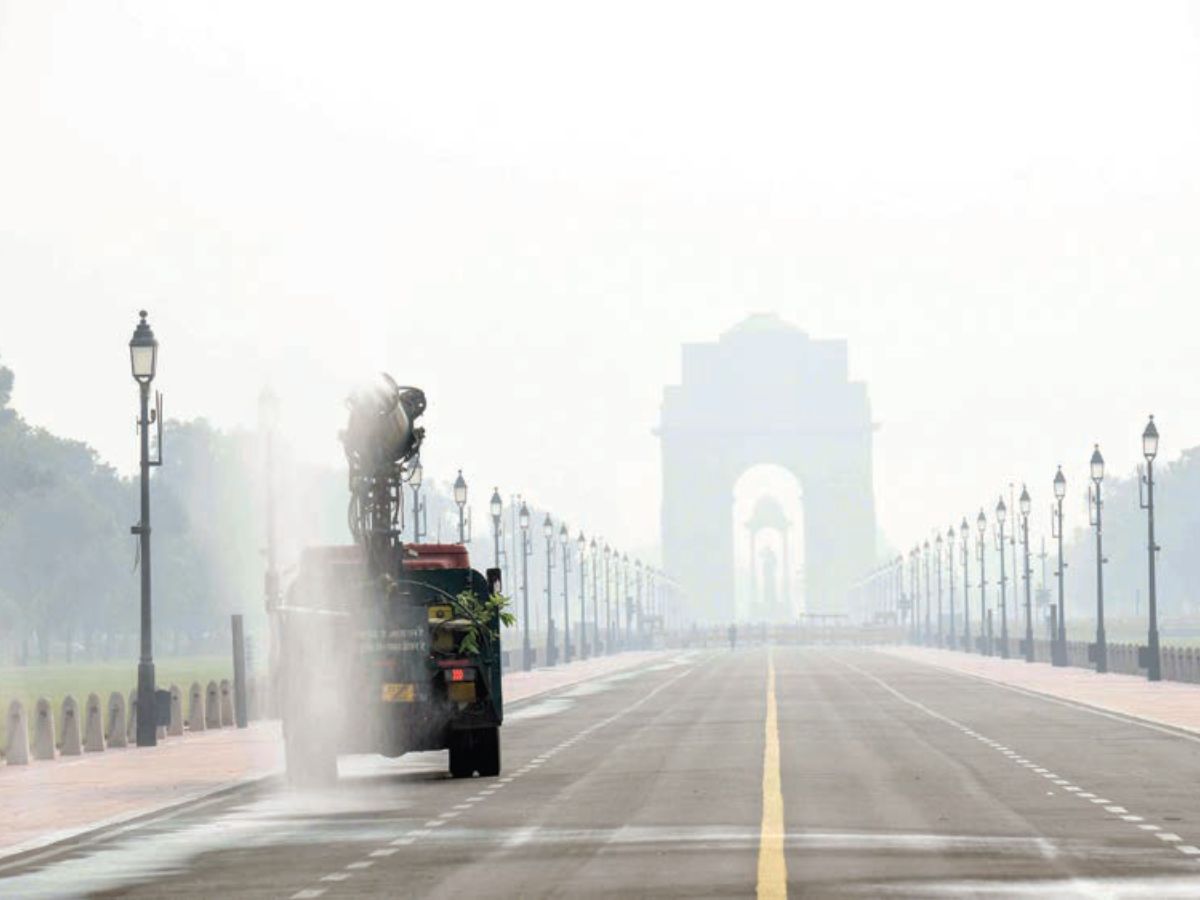
Air pollution in India is estimated to kill about 2 million people every year and is the fifth largest cause of death in India. Millions of people, especially children, have suffered permanent damage to their lungs and health in the National Capital Region (NCR). Air pollution lowers immunity and increases the risk of cancer, epilepsy, diabetes, and adult-onset diseases like multiple sclerosis. The Supreme Court’s approval of green firecrackers with restrictions did not save NCR from becoming the world’s worst gas chamber. This dubious distinction is somewhat relieved only by rains in July, August, September, and peaks from October to February, worsened by paddy straw, biomass, effigies burning, and fireworks, and perpetuated by the winter conditions of stagnant air. As per the Ministry of Earth Sciences report, October 2018, almost 41% of air pollution is due to vehicular emissions, 21.5% to dust, and 18% to industrial emissions. In November 2023, 38% of NCR air pollution was found to be caused by stubble burning. Multiple airports in and near NCR add to the problem. During the COVID-19 lockdown, the air quality and visibility dramatically improved. Hence, air pollution control is possible, as where there is a will, there is a way.
THE SILICA STRAW PROBLEM:
Silica is silicon dioxide, the commonest natural form of semiconductor silicon. Since the green revolution in the 1960s, high-yielding varieties (HYVs) of wheat and rice led to a sharp decrease in the cultivation of other crops in Punjab, a less diverse diet, and micronutrient deficiencies in the population. Unlike wheat straw, rice straw, especially of the high-yielding varieties, has high silica content (up to 15%) and poor nutritional value for use as fodder. Traditional rice varieties have taller, leafier, lower silica, and more fibrous straw suitable as fodder, while the straw from HYVs is shorter and denser. A higher silica content benefits the plant by strengthening it, detoxifying heavy metals, and increasing stress tolerance, pest, and disease resistance. The tough silica-reinforced straw is difficult to digest for ruminant animals. Worse, fungal toxins in mouldy rice straw can cause high fatality Degnala disease in buffaloes and cattle. High silica content in paddy straw significantly affects its industrial uses also. The rigid layer of silica on the exterior of rice straw protects the cellulose and hemicellulose from being broken down, reducing ethanol and biogas production. The hard silica particles interfere physically and chemically in pulp and paper manufacturing. When burnt for energy, the silica, potassium, and alkali metals-rich ash causes corrosion in boilers, reducing efficiency and increasing maintenance costs. The high silica content makes it a better resource for the construction, glass, ceramics, electronics, packaging, nanotechnology (especially for medical and environmental uses), polymer, and plastic industries.
The Punjab Preservation of Subsoil Water Act, 2009, allows paddy crop only during the monsoon months, and prohibits sowing of paddy seeds before 10 May every year and transplantation before 10 June. This restricted cultivation period and the intensive rice-wheat crop rotation leave farmers with a narrow window of just 2 to 3 weeks between harvesting the rice crop and sowing the subsequent wheat crop. The limited time available to clear the massive amount of stubble left behind by harvesters, unsuitable for fodder or composting, biofuel or biogas, encourages stubble burning in the typically dry post-monsoon weather in northern India. Farmers in the south grow the longer rice varieties with higher nutritional value and lower silica. The paddy straw is used as animal fodder and for thatching, reducing the incentive to burn it. Higher humidity and temperatures in the south allow quick decomposition of the small crop residue left by manual harvesting (due to availability of labour and smaller land holdings), thus clearing the fields. Silica in whole grains, vegetables (especially leafy greens, green beans, and root vegetables), and certain fruits (like bananas) is safe and does not accumulate in the body as it is flushed out by the kidneys. It is an approved food additive (E 551 or silicon dioxide) and is used as an anticaking agent in processed foods. Food-grade silica gel packets in medicine and food containers are not meant to be eaten; safe if mistakenly consumed, but can pose a choking hazard, especially for children.
THE SILICA FORELAND BASIN PROBLEM:
The Gangetic Plain is a shallow, asymmetrical depression (has a steeper slope on one side than the other), which is technically a “foredeep” or foreland basin, a type of valley-like feature that formed due to tectonic activity, rather than a valley carved by erosion like a river valley. It has become a “silica basin” where silica-rich stubble ash, construction, stonemasonry, mining dust, and the Thar desert silica (sandstorms) accumulate. Inhalation of fine crystalline silica dust or Respirable crystalline silica (RCS) is highly harmful and causes severe, irreversible lung diseases, called silicosis, and increases the risk of other serious health issues, including lung cancer, Chronic Obstructive Pulmonary Disease (COPD), Tuberculosis, and other lung infections, and kidney disease. Amorphous silica is considered less dangerous, though it irritates the skin, eyes, and respiratory tract. Smoke and toxic gases from fossil fuel (including firewood and cow dung) and garbage burning on street sides and landfills, remain suspended overhead due to the geography of the foreland basin that ensures low wind speeds and temperature inversions in winter, which trap pollutants close to the ground.
HEALTH AND FINANCIAL BURDEN:
In addition to health problems due to particulate matter and toxins in polluted air, poor visibility leads to accidents and injuries, as happened during the great smog of 2016-17, with a 24-vehicle pile-up on the Yamuna Expressway, and numerous other accidents in the city. The third India-Sri Lanka cricket test match of 2017-18 at Delhi had to be halted due to smog, causing cricketers to fall sick despite the use of masks. Decreased penetration of sun rays through the smog worsens vitamin D deficiency and reduces sterilization of airborne pathogens and those in surface dust. Health facilities overloaded with health problems of air pollution struggle to treat other health problems. Huge financial losses result from the closure of educational institutions, offices, and industries, accidents, health burdens, delayed and cancelled logistics, trains, and flights. Air purifiers and smog towers are an added expenditure. Poor air quality discourages tourists, reducing revenue from the tourism industry and medical tourism. Sports and cultural events, entrepreneurs, and investors avoid the gas chamber.
OFFICIAL ACTION AND A PUBLIC MOVEMENT NEEDED:
Beijing controlled air pollution with a multi-pronged strategy that replaced coal-fired boilers and power plants with cleaner energy, promoted electric vehicles, provided multimodal street-to-street public transport, curtailed industrial emissions, and implemented regional cooperation to reduce pollution across the entire region.
-
The coal-fired Badarpur Thermal Power Station, of 1973, produces less than 8% of the city’s electric power, but contributes up to 90% of the particulate matter pollution from the electric power sources in Delhi, the rest being from diesel gensets. There are 11 thermal power plants within a radius of 300 km from Delhi. Replacing these with a clean and stable power supply is eminently achievable.
-
Punitive tax on polluting fossil fuel to subsidise power for electric vehicles and public transport will be far more effective than any regulation or ban.
-
All polluting industries should be shifted away from populated areas and forced to implement end-of-pipe treatment to reduce environmental damage.
-
Dust and other emissions at construction sites can be reduced by the use of prefabricated structures and strict barrier measures to contain noise and dust within the premises.
-
Street dust can be reduced by vacuum cleaning of well-designed and maintained roads, preventing open transport of sand, garbage, etc., paving of footpaths and cycle tracks, and greening of open spaces, road dividers, and sides, and with vertical gardens.
-
A public movement is required to force the officials and politicians to act on the above measures, and to recover public places, footpaths, and to green and clean the city.
-
Public action can reduce littering, dumping waste on streets, and garbage burning.
-
In 2022, the Punjab Government announced plans to purchase maize, sorghum, pearl millet, sunflower, and mung bean crops at MSP, to encourage farmers to adopt less water-consuming crops instead of paddy and wheat, in the wake of fast-depleting groundwater. The government should set MSP for paddy straw and put it to use by the industry. Farmers will stop burning stubble once it can be monetised. Issuing health advisories for breathlessness, chest constriction, eye irritation, asthma, allergy, setting up smog towers, and invoking the Graded Response Action Plan (GRAP) in stages across Delhi-NCR does not solve the problem. A mission-mode drive by the state and central governments, with active participation by the public, businesses, and industry, is the need of the hour to clean up the mess and save public health.
Dr. P.S. Venkatesh Rao is a Consultant Surgeon, Former Faculty CMC (Vellore), AIIMS (New Delhi), and a polymath in Bengaluru.




