
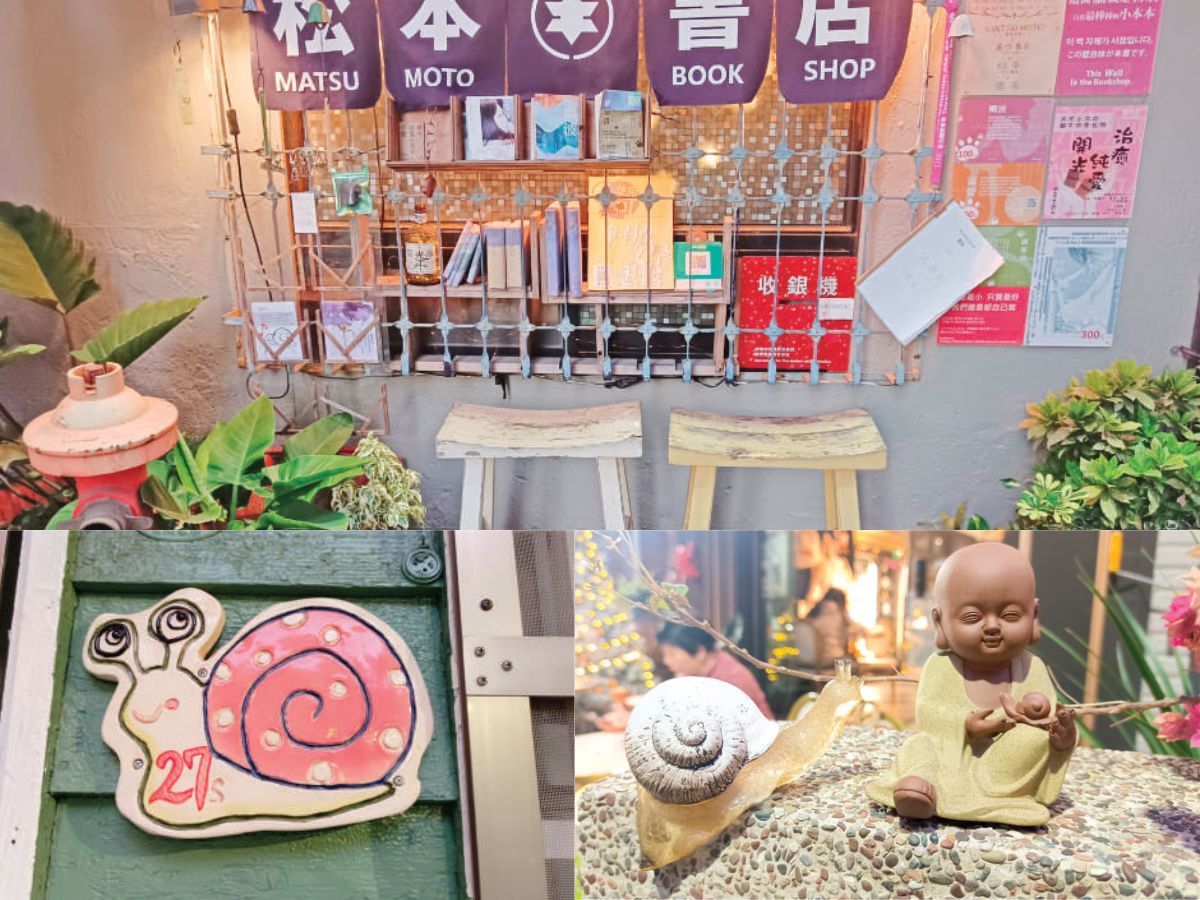
The name “Snail Street” sounds like an old lane selling sea food in coastal Tainan, the oldest city of Taiwan and very much its cultural capital. But the snail alley is very different—it’s for those with the ability to slow down to the extent of a snail’s pace, just like writers and artists do and find inspiration, poetry and even a few moments of breathing deeper than one does as a matter of fact.
The narrow alleys would have been ordinary and of no interest had there been no concept of attracting snail-paced tourists to it. Luringly, snail’s street is a thick neighborhood with narrow streets lined by houses, a few very old ones from Japanese time, home stays and tiny shops and cafes selling coffee, kosha (chinese fruit inlaid egg rolls) and memorabilia. There was even a Michelin star restaurant in one of its narrow alleys.
A recent walk through it made me nostalgic for many olden cities in India or downtown parts of olden cities like Delhi (purani Dilli) and Kashi hold history and heritage similarly in their narrow alleys. Their narrow alleys also require people to slow down because they weren’t built for traffic and the fast pace of today. Probably they too require someone to give them a name on the tourist map that narrates that neighborhoods are actually living history and at times attracting people back to them requires giving them a new meaning that resonates with contemporary times. We may call it micro-branding of smaller alleys within the macro brand of a larger tourist town.
At Kashi I have sat at the Blue lassi cafe a few times—Blue lassi cafe is a tiny cafe in Kashi’s very old alleyways with old wooden doors and wooden benches painted in bright blue and its walls glued with numerous pictures and passport size photos of those who have thronged it from around the world for years. The collage of pictures on the wall creates a space of alive memories and as you sit inside you watch outside, people carrying their dead to the world’s oldest crematorium at Manikarnika ghat at the Ganga. It’s ironic and can sound shocking but the rhythm of people carrying dead through the narrowest alleys while cows and dogs too try to sneak in through their way creates an experience not available anywhere else in the world.
It brings you face to face with the reality of life and death, pain and joys, tastes and distastes and philosophy and pragmatism–all at the same time and the same place through the door of the blue cafe. Like blue cafe and its alley there are multiple other alleyways holding massive potential of revitalization and micro-branding. In fact each alley has a different story waiting to be told in a fresh appealing way to the new generation of tourists equipped with hashtags, trending content and barcode scanners.
Narrow alleys can make tourists slow down, observe and tell the story creating a rippling effect and just like the “Snail Alley” of Tainan, India’s many historic alleys can fine tune their stories for the happening platforms of the generation Z. Neighbourhood tourism start-ups can tap into this micro-branding creating an enriching ecosystem for entrepreneurship. And the newness of the stories can reflect on tourism apps like Agoda, MakeMytrip, Trip, Yatra, EaseMyTrip, etc creating newer tours for tour agencies to sell and tour guides to narrate.
Thank you Tainan. Thank you dear Snail Alley for helping me think in new ways!
Venus Upadhayaya is a senior journalist and a MOFA 2025 Taiwan Fellow. This is the first of her writeups on her travels through Taiwan.




