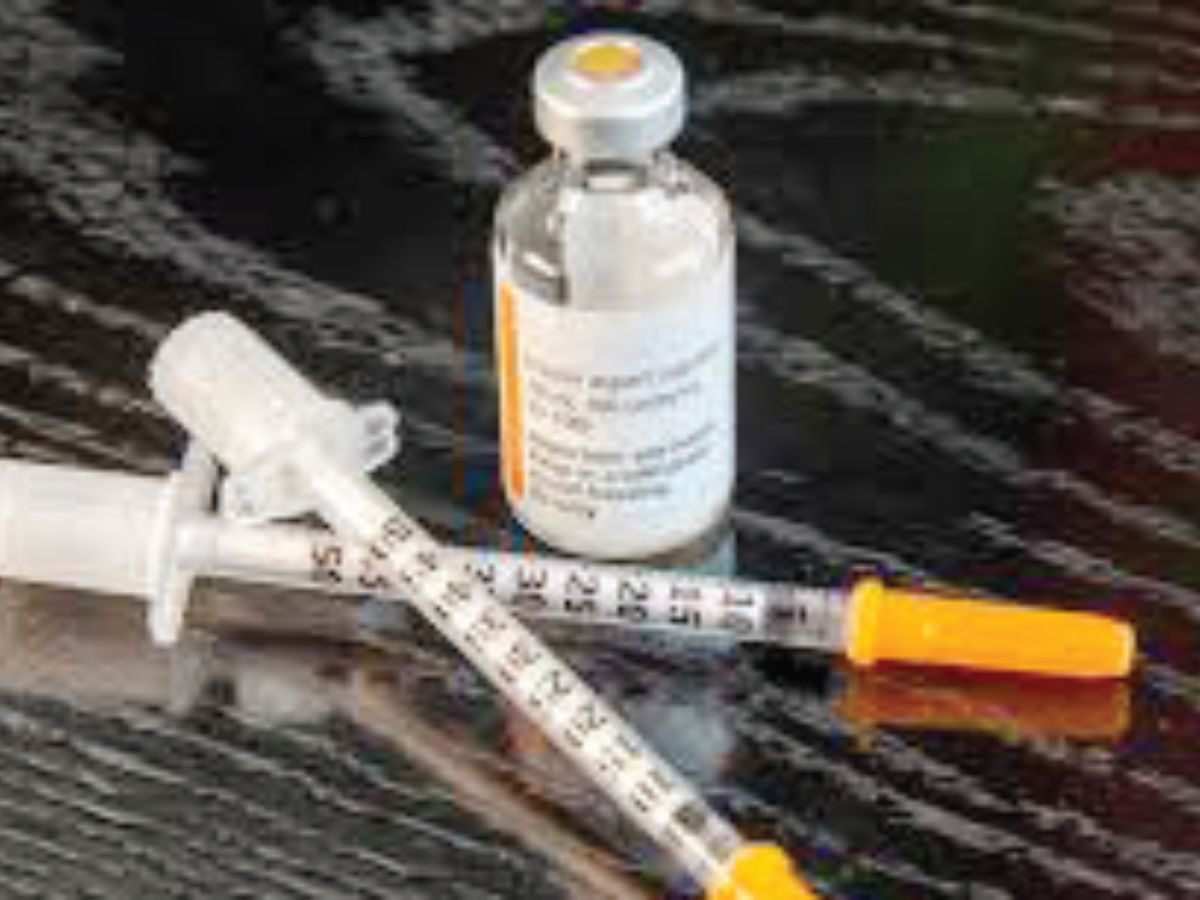
A future without insulin injections? New diabetes therapy shows promise
For more than a century, insulin has kept millions of people with diabetes alive — but at a painful cost. Needles, injections, pinpricks, and the daily dread that comes with them have felt like an unavoidable part of the disease.
Now, scientists in China believe that era may finally be nearing its end.
In a series of striking new experiments, a research team from Zhejiang University has developed a way to deliver insulin through the skin — not with a patch, not with a microneedle, but as a simple topical treatment.
Just rub it on. Wait. And watch blood sugar levels fall smoothly. It’s the kind of breakthrough that has long been considered impossible.
Human skin is a fortress — especially its outermost shell, the stratum corneum, a barricade of dead cells held together by oily lipids. Most medicines can’t pass through it unless they are tiny, fat-friendly molecules.
Insulin, on the other hand, is too big to slip between cells and its water-loving nature means it bounces right off the skin’s oily barrier. For decades, that was considered the end of the story.
But the researchers noticed something intriguing: the skin isn’t the same pH throughout. Its surface is slightly acidic, while deeper layers are more neutral. That chemical gradient might be the key to opening the gate and bypassing nature’s strongest filter.
The team engineered a special polymer with a name only a chemist could adore: poly[2-(N-oxide-N,N-dimethylamino)ethyl methacrylate], mercifully shortened to OP.
This polymer changes personality depending on where it is located. At the skin surface, in the acidic zone, OP carries a positive charge that allows it to cling to lipids like a magnet. But as it moves deeper where the pH becomes neutral, it loses that charge and slips freely past the barrier into the body.
The researchers attached insulin to this smart polymer, creating a conjugate known as OP-I, allowing the hormone to hitch a ride through the skin.
What was once theory suddenly turned into jaw-dropping practice. In lab-grown human skin and diabetic mice, OP-I dramatically outperformed insulin alone or other controlled formulations.
In mice, blood glucose levels dropped to normal within an hour and remained healthy for twelve hours, with effectiveness comparable to direct injections.
Tests in diabetic minipigs — animals with biology remarkably similar to humans — showed the same uplifting pattern: glucose normalized within two hours and stayed stable for twelve.
Once inside the body, the OP-I conjugate traveled to glucose-regulating tissues such as the liver, fat, and muscles, releasing insulin exactly where needed. No inflammation was detected, hinting that this approach could be remarkably safe.
If future human trials confirm these results, the era of frequent insulin injections may finally give way to something gentler, easier, and far more humane.
