
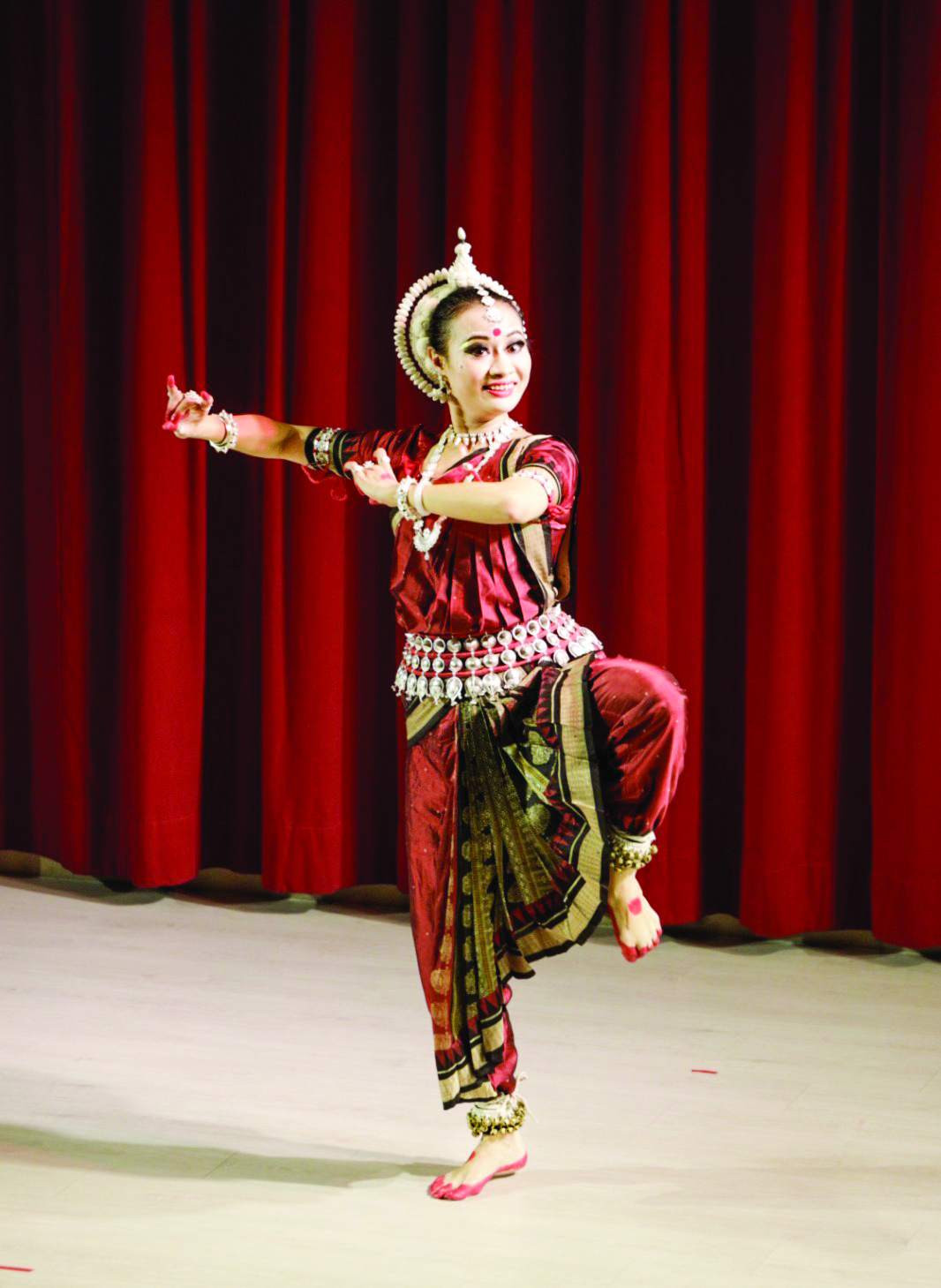
Twenty years ago when Huang Meiyu arrived alone in New Delhi to learn Bollywood dance, she feared that she would end up being a face on the posters of “missing people” she often sighted on the walls of Connaught Place. Fast forward and today she’s a trained Odissi dancer with a dance studio in Taipei teaching Indian dance forms to young Taiwanese and also spreading an appreciation of classical Indian culture through her dance recitals on Ramayana and Shiva. Meiyu’s Taiwanese mother is wonderstruck about how an “Indian soul” got inside her daughter and Meiyu says that her life is devoted to dance and that she has gradually come to understand what the classical Indian dances promote as, “Dancing for Gods.” She says she dances for god.
Today’s materialistic societies least understand or misunderstand, “dancing for god.” It’s even more difficult when someone is pursuing the least popular art form in a foreign society. It can be a lonely pursuit and it calls for a lot of devotion towards the art form or as Meiyu says, “being married to dance.” And dancing for gods isn’t an unfounded concept for Indian classical dancers- -Meiyu talks highly of how every ornament of an Odissi classical dancer denotes either some form of God or some ancient temple from Odisha.
“The flower you see on the head [of an Odissi dancer] represents the Lotus flower with a thousand petals that lies above the head in the head chakra which is an energy center. It’s also like the sunlight of the Konark Sun temple. The longer piece that emerges from the center of the back piece is called Tahiya and this represents the temple spire of Lord Jagannath. Everything is linked to faith, belief and temples,” she said while sipping a beverage in a cafe in the Taichung Railway Station in Central Taiwan.
Lure of Bollywood to Seriousness of Classical Dance
Twenty years ago before landing in India, Meiyu was taken aback by the costumes, dance and the beauty of the cinematic sets of Sanjay Leela’s Bansali’s Devdas. To the younger her, that beauty and colourful display of dance and music was such a lure that she decided to travel to India to learn Bollywood dance. “Devdas was popular in Taiwan. I wanted to become Aishwariya Rai,” said Meiyu. Before starting her journey in Indian classical dance, Meiyu was practising belly dance, the Chinese classical dance and other fusion forms. In a tribal dance festival in San Francisco she met Collena Shakti, a Greek dancer and a proponent of Indian dance forms who around the same time went on to establish Shakti School of Dance in the Old Rang Nath Temple Pushkar, Rajasthan.
Collena works with folk artists to promote traditional Rajasthani dance and music, while in Summer months she hosts dance residencies and yoga immersions at Villa Shakti Crete. Meiyu invited Collena in 2007 for a three weeks dance workshop to Taipei. A few years before that, through the wife of an Indian engineer in Taipei she had already been introduced to Bharatnatyam. In 2010, Meiyu started to learn Odissi under Madhumita Raut, a noted exponent of the classical art form and the daughter of Padmashri Guru Mayadhar Raut who’s credited with reviving Odissi dance through Shastrabased knowledge in the 1950s.
To reconstruct the modern Odissi, Guru Mayadhar had started in 1959 an association of scholars, performers and gurus called Jayantika. It’s Madhumita who stressed upon Meiyu the need to focus on only one form of classical dance and excel at it. Meiyu understands it’s the spiritual need of any exponent of classical form of Indian dance.
Currently her guru is Padma Charan Dehury, another noted exponent of Odissi who was also invited by her and by Professor Yin Weifang of the Department of Theatre Arts at Sun Yatsen University in Taipei in 2016 for introducing Odissi classical dance form to university’s students. Meiyu wishes that some university in Taiwan would take up Indian dance in its regular curriculum.
Nonetheless her dance studio, The Shakti Indian Dance Group continues to introduce and train young Taiwanese into multiple Indian dance forms including folk and contemporary.
Staging Taiwan’s First Ramleela
Today she can be credited for staging many Indian cultural performances in Taiwan. In 2022 she staged a ten-minute version of Ramleela in the Diwali Indian festival with her Taiwanese students. She gasps how she struggled to look for someone to play Ravana and finally found an Indian expat to do so. She designed the costumes herself including the weapons like the mace (gada or Kaumodaki) of Hanumana.
“After the performance an Indian from the audience came and gave me 2000 NTD and told me that he watched such a performance for the first time in Taiwan,” said Meiyu. She said there was a deeper cultural message in that gesture which a lay Taiwanese can mistake for payment for the ticket price. She exclaims how only an Indian would understand what a token of such money means after a Rameela performance.
These days Meiyu is working on musical dramatization of stories from Shiva Purana. In 2023 she staged twice a show on the Shiva-Parvati story at the Xinzhuang Culture and Arts Center at Taipei. According to her, at present there are 10-15 small dance groups practising Indian dance forms around various counties of Taiwan. She had many students but she says only eight Taiwanese took up Odissi with greater seriousness. She wishes she had more students like that and she aspires much more for popularizing Indian culture and dance in Taiwan.
She says she’s a devotee of Shiva and prefixes Shakti to her name–Meiyu Shakti. Meiyu is also actively involved in cross-cultural theatre and has made painstaking efforts to integrate Indian classical traditions into Taiwan’s academic and performing arts. Incollaboration with the Department of Theatre Arts at National Sun Yat-sen University, she co-produced the first-ever Sanskrit play for the Chinese-language audience, titled “Mrcchakatika” or The Ittle Clay Cart.
“This milestone production marked a rare fusion of classical Indian dramaturgy and modern Mandarin-speaking theatre, and highlighted the potential of Indian ancient cultural heritage to new and diverse audiences,” said Meiyu. *Venus Upadhayaya is a senior journalist and a MOFA 2025 Taiwan Fellow.




