From Carnatic roots to jazz fame, Chandana Bala Kalyan embraces boundless creativity.
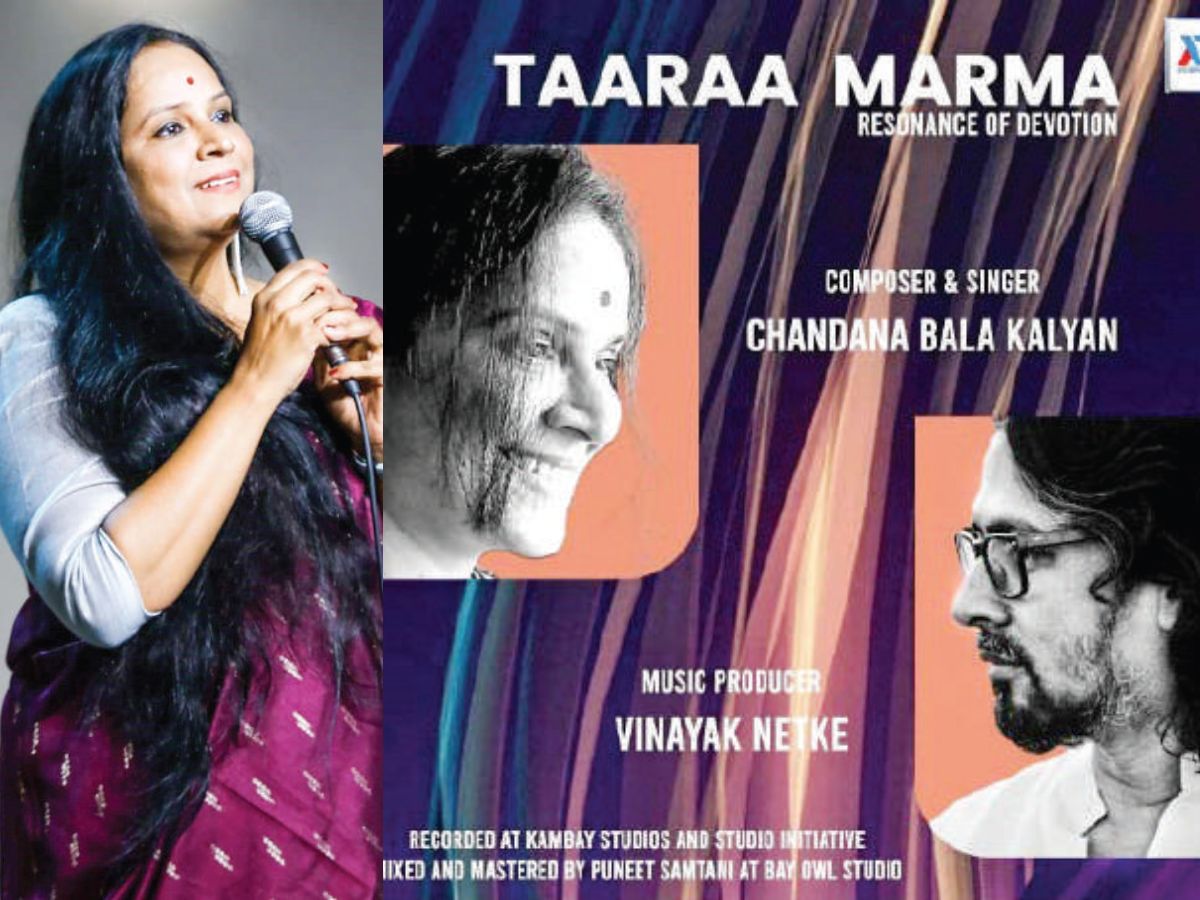
On the fifth day of Dasara, I wore a green sari and stepped out to attend Chandana Bala Kalyan’s concert, preceded by the release of her second album, Taara Marma. Like you, I’ve often wondered what makes some people push boundaries and excel in their chosen field. Chandana Bala Kalyan is one of those people - a gifted singer, she’s made the transition from Carnatic to Hindustani, Sufi and Jazz and become a songwriter and composer along the way.
Though I interviewed her for my podcast a couple of years back, I still found myself with more questions. Never at a loss for words, with a cheerful and warm personality, Chandana is an engaging subject to talk to.
“For a long time, I had to set aside my singing career as I didn’t have an avenue to sing,” she remembers. It seems hard to believe now that she’s released two albums and performs not only at Carnatic concerts but as a member of well-established fusion bands like Sanjay Divecha and Secret, Indiva, and the Rajeev Raja Combine. She’s worked on albums with Taufiq Qureshi and Ranjit Barot, playback and background scores for films, including duets with Hariharan.
The daughter of well-known violinist S Nataraja Murthy, it was natural for her to start learning music at five. With indulgent school and college teachers allowing her time off, she made good progress as a concert performer in Bengaluru. “I never feel stage fright—I’ve been performing throughout my life.” She also became a Grade A artist on All India Radio.
The real challenge began when she moved to Mumbai after marriage. As a Carnatic singer, she performed at all the available sabhas in the first year or so. After that came a long lull when the wait for performances seemed interminable.
She approached jingle makers for a break, which led to several gigs as a voice-over artist. Her sweet voice in a Bournvita advertisement became popular and led to many more assignments. She kept doing that until she met percussionist and composer Taufiq Qureshi, who introduced her to jazz guitarist Sanjay Divecha, who asked her to sing with his band.
“I was very hesitant as I wasn’t sure I would be able to get the hang of Western music, especially the right pronunciation,” she says. But her desire was stronger than her fear, and her interpretation of the jazz standard “Take Five” became a raging hit, garnering millions of views—even the official Dave Brubeck page shared it. The internet fame led to more requests for collaborations and concerts from far and wide.
She kept learning and improvising. When Sanjay introduced her to the whole tone scale, she found it was similar to the Gopriya raga in Carnatic classical music. She used it to unusual effect while singing ‘Neemayeya Olago’, a well-known poem by the 16th-century reformist Kannada poet Kanaka Dasa.
Her guru, Vidwan HS Sudhindra, assigned her the task of translating ‘Ugabhogas’ into English. Ugabhogas are a distinct genre within Carnatic music, written mostly by Haridasas. The project set her off on a journey of discovering music from across the country. This inspired her to begin composing and writing.
She created ‘Marma’, a confluence of devotional, spiritual and philosophical poetry by various poets. They are contemporary arrangements with influences of classical, light classical and folk traditions of India, and explore the various Margas of Bhakti—paths to devotion.
Her first album, Marma, has eight songs and her second Taara Marma, has six songs. Produced by Vinayak Netke, there are interesting arrangements with string instruments like guitar, bajlama, iktara, and violin. Whichever genre she sings, her voice moves effortlessly across scales, giving her the moniker ‘vocal gymnast’. A born performer, her evident joy in performing is contagious. Both albums were recorded at live concerts with the audience present. She’s created sets that three members can perform at an intimate baithak or a five-member band at a bigger space.
Chandana divides her time between Mumbai, where her husband and son live, and Bengaluru to spend more time with her mother and sister after her father passed away a year ago. The challenges of juggling the roles of independent artist, wife, mother, daughter and sister are not easy, but she handles them with composure.
So how did she succeed in Mumbai’s competitive music scene? Confidence from years of early training and public performances. A clear sense of identity. Passion for music backed by purpose. Ambition tempered with humility—her devotion to her gurus is absolute. Her music guru and many of her teachers from school and college were honoured at the album release.
But perhaps most importantly, she’s maintained her independence, financially and artistically. She’s never waited for permission to find an opening. She adapted. When Carnatic concerts dried up, she did voice-overs. When jazz felt intimidating, she learned it anyway.
And she understood early on that staying connected matters. For example, after we first met in Panjim at the Serendipity Arts Festival, she followed up with emails about her work, not being pushy, just present. So when it came time to curate performers for the Under The Raintree women’s cultural festival in Bengaluru, she was top of mind. That’s the thing about people who push boundaries—they don’t just wait for opportunities. They make their own.
Sandhya Mendonca, author, biographer, and publisher at Raintree Media, offers a distinct female gaze of the world in this column. Her podcast Spotlight with Sandhya is on all major platforms and YouTube.
