
The fingerprints of all human beings are different. So too the variations of their physiognomy, even though there is the almost banal similarity of a pair of eyes, nose, body, limbs etc. The ancient concept of Parabrahman is uncannily the same. For example, in the Mahabharata, Krishna, who Arjuna sees more as a friend than a cousin, is his God. Each time the Pandava forgot this, it led to disaster!
India has had the mixed fortune of being under the influence of many waves of people, with different languages, customs, food habits and philosophies. “Let good thoughts come from all directions,” proclaimed our ancestors. They had the confidence in themselves not to be intimidated by something quite different from them. They also had the ability to pick out what was best and ignore the rest without the slightest qualm. This ensured the variety and richness of their lives—a lesson every citizen of India will still find relevant.
Their absolute belief and self-confidence as well as curiosity made them hold their own. Sadly, in some eras this became fear, which translated into aggression and an effort at shutting down whatever was even slightly different from them. It is needed to believe in oneself. It is equally needed not to feel good until these views that were thrust down the throats of everyone opposing it were grudgingly regurgitated.
The traditional religious system of our country is Sanatana Dharma. There are huge to tiny temples, or dwelling places for Divinities, which simultaneously absorb the faith of the devotees as well as transmit them to the devotees. Most of these temples were centres of learning as well. The meaning of the word Kshethra simply means a delineated area. Kshatha thay thraana ithi Kshetra, runs the precept. That which destroys hurts, negativity etc. is a Kshethra. Earlier Divine Souls used to meditate in these places, increasing the spirituality of the place. Parabrahman was ubiquitous. Certain acts and rituals made it more accessible.
It is interesting to note the number of places, especially in the South of India, that are allegedly the Samaadhi of Agastya Muni, one of the great sages of this country. This is because Agastya Muni was a magnet of spirituality. Parabrahman, very much like nuclear energy, exists in itself. To activate it we use a simple button. This button is our belief system. We had the Ganapathya (Ganapati), Shourya (Sun), Kaumara (Muruga) systems of worship, now shortened to Shaiva (Shiva), Shaaktheya (Devi), Vaishnava (Vishnu).
For example, there are many forms depicted of Ganapati, some of them very different from the cute, pot-bellied Ganesha, easily propitiated with a ball of jaggery. The Tantric forms of Ganapati are as intimidating to the uninitiated as some forms of Sri Maha Kali! It is interesting to note that the Pancha Phala (Five fruits) offering to Ganesha is perfect if the fruits are round-shaped such as apples, guavas, oranges etc. Roundness signifies completion. Round is the only shape which has no hierarchy.
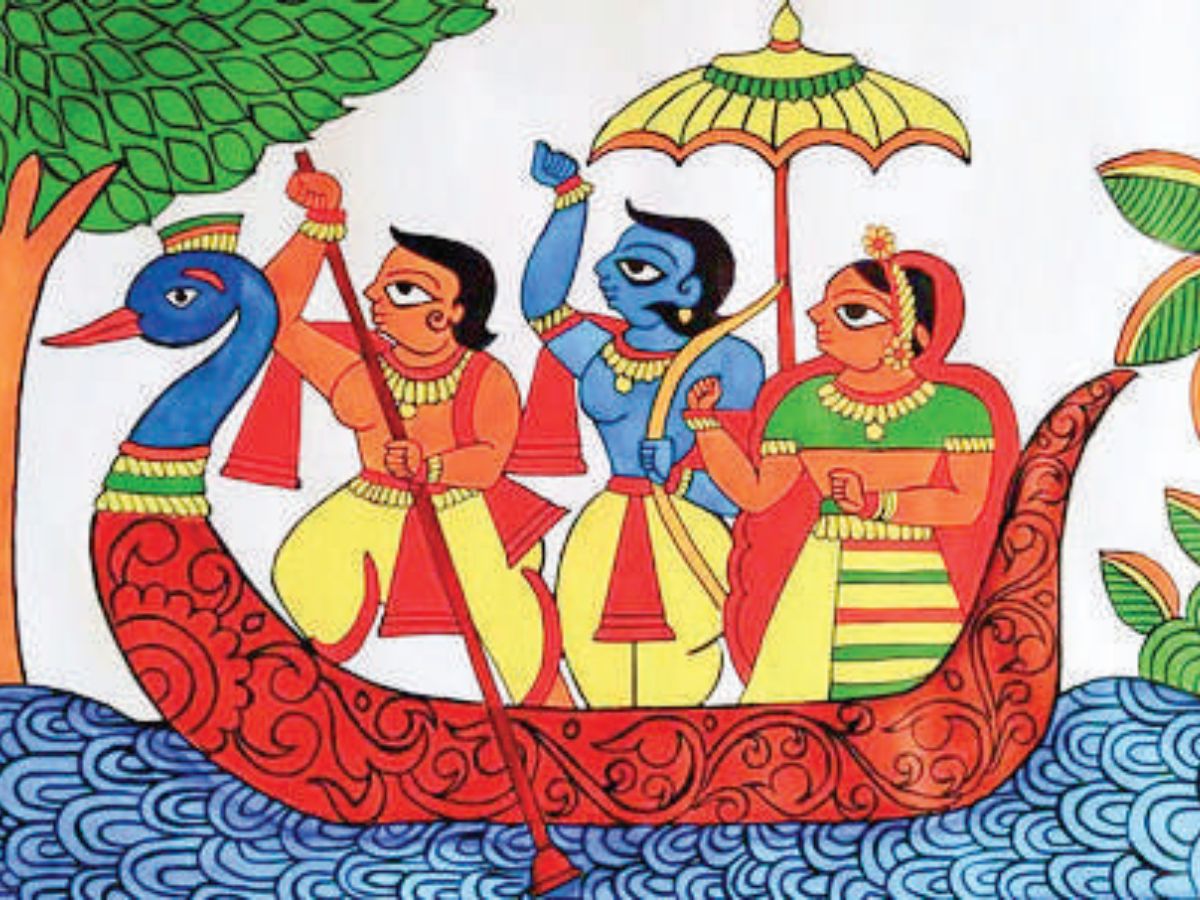
The basic Sanatana Dharma of this land survives because faith runs deep. If we look at the number of temple goers, they are abysmally low. Temples were centres of socializing as well as many other things. Maudlin television serials have taken over the time of many people. Ramanand Sagar’s epic Ramayana, broadcast on national television, was the first alternate method of learning the basics of worship. People got pulled into the story.
A very wise lady taught her kids to read books by reading out the story in the books aloud. She would pause at a very interesting juncture of the story, promising to complete it the next day! The children would be too impatient to wait. She would leave the book on the table, casually saying that the story was in the book and that the kids could always look at it. She never asked the kids specifically to read books or that it was good for them. All of them became bookworms, who cannily continued their aunt’s technique to make their kids avid readers as well!
There is a beautifully made Ramayanam in Japan which has not been aired on the national channel yet. Mahabharatham was the next epic to follow Ramayanam on TV. Sweet old grand uncles and grandmothers were the storytellers and guardians of our culture. Everywhere on Earth, storytellers were welcomed and respected. Despite his tendency to sow disharmony, Sage Narada was welcomed even by demon kings who knew very well that Narada was one of the greatest devotees of Shri Maha Vishnu, their traditional enemy. Shri Maha Vishnu as the Protector was bound to see to it that His world was protected from the imposition of demoniac laws!
The electronic media has taken over the role of elderly members of the family ensuring the continuance of their culture. In fact, it is a great pity that each newborn infant within our great Sanatana Dharma is not exposed to our shlokas and sthuthis, let alone the Vedas! All that has to be done is to switch on an appropriate YouTube channel and put it to the child. The kid is too young to change the channel just yet. Rather than moan at the sadly dying family structure, it is wise to use the present infrastructure to preserve if not propagate our precious culture.
At many places we have reduced it to a majority religion versus a minority one. Anyone who has listened to a Muslim, Parveen Sultana, sing the Hindu Bhajan Bhavani Dayani will realize how ephemeral human-made differences are in front of the great harmony of music. Social media warriors and politicians are adept at using the slightest variations to their own advantage. This action has overtaken our natural one of tolerance and inclusiveness.
Sanatana Dharma believers need to insist that every temple has its own rituals, myths and practices preserved carefully. Take the famous Guruvayoor temple in Kerala for example. Dwapara Yuga or the Age of Krishna had come to an end and the ocean was inundating all the land with pralaya. Brihaspati (Jupiter) and Vayu (Wind) were designated with the job of ensuring that the idol of Shri Maha Vishnu, worshipped by Krishna’s parents, was preserved to be worshipped in the ensuing Kali kaalam as well. They saw a spot where Shiva and Parvati were dancing. The Divine couple made their way to the neighbouring Mammiyur to accommodate Guruvayoor Appan. Custom and usage has made the four-armed Maha Vishnu into Krishna. This is an example where Shaiva, Shaaktheya, Vaishnava philosophies blend. No visit to Guruvayoor is considered complete unless the devotee worships at Mammiyur temple! Compare this to the Thenkala-Vadakala tussle at Shrirangam, one of the most ancient Vaishnava centres in India!
There is a Shivalinga under the hand of Shri Padmanabha Swamy temple in Thiruvananthapuram. Shri Maha Vishnu is doing pooja to Shiva, as Shiva is the superior deity declares the Shaivite. “No, certainly not,” avers the Vaishnavite. Shiva is taking shelter under Shri Maha Vishnu’s strength. The beauty of Sanatana Dharma is its very diversity. Religious leaders should have the depth to declare that each household, each individual, each temple has the right to its own Veda, Aagama etc. This would, of course, ensure that the strands which hold our Faith are strengthened. Not only that, they would be dyed in colours which cover the entire spectrum of light. Eternity lives on where beauty, faith and utility mingle seamlessly. Even sans modern technology our ancestors were acutely aware of it. It would be wonderful if we could combine their knowledge with our timorous one. It would certainly leave our old Masters more glowing and us basking in that light.
Thiruvathira Thirunal Lakshmi Bayi was born the XII Princess of the erstwhile royal family of Travancore.




