Andreas König: Piano maestro bridging Indian and Western music through soulful teaching and transcendent performances.
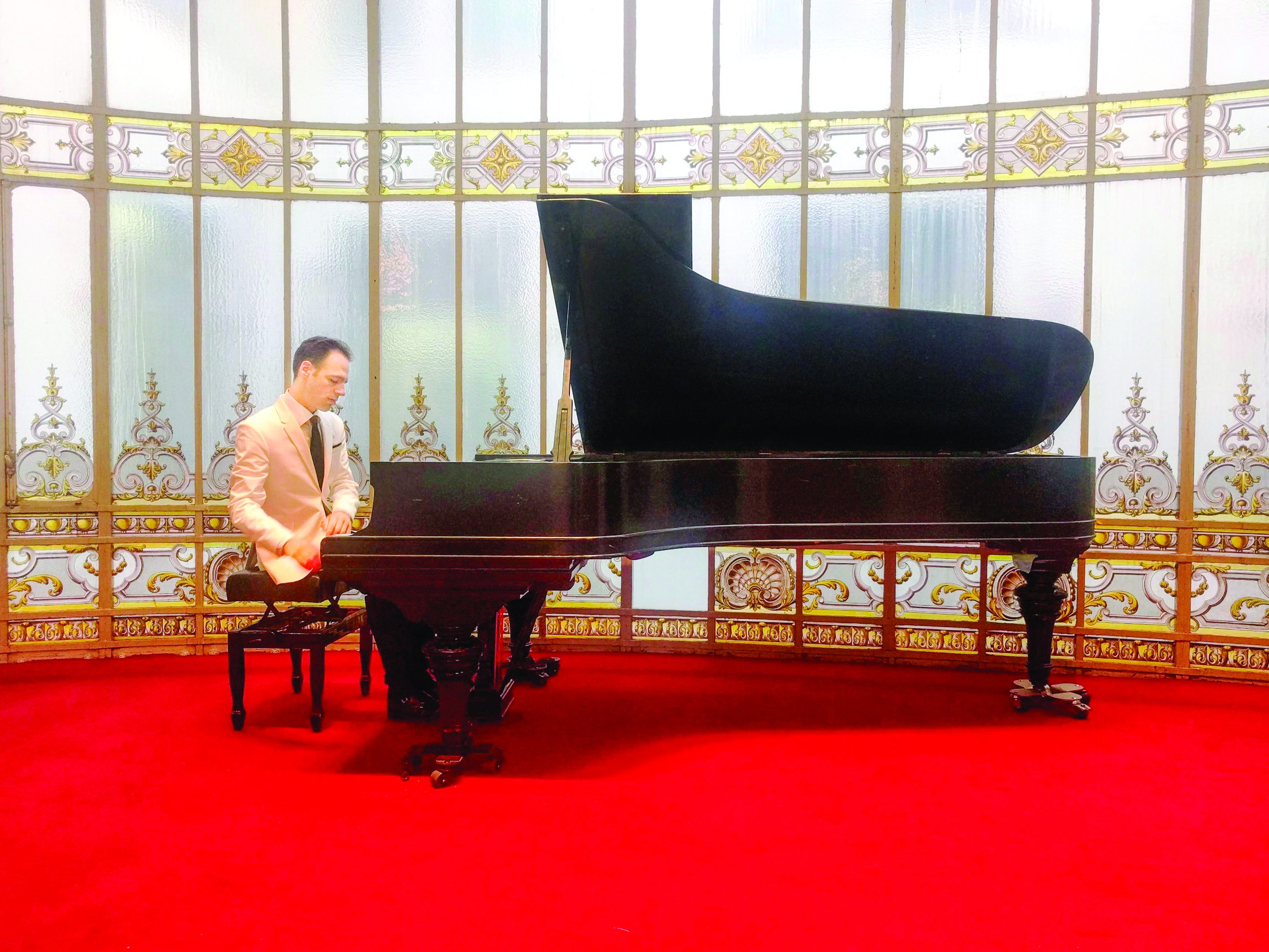
For German pianist Andreas König, music is far more than structured sound—it’s a journey beyond the physical world.
“Music is a trail from the physical world to the metaphysical,” König reflects. “It leads us into realms higher than our material world, a locality where we meet each other as pure souls, and where we come closer to the Divine.”
In his presence, one gets the sense that König isn’t merely interpreting scores—he’s tracing spiritual maps. A seasoned performer, chamber musician, and pedagogue, König has travelled from his beginnings in Nuremberg to conservatories and concert halls across Europe. Today, his musical journey finds him in India, where his insights on artistry, education, and cultural collaboration resonate with rare clarity. He is currently associated with the Delhi Music Society as a piano lecturer for senior students and teacher training.
“I like the collective attitude here that we can build a bright future,” he says of India. “There’s this general curiosity and eagerness to get to know ‘new stuff,’ which I really enjoy. And there’s a rising interest in Western classical music, as well as collaborations between it and Indian art forms, which I find marvelous.”
König’s approach to music education is deeply philosophical and intensely personal. For him, true teaching isn’t about imposing systems but about awakening inner resonance. “Music education should be a highly individualized endeavor,” he explains. “Because music is nourishment for the psyche and the soul. Everyone has different necessities, determined by their personality, life, and experiences. These individual necessities must be met.”
He references Nietzsche with a knowing smile: “The desire for system is a lack of integrity.” Central to his pedagogy is the concept of “flow”—that almost mystical state of being fully absorbed in the activity, where time, self-consciousness, and external distractions melt away. “It’s crucial that the music learner experiences the sensation of flow. That’s when real growth happens—when music becomes not just a skill, but a lived experience.”
Every artist has moments that change everything. For König, two stand out. The first was a move from Frankfurt to Madrid, accompanied by a shift in musical focus. “I dedicated several years to chamber music. It brought such a plethora of new impulses—new environment, fantastic colleagues, new culture, language, and having ensemble playing as an almost daily experience. It was transformative.”
The second turning point was more inward: discovering yoga. “Starting yoga changed my entire physical and mental approach to performance,” he says. “Just as a hint: the legendary violinist Yehudi Menuhin once said that B. K. S. Iyengar was his best violin teacher.” The physical discipline of yoga, König suggests, aligns the body with breath and intention—an alignment that can be as crucial for a pianist as finger dexterity or theoretical knowledge.
König has studied under an enviable roster of mentors—Lev Natochenny, Ralf Gothóni, Eldar Nebolsin—and attended masterclasses with legends like Ferenc Rados and Menahem Pressler. “I am deeply grateful for all the valuable insights I received from them,” he says. “Learning from the great is a privilege and should be treated as such.”
But König also believes that what we don’t receive—or don’t expect—can shape us just as powerfully. “As students, we learn from what we think we need and get, what we think we need and do not get, and what we didn’t think we needed but were bestowed with. We tend to focus on the first, but the latter two are just as decisive.”
In 2020, when the pandemic silenced concert halls around the world, König joined the online initiative Música para una cuarentena, offering digital performances to audiences in isolation.
“What does ‘crisis’ mean?” he asks. “It means ‘decisive moment,’ literally. In those moments, the trivial disappears, and the substantial gains prominence.” For König, the pandemic underscored the essential role of the arts. “In times of prolonged distress, after the first shock, we feel that we need arts and music. It reminds us of the soulfulness of being human.”
But while digital concerts offered a lifeline, he remains clear: “The digital space for performance is a makeshift solution for exceptional circumstances. It cannot wholly substitute gathering in person.”
As both a soloist and a chamber musician, König knows the tension—and harmony—between interpretive freedom and collective precision. “Funnily, this is similar to how you balance being alone versus being together in life,” he laughs. “There’s no standard recipe.”
Sometimes the chemistry with fellow musicians is instant, he explains. Other times, it takes work. “The best outcome is often when the musical piece itself pulls you toward perfection—when it snaps into place—rather than overthinking what to ‘do’ with it.”
This mindset, he believes, works equally well for solo or ensemble playing. “In ensemble playing, such a collective mindset can prevent different musicians’ minds from pushing in different directions. No mind should push in any direction.”
At the heart of König’s work is a conviction that music transcends its form. It’s not simply about sound or even emotion. It’s a metaphysical meeting ground, a way of knowing and becoming.
When asked what the ultimate goal of making music is, his answer is immediate and heartfelt: “Making our world more beautiful.” Through his playing, teaching, and presence, Andreas König does just that—guiding others along that trail from the tangible to the transcendental, deftly and sophisticatedly, one note at a time.
