
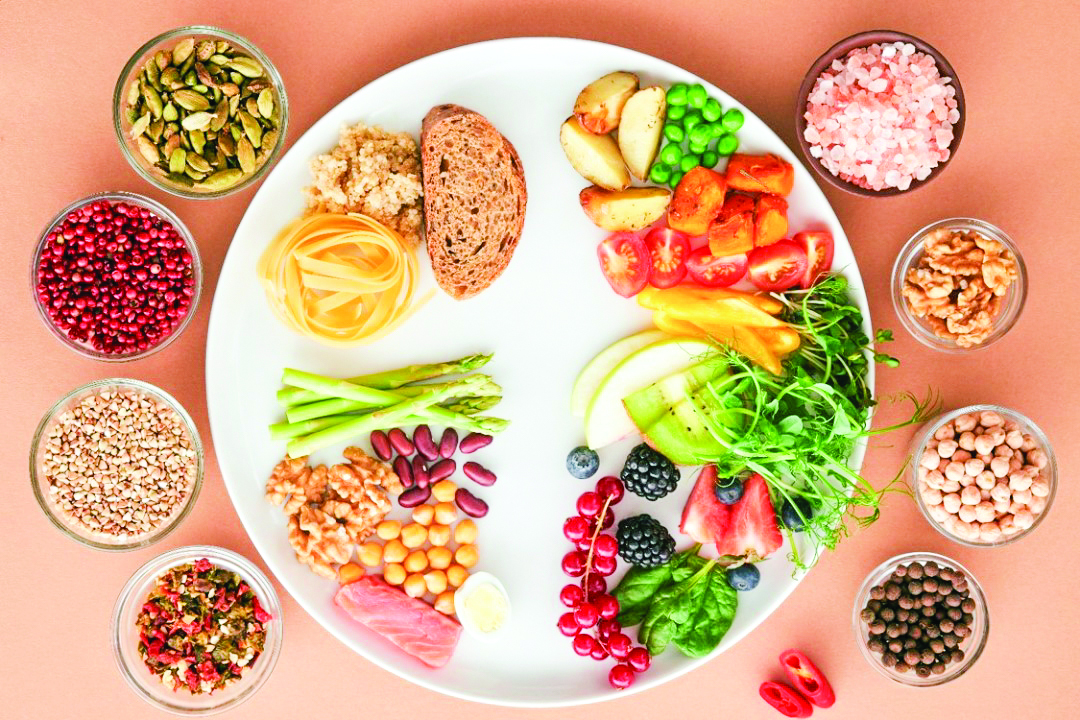
French gastronome Jean A. Brillat-Savarin wrote in his 1826 book, “Tell me what you eat and I will tell you what you are,” suggesting that the food we consume significantly impacts our health and physical state. His simple, elegant phrasing popularized the adage “you are what you eat.” A recent Netflix eight-week docuseries by the same name, comparing twins on a vegan diet with omnivores, was panned by critics as “biased and skewed towards political and environmental activists and vegan manufacturers” and “food fear-mongering and sensationalism.”
The saying “you are what you eat” has roots in the philosophical and medical thought of ancient cultures, highlighting the importance of mindful eating and how dietary choices can affect our physical and mental health, energy levels, and mood. A balanced diet provides the components necessary for growth, repair, and sustaining bodily functions. A deficient, unhealthy diet leads to various health problems.
Natural Diet of Humans
All animals eat what they can digest raw and evolved to survive on locally available food sources. Ruminants (cattle, buffalo, bison, sheep, goats, deer, giraffes, and camels) have a special organ called the rumen for digesting grass and evolved on grasslands. Carnivores evolved with claws, teeth, and a digestive system designed for fibre-free raw meat with bone fragments, where large herbivore populations existed. Birds developed gizzards to grind seeds and grains. Vultures have evolved highly acidic stomachs and specialized gut bacteria that efficiently process decaying flesh and neutralize harmful pathogens.
The human digestive system and teeth are designed for a high-fiber herbivorous diet of fruits, berries, nuts, vegetables, sprouts, nontoxic leaves, flowers, and mushrooms. Many staple foods, such as wheat, barley, rice, corn (maize), other grains, and sugarcane, are derived from domesticated grasses. Vegetarian and vegan diets are promoted for health, religious, moral, animal rights, and environmentally friendly reasons, but not as the natural diet of humans based on the evolution of our digestive system and body.
Influence of Culture on Diet
In Indian culture, food is not just about sustenance; it is deeply related to spiritual, philosophical, and medicinal aspects. The Vedas emphasize food’s role in daily life, rituals, and health, and Ayurveda (Indian traditional medicine) highlights the importance of balancing mind-body types (three doshas of Vata, Pitta, and Kapha) through diet. The practice of ‘Ahimsa’ (nonviolence) towards all living beings and the use of satvic (pure, clean, and nourishing) food to promote mental clarity, emotional stability, physical health, spiritual well-being, and enlightenment have influenced the Indian diet, and hence India has the highest incidence of vegetarianism in the world. Indian cuisine is known for its diverse range of dishes, incorporating grains, legumes, fruits, and vegetables, ensuring a wide array of nutrients.
The traditional Chinese diet was mostly vegetarian, though urban Chinese now have a predominantly diverse non-vegetarian diet. Japanese cuisine traditionally revolved around rice and seafood. The Meiji Restoration in the late 19th century led to westernization as a symbol of modernization and saw a rise in meat consumption. In Korea, meat is associated with prosperity, social status, and traditional celebrations. Mexico has the second-highest percentage of vegetarians, after India, due to renewed interest in pre-Hispanic foods like amaranth, chia, corn, and cactus. The traditional Brazilian diet emphasizes whole foods, legumes, roots, and tubers. Tribal communities worldwide are usually omnivorous (tubers, wild leafy vegetables, fruits, grains, insects, fish, and even small animals) based on their location, environment, availability of resources, and cultural practices.
Influence of Religions on the Human Diet
Humans in arid regions and deserts have had to depend on a diet of camel meat and milk and drought-resistant foods that can be stored for long periods despite the heat, like dates, grains, and legumes. The theological (study of God and religious beliefs) Abrahamic religions of the Middle East thus approved of meat consumption, provided specific dietary laws, or kosher or halal, were followed. Judaism permits the meat of kosher animals (fish and cloven-hooved animals that chew their cud), and Islam forbids pork and carrion (dead animals). West Asian and Occidental diets, except the Mediterranean diet, have been in contrast to traditional oriental diets.
The influence of Jewish dietary laws (Kashrut) and the popularity of hummus and falafel have now led to 13–15% of Israelis being vegetarian, and Tel Aviv is the “vegan capital of the world.” Philosophical (study of fundamental truths about existence, knowledge, and reality through reason, logic, and critical analysis) based and ‘Ahimsa’-principled religions of Indian origin, especially Buddhism and Jainism, had a wide range of plant-based foods available locally. In Jainism, a vegetarian diet is mandatory. Buddhist influence in Taiwan, rural China, and South and Southeast Asia has preserved traditional vegetarian diets. Meat is usually not served at weddings, religious functions, and in sacred spaces (temples, Buddhist monasteries, Sikh gurudwaras, Shinto shrines, etc.) in eastern cultures and religions, though animal sacrifice rituals existed. Yogurt (curds) has cultural and religious significance, particularly in Hinduism, where it’s seen as a symbol of purity and nourishment and is used in rituals. Several religions prohibit or discourage the consumption of alcohol and intoxicants, especially Islam (as Haram), Buddhism (as the fifth of the five basic precepts), and Jainism (as a hindrance to self-control and spiritual progress).
Influence of Geography on the Evolution of Human Diet
Humans probably evolved in a lush, wet environment in southern Africa, eating berries, fruits, and green leaves. On migrating to the grasslands (savannas) of central Africa, they learned to hunt, farm, domesticate animals, cook, and eat grains and meat. Central Asia, with its extensive flat grasslands (steppe) and a nomadic heritage involving herding animals, has a diet rich in meat and dairy. Migration to the icy northern regions led to a diet of high-fat and protein-rich foods from animals, with limited plant-based options. Inuits, the indigenous people of northern Canada, Greenland, and Alaska, have a diet with nearly 50% fat from fish and marine mammals like seals and whales, often consumed raw, frozen, or dried. The ketogenic diet (high in fat, low in carbohydrates) and the western protein and meat obsession originated from pemmican, a calorie-, protein-, and fat-rich native food that was vital for survival in harsh northern Canadian conditions, where fresh food was not available. The pemmican and the war over it were discussed in a previous article on nutrients, micronutrients, and antinutrients.
Mountain region diets often feature locally grown fruits, millets, legumes, and local fermented beverages, with adjustments needed for cooking in the low air pressure and oxygen of high-altitude conditions. Their diet has more energy-rich, complex carbohydrates, with a respiratory quotient (RQ = Volume of CO₂ produced / Volume of O₂ consumed) of around 1.0, which helps increase oxygen availability in the body compared to fat-rich diets with an RQ of around 0.7. Proteins have an RQ between 0.8 and 0.9. Coastal communities consume a lot of seafood, edible salt marsh plants (halophytes) such as glasswort and sea beet, and salt-tolerant (facultative halophytes) plants such as coconuts. Traditional island diets, particularly in the Pacific, relied on root crops (taro, yams, and sweet potatoes), coconuts, fruits, and seafood. Humans in forest environments rely on hunting wild game, freshwater fish, wild plants, sap, gum, salt from certain sources, nuts, mushrooms, insects, berries, and fruits.
Diet and Health
Diet plays a crucial role in your health. Heating food leads to nutrient loss, particularly of heat-labile, water-soluble vitamins like C and B vitamins, and minerals that can leach into the cooking water. The addition of fats, sugar, salt, and synthetic chemicals in cooked and processed food further affects the health of the consumer. Fried foods are best avoided, and air frying or baking is a healthier alternative. If cooking oil is used, cold-pressed unprocessed oil with a high smoking point, like unrefined avocado oil (250°C), or refined peanut, coconut, sunflower, or soybean oil (232°C) should be used, and it should not be overheated to the smoking point or reused. Refined oils generally have higher smoking points than their healthier, unrefined counterparts [e.g., unrefined coconut oil (177°C), peanut or soybean oil (160°C), sunflower oil (107°C)] due to the removal of impurities and free fatty acids. Ghee (clarified butter) has a high smoke point (232°C).
A poor diet leads to malnutrition, obesity, chronic diseases, and an increasedrisk of breast, colon, liver, and certain other cancers. A diet of whole grains, nuts, berries, fruits, vegetables, and sprouts, with a sprinkling of extra virgin (cold-pressed, unrefined) olive oil, is our natural diet. Fermented foods, especially yogurt, are nutritious and rich in probiotics, as discussed in an earlier article. Maintaining a healthy weight with regular physical activity and a well-chewed, balanced diet containing all nutrients and no antinutrients, tobacco, or alcohol, and maintaining a good gut microbiome and oral hygiene is essential for physical and mental health.
Dr. P.S. Venkatesh Rao is a Consultant Endocrine, Breast & Laparoscopic Surgeon and a polymath based in Bengaluru.




