AVOIDING AND MANAGING VENOMOUS SNAKE AND OTHER BITES OUTDOORS
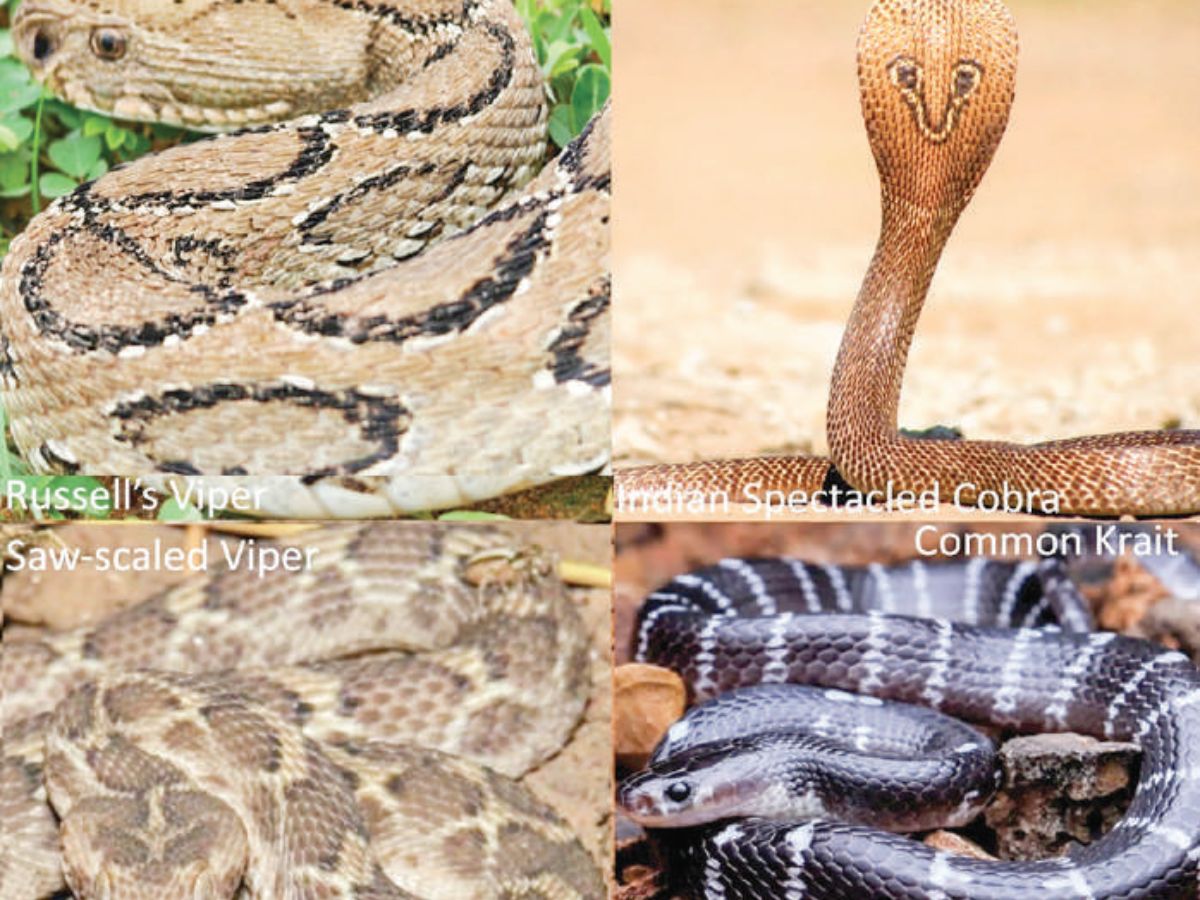
Snakebites are a silent global health crisis, claiming an estimated 138,000 fatalities annually, of which 58,000 fatalities, the world's highest, are in India. India hosts over 60 venomous and 240 other snake species. Irula Cooperative Society of tribal snake handlers in Tamil Nadu supplies 80% of the venom for antivenom production in India, a major producer globally. The "Big Four" (not by size) venomous Indian snakes are the Russell's viper, saw-scaled viper, Indian cobra, and common krait. Snakes are captured, and venom is carefully extracted before they are released back into the wild. This venom is used to immunize animals like horses or sheep, and the antibodies from their blood are extracted and purified to create antivenom serum (AVS) for human use. These antivenoms are species-specific, costly, difficult to produce, and can provoke dangerous allergic reactions due to the presence of animal antigens. Polyvalent Antivenoms made for these "Big Four" do not cover other venomous species like the king cobra, banded Krait, and various pit vipers. Among the numerous Indian antivenom manufacturers, Haffkine Bio-Pharmaceutical Corporation also produces scorpion antivenom. Delayed access to antivenom, poor rural healthcare infrastructure, and transport contribute to a high morbidity (paralysis, bleeding disorders, kidney failure, and amputations) and mortality.
SNAKES AND VENOM: Snake Venom is a potent mixture of seventy distinct toxins that can vary within a single species. These toxins belong to ten main protein classes, which attack in different ways. Venom composition can vary significantly even within the same snake species, depending on the geographical region. =Haemotoxins of Russell's viper and saw-scaled viper destroy blood cells, disrupt clotting, and cause internal bleeding. =Neurotoxins of Indian Cobra and Common Krait block nerves, leading to paralysis and respiratory failure. =Cytotoxins in pit viper venoms dissolve tissue at the bite site. =Indian sea snakes have myotoxic venom, which causes muscle paralysis. =The monsoon season ( June-September) sees a higher number of snakebite incidents because snakes are more active and come out more frequently. =A non-venomous snake bite can lead to bacterial infections if not treated. Handling reptiles and then touching your mouth or food without handwashing can transmit salmonella and other bacteria. =There have been fatal attacks on children or small adults by large nonvenomous snakes like boas and pythons by wrapping around and squeezing them until they suffocate. =Even a harmless snake can cause panic, leading to car crashes, falls, and heart attacks. =Snakes are protected under the Wildlife Protection Act, 1972. Capturing, killing, or milking venomous species is prohibited in India.
SNAKEBITE PREVENTION STRATEGIES: Most snakes will not attack unless provoked. If you see a snake, avoid sudden movements, back away slowly, and let it retreat. Don’t try to handle a snake, even if it appears dead. =Stick to clear paths and avoid walking through dense vegetation or tall grass, and be cautious near water bodies. Be alert and spot snakes before you get too close. =Use a stick or trekking pole to push aside bushes or grass before placing your hands or feet in such areas. Snakes can't hear, but they sense ground vibrations. Heavy footsteps, or a stick hitting the ground, make them aware of your approach, but do not scare them away. =Use thick gloves when handling firewood, debris, or working in undergrowth. Never put your hands or feet into holes, crevices, or under rocks/logs without checking. =Wear boots and long pants when walking in tall grass, forests, or rocky terrain. Snake boots are specifically designed to prevent fangs from penetrating, but they do not protect the calf or thigh. =Clear your campsite of brush and tall grass. Keep tents zipped and gear off the ground. Shake out shoes and clothes before wearing them. =When walking outdoors at night, always carry a flashlight to avoid stepping on a snake. =Remove piles of leaf litter, wood, rocks, or debris from pathways and keep your home and surroundings clean, free of rats, as these attract snakes. =Snake-proof your home by sealing cracks and holes in walls and floors. =Learn to identify venomous snakes in your region by colour, pattern, and behaviour. =The Banna tribe of Ethiopia practices a unique "stick walking" using long stilts to navigate challenging terrains, herd cattle effectively by seeing over tall grass, and protect themselves from venomous snakes on the ground.
SNAKEBITE MANAGEMENT STRATEGIES: It is important to identify the snake types correctly, as their behaviour and venom differ. =The mobile application developed by the Indian Snakebite Initiative helps in snake identification, contacting the nearest snake rescuer, and locating the nearest hospital with antivenom. =Do not panic or run; move away from the snake to prevent further bites, and stay calm to slow venom spread and to prevent your heart rate from increasing. Try to keep the bitten area still, or immobilise it to slow the spread of venom, and lie down with the bitten part lower than the heart. =Seek immediate medical help and transport to the nearest hospital, as antivenom is the only effective treatment. =Do not suck the bite or cut it to remove the venom or rub it or apply ice, herbs, or tie a tourniquet, as it can cause severe local tissue damage and other complications.
EMERGING SOLUTIONS AND INNOVATIONS IN ANTIVENOMS The National Action Plan for Prevention and Control of Snakebite Envenoming (NAP-SE) aims to halve the number of deaths and disabilities caused by snakebites by 2030. =Public Education Campaigns to raise awareness about snakebite prevention and timely medical intervention can significantly reduce fatalities. =Portable rapid venomdetection kits can guide accurate and timely administration of antivenoms. =Indian Institute of Science (IISc), Bengaluru researchers are developing antivenoms tailored to specific snake species and regional venom variations. =Synthetic "universal" human monoclonal antibodies antivenoms developed using AI, computational design, and recombinant DNA technology promise higher purity, lower cost, greater effectiveness, better stability, without allergic reactions, that could treat a large proportion of snakebites globally. =Tim Friede, a selftaught herpetologist, has survived more than 800 bites of the world’s most lethal snakes, including cobras, mambas, taipans, and rattlesnakes. Rare, powerful antibodies in his blood, capable of neutralising toxins from multiple species, have been isolated by teams at the National Institutes of Health and Columbia University, USA, for trial on mice. These antibodies could potentially help create a universal antivenom to the highly complex composition of snake venoms.
OTHER DANGEROUS BITES IN THE WILD: Tick bites are small, painless, and easy to miss. Ticks thrive in grassy and wooded warm areas. Wear protective clothing, longsleeved light coloured (on which insects are easily noticed) tucked-in shirts and pants tucked into the socks, and apply tick repellents on exposed skin, when hiking, camping, gardening in overgrown backyards, or walking through tall grass or wooded areas. Check your skin, hair, and clothing for ticks after being in tick-prone areas. Check pets for ticks as well. Ticks hide behind ears and knees, between toes, along the hairline, under arms, etc. Remove and wash clothes on returning home before ticks get into beds and sofas. Ticks can carry Lyme disease, a bacterial infection, which presents with a "bull's-eye" rash, fever, and fatigue up to three months after a tick bite. Babesiosis is a lesserknown tick-borne disease caused by the Babesia parasite, which mimics flu or fatigue. Investigate any unexplained fever, fatigue, weakness, or chronic pain. These infections may progress for years undiagnosed, affecting joints, heart, and nervous system. =Venomous spiders like the Indian Tarantula can cause intense pain and swelling. The venom of Black Widow spiders found in temperate regions causes muscle cramps, nausea, and difficulty breathing. The venom of Brown Recluse spiders found in the Americas causes necrotic skin lesions and systemic illness. =Indian Red Scorpion, found in western and southern India, is one of the most lethal globally. Scorpion venom causes intense localized pain and swelling, numbness, drooling, and muscle twitching, and in children: vomiting, convulsions, and respiratory distress. Avoid sleeping directly on the ground in endemic areas, keep surroundings clean and free of debris, use sealed footwear, and inspect bedding and clothing. Immobilize the affected limb and keep it below heart level. Do not apply ice or cut the wound. Seek medical help immediately, as antivenom may be required for scorpion stings, especially in children. =Other wild animal bites can be extremely dangerous due to venom, infection risk, or sheer bite force, especially dogs (Rabies, tetanus, and bacterial infections), big cats (crushing injuries, severe bleeding, and infection), crocodiles (fractures, drowning, and massive tissue damage), bats (Rabies and other viral infections), monkeys (Rabies, herpes B virus, and bacterial infections), and even cats (Pasteurella or Bartonella(cat scratch disease) infection). Avoid feeding or approaching wild animals and keep a safe distance from water bodies in crocodile-prone areas. Vaccinate against rabies if traveling to high-risk zones. Carry a first aid kit with antiseptics and bandages. Seek medical help immediately after any bite.
Dr. P.S.Venkatesh Rao is a Consultant Surgeon, Former Faculty CMC (Vellore), AIIMS (New Delhi), and a polymath in Bengaluru.'
