

Where ancient tradition meets Opulence, BrijRama Palace offers a memorable stay in Varanasi, blending centuries-old architecture with the mystique of ghats and the Ganges.
From the hum of distant temple chants to the buttery yellow glow of its 200 year old walls, this heritage palace is where modern indulgence dances with ancient sanctity. Arrive by boat; stay for eternity, or at least as long as you can.
WHERE HISTORY WHISPERS
I’d heard tales of Varanasi’s magic, but nothing prepared me for ‘how’ I arrived at BrijRama Palace. There I was, cocooned in a graceful boat at dawn, the Ganga unfurling its sleepy mists around me, with the silhouette of the palace growing larger by the second. By the time I reached Darbhanga Ghat, I felt more like a time traveller stepping into a royal epiphany than a tourist. I hadn’t even reached the palace doors, but I already knew this wasn’t just a stay, it was an encounter with time itself. The moment my foot touched those weathered stairs, a man dressed in traditional Banarasi attire welcomed me with a marigold garland. No lobby, no blaring announcements of check in, just the sound of conches, the distant clang of temple bells, and that softly persistent breeze off the river. It was as if the air itself wanted me to unravel. And unravel I did. The palace, built in 1812, is a slice of regality steeped in history. Sandstone arches, exquisite artwork, and heritage furnishings surrounded me.
Walking into BrijRama is like being gently ushered into a dream you didn’t know you had. The air feels different, thicker, older, as if it carries the weight of centuries. The glint of mirrorwork catches the flicker of oil lit Diya’s, their golden light sweeping across sandstone pillars adorned with playful dolphin carvings. In the courtyard, Radha and Krishna stand timelessly serene, bathed in sunlight streaming through ancient jaalis. But then comes the showstopper, a 19th century elevator, creaking and glorious. One of Asia’s first, they said, and I believed it. Riding it felt almost cinematic, the scent of masala chai wafting in the air as the ancient ceiling fans hummed their steadfast lullaby. And then, the Varuna Burj Room, a masterpiece perched with a 180 degree embrace of the Ganges. BrijRama doesn’t just display its past, it performs it.
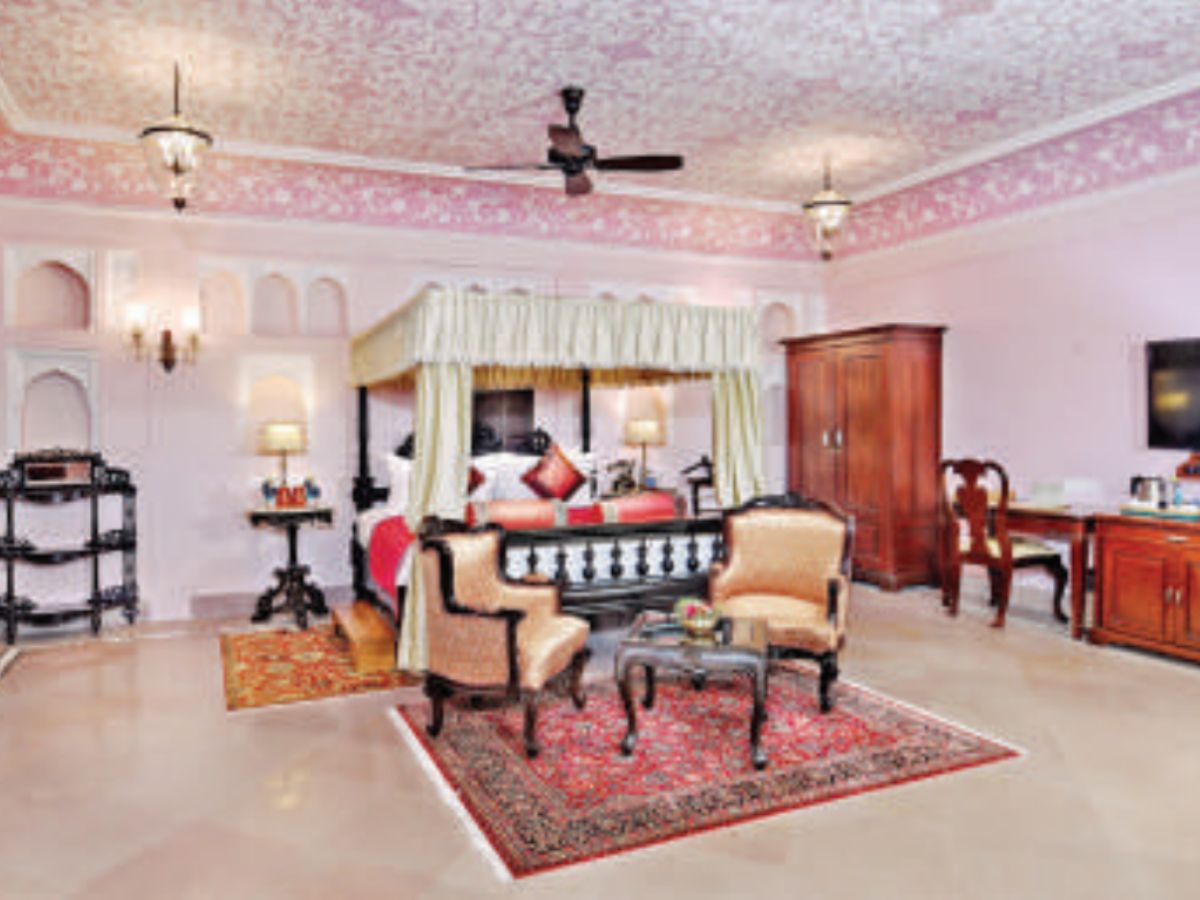
Maharaja Suite at Brijrama
WHERE LUXURY EMBRACES LEGACY
My Maharaja Suite was no less regal, tucked into a time capsule, was the perfect fusion of comfort and craftsmanship. Banarasi silks spilled over the bed like liquid sunlight, while antique furniture offered just the right amount of defiant creak. Mornings turns electric here. The sun stretched long fingers over the ghats while the river shimmered alive, pilgrims bathing in its devotion. The curved arc of windows opened sunrise views that felt painted just for me, soft pinks and golds reflecting off the rippling waters below. Even chai felt sacred here, sipped by the window, as the Ganges flowed past like an eternal storyteller. Nights are magic, Kathak dancers twirl in the ‘Bada Aangan,’ shadows flicker like stories being retold, and the vegetarian feast at ‘Darbhanga’ turns a meal into a memoir. By the final bite of Banarasi paan, you swear you’ve tasted the city itself. At ‘Aangan’, once the Maharaja of Darbhanga’s domain, history comes alive on your plate. A 10 course degustation marries royal nostalgia with innovation, think cauliflower croquettes with fennel rose sauce or rasmalai tres leches. Add live sitar, swirling dancers, and henna artistry, and every meal feels like a performance steeped in legacy. Another dinner was an elaborate affair of traditional Banarasi thalis under a sky glazed with stars on the rooftop, with the Ganga whispering softly below. And yet, what intrigued me most about BrijRama wasn’t the luxury, it was its ability to quiet the world. To make you listen, to the river, to the chants, and maybe, to yourself. My personal favourite? The terrace. From up there, you can spy saffron clad priests conducting ceremonies at the ghat below or watch a kaleidoscopic Ganga sunset blaze through the sky. This wasn’t a stay; it was a conversation with eternity. But if I had to pick one moment that cinched this otherworldly experience, it was the ‘Ganga aarti.’ By sheer good fortune, I’d settled myself on Brijrama’s private ghat view, away from the chaos of Dashashwamedh Ghat. When it was over, I lingered by the water. A room might give you temporary shelter, but here, the palace makes you feel like you belong to something much older, much bigger than yourself. As the scents, sights, and sounds of Varanasi settled into their nighttime rhythm, I realized I wasn’t just witnessing a city; I was becoming a part of its story. And the great thing about Varanasi’s story? It’s always unfinished, always waiting. I left at sunrise, with footsteps that felt too reluctant, tossing one last longing glance at the palace now fading into the morning mist. BrijRama doesn’t just linger; it makes you timeless too.
Where? Darbhanga Ghat, Dashashwamedha, Varanasi, Uttar Pradesh, India
Call: +918069057704
(Awarded the ‘Best food writer in the country’ by the Indian culinary forum, WACS and the ministry of Tourism, Rupali Dean writes on food and travel.)




