Navratri embodies reverence for women, nature’s rhythms and spiritual cleansing through devotion.
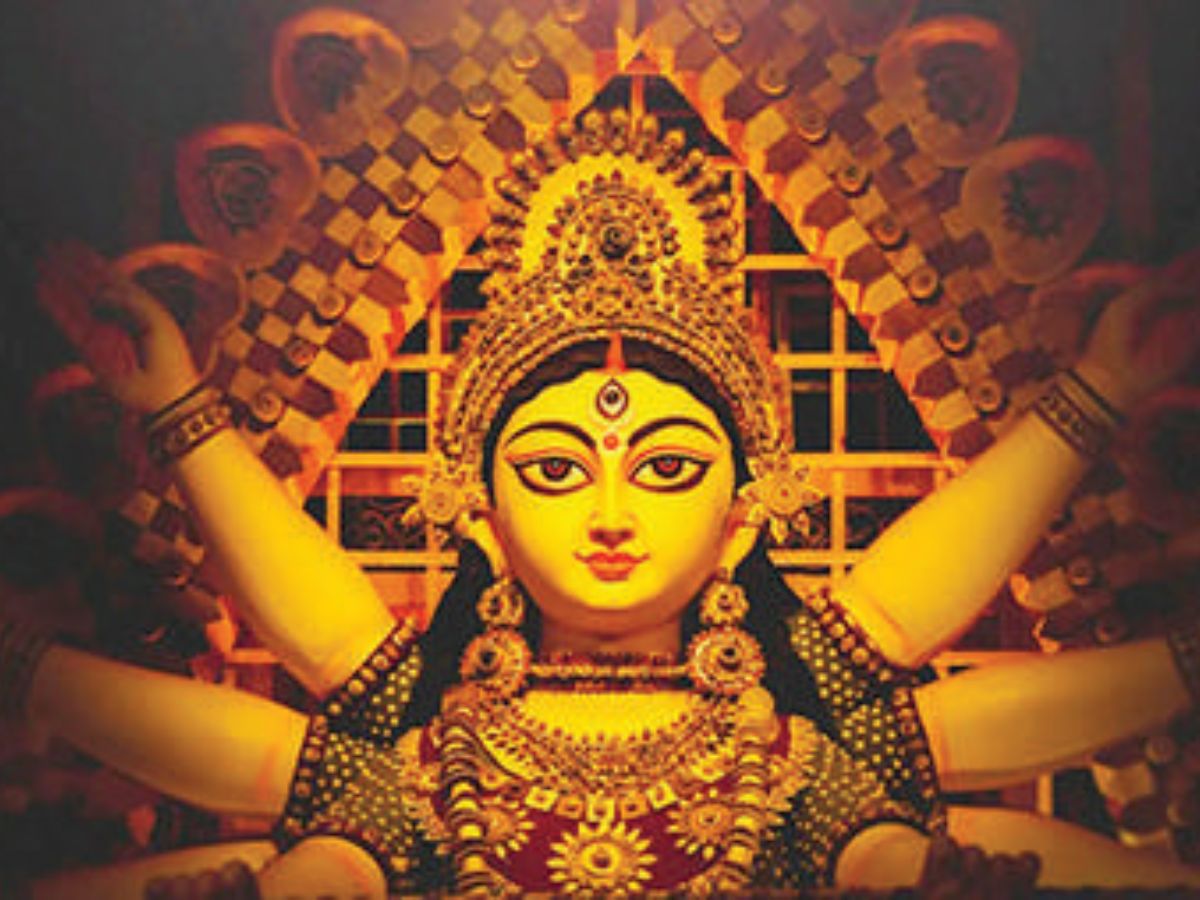
The Navratri which is celebrated twenty days before Diwali is the one which is prevalent throughout India. It is believed that the whole of Ayodhya was lit up to welcome back Shri Rama, Sita Devi and Lakshmana after their fourteen years sojourn in the forest. This is after winter Navratri. The summer Navratri or the Greeshma Navratri ends with Shri Rama Navami being the equivalent of Maha Navami. The other two Navratris are the Vaarahi Navratri and the Raja Maathangi Navratri, both secretive and for initiated followers of Ma Shakthi.
Kids love the winter Navratri. This is the only time in their lives when they are forbidden to study. Even during the long holidays in summer, they are urged to prepare for the higher classes. But from Durga Ashtami evening throughout a glorious Maha Navami to Vijayadashami morning, their books are kept for pooja in front of the Mother Goddess. At that time students cannot study. Mandatorily. Farmers, carpenters, and people who work with implements keep them for pooja as do dancers their anklets, painters, their brush and palettes etc. It is believed that the Goddess goes through all of this, corrects mistakes and blesses them for the oncoming year. Saadhaks keep their very selves for pooja. It is considered to be a cleansing process with the Goddess permeating into everything.
Ancient India, contrary to parts of the modern one, had always respected women. Modern day India either reveres her or uses her. There is no balance between worship and abuse and this makes the whole of womanhood slightly skewed. Till technology intervened and with the exception of parthenogenetic creatures, the woman has always been the fountainhead of birth. Birth meant newer and newer creations, necessary for the sustenance of life on Earth. Even nature is an unstoppable process of birth, life, death and regeneration. Visually women are seen to be the ones who gestate, give birth and nurture their children, till normally those very children are ready to give birth.
Shiva is conceived to be Purusha or the male energy, still, stoic and powerful. Shakthi is thought to be Prakrithi or the female energy, ever moving, pliant and equally powerful. Shri Aadi Shankara Aachaarya’s Soundarya Lahiri or Intoxication of Beauty opens with these lines: “Shiva Shakthya Yuktho Yadi Bhavathi Shaktha Prabhavithum Namaste Chay Devam Devo Na Khalu Kushala Spandithumapi.” These mean that without Shiva and Shakthi there will be no movement even.
Ancient India worshipped nature. Every ritual could trace its origins to harvest or lunar festivals. All these were obviously nature-based. Rocks, mountains, caves, rivers and stones were considered different forms of divinities. It was so important to preserve the sanctity of the air we breathed, the water bodies we had, the sacred earth on which all of us lived. Now noxious gases are emitted as well as toxic effulgences on all our surroundings. We have given myriad chemical washes to this Earth. Chemicals to kill off insects are so strong that they kill birds pecking among the plants. Many vegetables and fruits (especially ones with thin skins) are dangerous to the consumers.
Navratri begins when the rains have abated and winter is yet to start. There are nine days of festival with Shailaputhri, Brahmachaarini, Chandrakhanta, Kushmaanda, Skandamaatha, Kaatyaayani, Kaalaraathri, Maha Gauri, and Sidhdhamatha. These are not different Goddesses. Rather they are different facets showing different stages and aspects of the Great Ma Shakthi. Like the Goddesses of Navratri, each woman goes through each stage for a complete cycle of life. Similarly a sleeping seed is buried deep in the dark, soft soil which is like the womb. The gentle rain awakens the dreaming seed and it pushes its way up to the surface of the earth. The sun and the wind do their job. Nourishment is provided and the seed becomes a plant which bears flowers and fruits. This produce of the plant is enjoyed by many. Finally, it dies and becomes part of the surface soil, ready to yet again bear a seed which will go on to complete the cycle.
We too often pollute our water bodies by making them our easy waste dumps flowing by us, until they turn turbid and finally movement-less, making them mosquito and other insect breeding centres. Lotuses and fish are choked by the poisonous water far more dangerous than a Kaliya-contained Kalindi ever was. Plastic is burned and that leads to air pollution. This affects the lungs of all beings.
Two simple things can be adapted for the ongoing Navratri. One is a promise to oneself not to use wells, ponds, streams and the ocean as easily accessible, free dumping grounds. The other is a concerted effort to revive and revitalize water on Earth. Every action done with faith becomes an act of worship. While doing pooja, it may be a good idea to take a page from our ancestors and foster festering water bodies. This way the endless grace and blessings of the Mother Goddess will continue to flow unhindered to us, much after the glorious nine days of Navratri.
Thiruvathira Thirunal Lakshmi Bayi was born the XII Princess of the erstwhile royal family of Travancore.
