
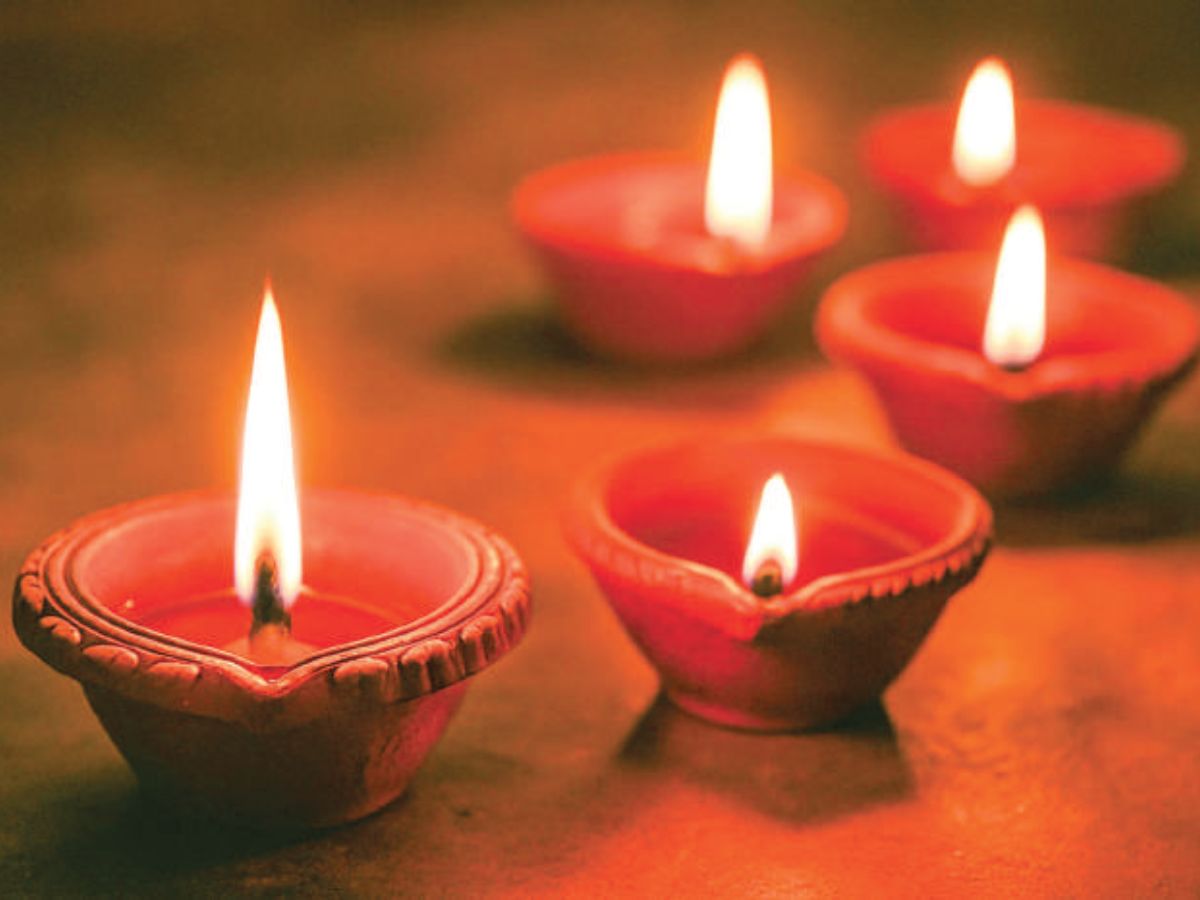
Diwali is said to mark the return of Shri Ram to Ayodhya after fourteen years of exile: the triumph of truth and clarity over deceit and darkness. The lamps that were once lit to welcome him have become symbols of that inner victory. Yet today, while the lights have multiplied, the remembrance has faded. We celebrate his homecoming, but have we made space for him within? Every year, when Diwali comes, we light the lamps, adorn our homes, and give each other sweets and greetings. But somewhere, quietly, the question creeps up: Has any of this actually helped us see the light? The festival keeps coming back, as if to ask, “What kind of light have you lived by this year?” It’s normal to want to be joyful, but joy without understanding quickly becomes empty.
Asking how to celebrate Diwali is like asking how to study for an exam after the results are out. A festival is never just a single day of excitement; it shows how we’ve lived over the past year. If our days have moved opposite to the values of Shri Ram, then celebrating his name for one evening becomes nothing but an act of self-deception. The lamp has meaning only when it is lit by truth. Every festival, in that sense, is an examination. Those who have lived honestly can celebrate in peace. Those who haven’t, should pause and look within. But today, celebration has turned almost entirely outward. Those who fail the inner test often make the loudest noise outside. We hide our restlessness behind decoration, our emptiness behind display. It is human to seek celebration; it becomes hollow only when clarity is missing. The tragedy is not that people are ignorant; the tragedy is that they stop seeking because they think they already understand. The festival of lights cannot truly belong to those who still choose darkness.
Earning the Right to Celebrate
Even to take the name of Shri Ram calls for a certain worthiness. The right to celebrate his festival is not given by birth or by custom; it must be earned through right living. When people who share nothing with his life invoke him for a day, it becomes hypocrisy wearing the mask of devotion. To celebrate Diwali in its real spirit is not to light more lamps but to remove the darkness within. Only a life rooted in honesty and compassion deserves to be called a festival of light. For others, it should be a day of reflection: a day to see how far we have drifted from the clarity that is Ram. If he were among us today, he would not bless most of our celebrations; he would question them. “You call this my festival?” he might ask. “You spend the year chasing power and pleasure, and now you gather in my name?” The one who renounced an empire in a single moment would be pained to see his name used to glorify greed. His greatness lay in simplicity, fearlessness, and truth. Yet in his name we now worship excess. A genuine devotee must live as Shri Ram lived: truthfully, fearlessly, and tenderly. Only then does celebration become sacred. Without that inner qualification, Diwali turns into a spectacle, a show to hide the hollowness inside.
The Essence of Shri Ram
This is not philosophy for the sake of philosophy. As long as the ego defines even God, it keeps itself alive. Shri Ram is not a thing of nature, nor a thought of the human mind. He is not saguṇa, with form and attributes, nor nirguṇa, without them. Every label we give him only limits him, for the one who labels is still the ego. Kabir Sahab said, “Rām niranjan nyāra re”: Ram is unstained, and utterly apart. As long as the ego survives, Shri Ram cannot be known, because the complete allows no other besides itself. The complete is one, infinite, without association. To know that is not to believe something; it is to see with inner honesty and clarity. This is why Diwali cannot be understood without understanding Ram, for the festival only celebrates what the mind has realized. To live in that realization is to live in Dharma: doing what is right even when it is not convenient. Dharma is not ritual, not identity; it is courage in action, standing with truth when the world pulls elsewhere.
The Light That Never Goes Out
Our sense of “I” keeps changing: built on possessions, relationships, opinions, and fears. The ego cannot stand alone; it must cling to something, and all that it clings to belongs to the world of change. What it holds today, it loses tomorrow. Living from such a base is like building a house on a stone that drifts down a river. For a while, it looks firm; then it shifts, and everything trembles. That is why even before death we keep dying in little ways: through anxiety, through loss, through uncertainty. There can be no peace when the very ground beneath us keeps moving. True stability arises only when life rests on what never changes. The false fades; the true remains. That stillness, that unmoving center, is what the sages called Shri Ram. To live without that center is to live in fear; to live anchored in it is to live in freedom. When the mind stands on truth, it no longer collapses under success or failure, praise or blame. It becomes quiet, and the light inside begins to shine. That inner illumination is the real Diwali, not the lamps outside, but the discovery of the light that never goes out. The Gita calls that state Yoga: inner steadiness amid external change.
True Diwali Begins Within
Shri Ram stands for compassion: the power to touch and transform because the heart is unclouded by desire. His touch turned stone into life because it carried no trace of self-interest. To follow him is to bring the same clarity and gentleness into daily living: to live without deceit, to choose what is right over what is easy. That is the real worship of Ram, not slogans or rituals but fearless integrity. If we look at our modern Diwali, we see how far we have drifted. The festival has external grandeur, but little inner grace. The light of Shri Ram seems to be missing from our hearts. He turned away from wealth and power without hesitation. Yet in his name we now celebrate indulgence. We live in a time when devotion is measured in volume, not depth, when noise passes for faith and repetition for remembrance. Festivals mirror the mind of the age. When the collective mind is restless, even worship becomes restless. Cleaning the house outwardly means little if the mind stays cluttered. Real cleaning is the courage to throw away what is false, unnecessary, or vain. When Shri Ram returned to Ayodhya, he brought no treasure: only light and peace. To bring him home today is to drop from our lives all that is wasteful and untrue. His exile ends only when our inner darkness is gone.
From Celebration to Clarity
If we are honest, most of us will have little reason to celebrate. Our actions betray our ideals; our desires outrun our integrity. Diwali, then, should not be a festival of pride but probably of repentance: prayashchitta. Repentance here does not mean guilt; it means clear seeing, the end of pretence. Let this day be a moment to bow before Shri Ram and say, “We could not live as you lived. Forgive us.” To see how far we are from the truth is already a step back towards it. The first lamp to light is the lamp of honest self-reflection. When the inner darkness begins to clear, the outer lights gain meaning again. Until then, the spectacle only deepens blindness. Without purity, celebration is arrogance; with awareness, austerity is grace. Let Diwali be a time to remember and make a promise to live more honestly before the next festival comes. Think of Shri Ram’s life: a prince exiled for fourteen years, accepting the forest without complaint. He never lost his dignity. That calmness in the face of trouble is what Diwali is really about. To honour him is to cultivate the same grace, doing what is right without bitterness and staying steady in the storm. The lamp outside is just a symbol; the real light has to come from within. When the mind is still, when compassion replaces desire, and when truth is more important than comfort, Diwali is no longer a date; it becomes the measure of one’s living. Let us celebrate Diwali not just by lighting a million lamps, but by extinguishing a million delusions.
The Light of Understanding
A lot of what we think of as tradition is really just habit that has been passed down without any thought. We dress children as Krishna and call it culture, yet never tell them who Krishna was or what the Gita teaches. Our festivals, which were meant to wake us up, are now mostly for entertainment. We need to go back to Dharma to find out what they mean again. Dharma is not a belief or a tradition; it is seeing things clearly and doing the right thing. When culture loses this base, it becomes nothing more than repetition. Words about truth mean nothing unless lived. To repeat “Ram Ram” while living falsely is betrayal. To say “I love truth” while choosing comfort over right action is hypocrisy. Love, if real, expresses itself through how one lives. Each time we act against what we know is right, something inside us breaks. The deepest shame is not public, it is private: the knowing that we have betrayed our own clarity. Yet every moment allows a new beginning. Drop what is false. Let your words and your living become one. When life itself becomes honest speech, even silence glows like prayer. Let this Diwali be remembered not just for the light we lit, but also for the darkness we understood.
Acharya Prashant is a teacher, founder of PrashantAdvait Foundation, and author on wisdom literature.




