UNESCO recognition highlights Diwali’s plural ethics amid global divisions and cultural anxieties.
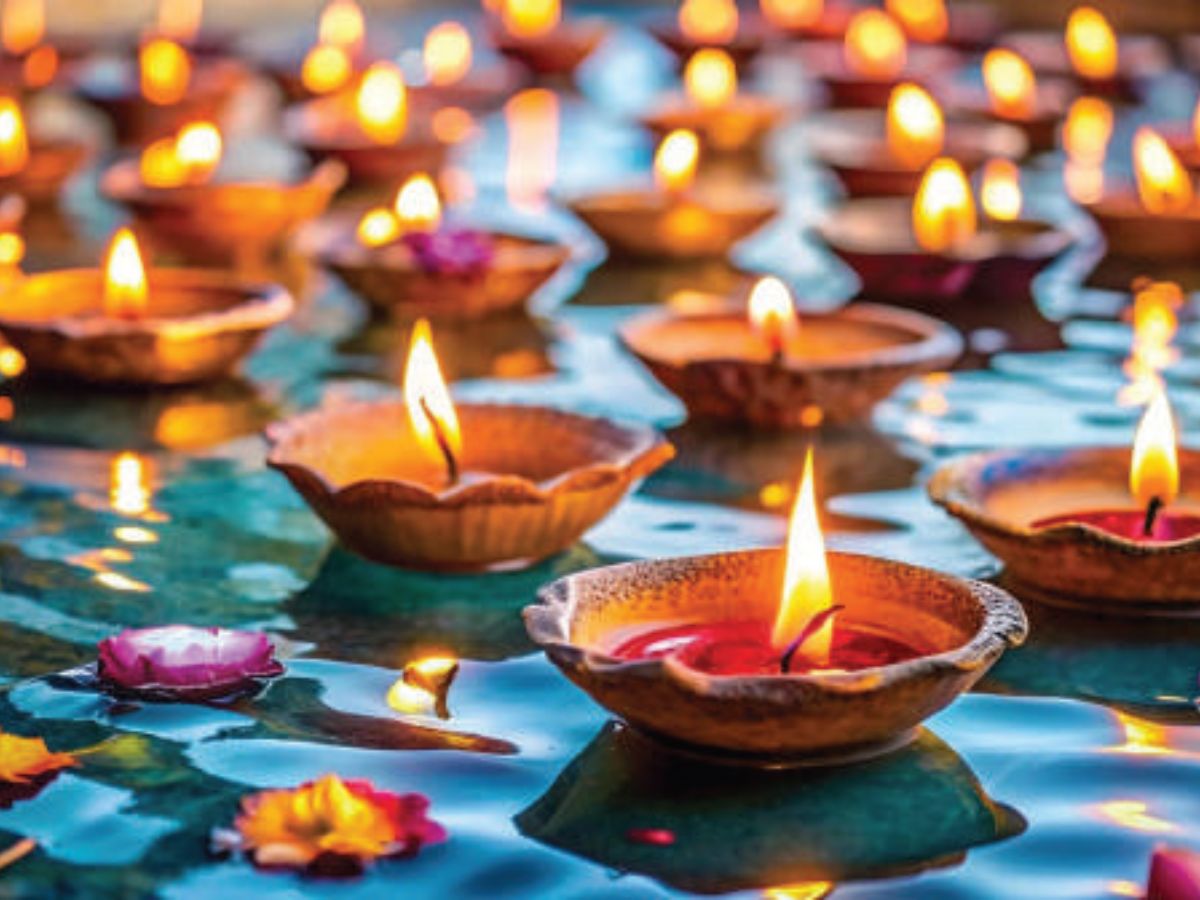
Diwali’s journey to UNESCO and India’s message to a fractured world
The global recognition of Diwali—Deepavali—by UNESCO is not merely an acknowledgment of a festival. It is the recognition of a civilizational philosophy that has endured for millennia: that light is not a weapon, but a shared moral responsibility. At a moment when the world stands fractured by ideological polarization, cultural absolutism, and geopolitical anxiety, India’s ancient festival of illumination arrives as a quiet but powerful counterargument.
Diwali has long been described as the victory of light over darkness, truth over falsehood, good over evil. Yet such formulations, while evocative, barely touch the depth of what the festival represents within India’s historical and cultural imagination. Diwali is not a single myth frozen in time, nor a ritual confined to one belief system. It is a living archive—inscribed in stone, copper, memory, and daily practice—through which Indian society has negotiated ethics, plurality, power, economy, and community.
Between the 10th and 13th centuries, references to Diwali—variously recorded as Dipotsava, Dipavali, or Divali—appear across inscriptions documented in the Epigraphia Indica and the Corpus Inscriptionum Indicarum. These records span regions as diverse as Karnataka, Kerala, and Rajasthan, and religious traditions ranging from Jainism to Vaishnavism.
A Jain inscription from Saundatti records donations of oil for lamps during Diwali rituals, emphasizing illumination as a collective ethical act rather than private devotion. In 13th-century Kerala, under Venad king Ravivarman, inscriptions at the Ranganatha Temple describe Dipotsavam as a sacred public occasion, blending royal patronage with communal participation. In Jalore, Rajasthan, a stone inscription commemorates the dedication of a drama hall during Diwali—affirming that art, performance, and storytelling were themselves understood as forms of light.
These inscriptions reveal something crucial: in the Indian civilizational framework, Diwali was never merely symbolic. It was infrastructural. Lighting lamps meant sustaining social order, supporting artisans, integrating economy with ethics, and publicly reaffirming shared values.
Modern debates often fragment Diwali into regional narratives: Rama’s return to Ayodhya in the North, Krishna’s slaying of Narakasura in the South, Kali Puja in the East, New Year rituals in the West, agrarian traditions in Central India, and hybrid harvest celebrations in the Northeast. Yet this diversity is not contradiction; it is coherence through plurality.
North India celebrates Diwali as the restoration of rajadharma—the moral return of Rama after exile. South India emphasizes purification through predawn oil baths on Naraka Chaturdashi, marking the defeat of inner arrogance embodied by Narakasura. Bengal invokes Kali, not as destruction alone, but as awakened consciousness that annihilates ignorance. Gujarat’s Chopda Pujan sacralises account books, insisting that economic life too must align with ethical order. Tribal communities in Bastar and central India tie Diwali to crops, livestock, and earth-bound gratitude.
Across these narratives runs a single philosophical current: illumination is shared, not monopolized. One lamp lights another without diminishing itself. This idea—radically anti-zero-sum—is perhaps India’s most enduring contribution to global thought.
UNESCO and the Ethics of Inclusion
UNESCO’s criteria for recognizing intangible cultural heritage are exacting: universality, continuity, depth of social embedding, and above all, inclusivity. Diwali meets these criteria not despite its diversity, but because of it. Contrary to frequent misrepresentations, Diwali is not the festival of one religion, one caste, or one ideology. It is sustained by potters who shape lamps, workers who clean homes, artisans who decorate streets, traders who balance accounts, performers who narrate epics, and families who gather across difference. Its economy is participatory; its aesthetics democratic.
UNESCO’s recognition therefore affirms something larger than cultural pride—it validates a social ecosystem where tradition survives by involving everyone.
Today’s world faces a crisis not only of politics, but of meaning. Societies are increasingly trapped in binaries—us versus them, belief versus belief, past versus future. In such a climate, Diwali offers a radically different civilizational grammar. It teaches that: Darkness is not defeated by denunciation, but by illumination, Plurality is not weakness, but resilience, Tradition is not inertia; it is continuity through adaptation, Celebration can be a form of collective moral renewal.
When India presents Diwali to the world, it does not offer a spectacle—it offers a method. A way of living with difference without erasing it. A way of remembering the past without weaponizing it.
Prime Ministerial references to Diwali as a “civilizational tradition” point to this deep continuity. Diwali is not an invention of the modern nation-state, nor a recent cultural assertion. It is the accumulated wisdom of thousands of years, refined through ritual, art, inscription, and everyday practice.
For those who seek to fragment societies by reducing festivals to narrow identities, UNESCO’s recognition poses a silent challenge: a tradition that was exclusionary could never have endured so widely, nor spoken so universally.
In the end, Diwali’s global inscription reminds us of an ancient Indian truth: Civilizations do not survive by extinguishing darkness, but by continuously producing light.
And perhaps, in an age searching for moral clarity, that light is needed now more than ever.
Dr Sachchidanand Joshi is an Author and Member Secretary IGNCA
